Monitors
Size, resolution, OLED panels and docking ports change the spending level. Match the display to your work or games.
BUYING GUIDE · RECOMMENDATIONS REVIEWED
Pick a screen for your room, viewing distance and mix of work, games and films.
We summarize professional reviews; we don't test products ourselves. We may earn a commission from purchases or qualifying sign-ups through our links. Affiliate links explained How we work
Selections reflect the use cases below. The number of coverage links does not determine the picks; current prices can change the value case.
Consider text clarity, ports and docking needs before comparing gaming scores.
Price check: Pay for work features you need; a gaming OLED serves a different mix of tasks.
Compromise: Premium office pricing and limited HDR performance
A gaming shortlist when motion and contrast matter. Examine text rendering for work use.
Price check: Check the exact panel, connections and image-retention warranty terms.
Compromise: OLED care, ambient-light behavior and a high purchase price
Compare reflections in your room and the price of an older C5.
Price check: Compare the same size and configuration; our 55-inch C5 results are not measurements of a 65-inch set.
Compromise: OLED stutter in slow pans; Larger C6H models use a different panel
These are spending limits for each product type, not quoted prices or a reason to pay more. Available offers determine which models fit. Amounts are in USD, before tax and shipping.
Size, resolution, OLED panels and docking ports change the spending level. Match the display to your work or games.
Compare the same screen size. Large premium OLED TVs belong in a different budget from desktop monitors.
Match size and resolution to your desk or room. For work, examine text clarity and scaling rather than relying on gaming scores.
Read measurements for brightness, reflections, motion and input lag. HDR support on the box does not establish HDR quality.
Check ports at the resolution and refresh rate you need, stand adjustment and warranty terms, including any image-retention exclusions.
Ask yourself: Will this look good in my room, with my content, connected to my existing hardware?
An alphabetical directory of reviewed models, including specialist and older alternatives. Inclusion is not a recommendation for every buyer.
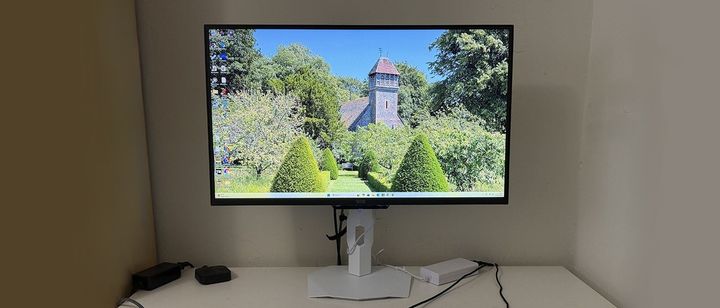
Acer Nitro XV273U F5
Blistering 540 Hz speed and deep IPS contrast without OLED burn-in worries. The Acer Nitro XV273U F5 is built for esports competitors and twitch gamers who want cutting-edge frame rates without the burn-in anxiety or text-fringing issues of OLED panels. Its greatest strength is ultra-responsive motion handling, hitting a native 540 Hz at 1440p and scaling to 1,000 Hz at 720p with an unusually strong 2,003:1 static contrast ratio. The main compromise is HDR: lacking local dimming, it cannot produce deep per-pixel contrast in cinematic games, and the 1,000 Hz mode requires dropping down to a soft 720p resolution. While dedicated 1080p 1,000 Hz displays like the LG UltraGear 25G590B maintain higher resolution at quadruple-digit speeds, Acer offers a far more practical 1440p everyday balance for several hundred dollars less.
1 published review link
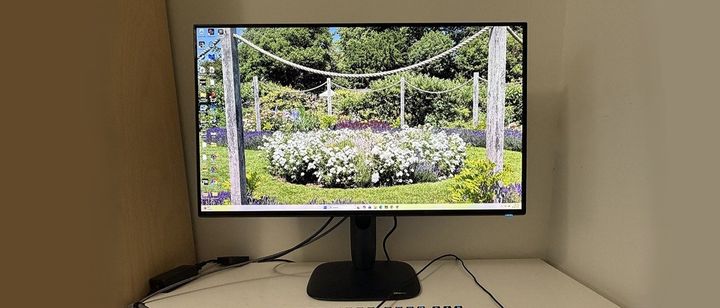
AW3226Q
A flat 4K OLED monitor that nails text clarity and price by scaling back refresh rate. The Alienware AW3226Q is built for mixed-use setups where everyday desktop work matters just as much as immersive gaming. Its primary asset is the tandem WOLED panel with a standard RGB stripe subpixel structure, which banishes the text fringing seen on earlier OLEDs. The catch is that refresh rate tops out at 165Hz and the USB-C port does not carry video or charge a laptop. Buyers seeking maximum competitive speed can step up to 240Hz models like the curved Alienware AW3225QF or Asus ROG Swift PG32UCDM, but the AW3226Q undercuts them significantly while offering a cleaner desktop picture.
2 published review links
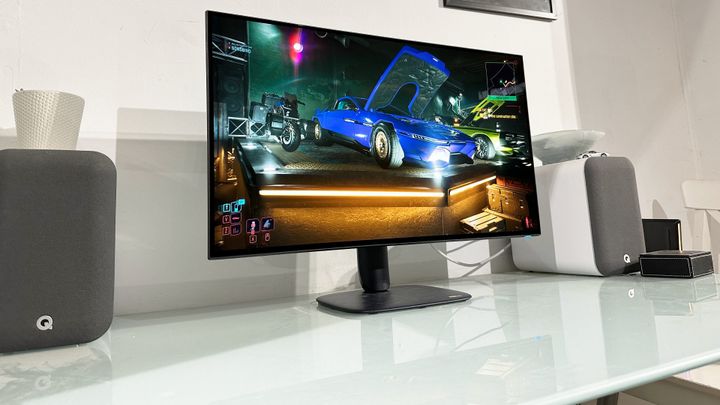
Alienware AW3226Q
A flat 4K Tandem OLED that delivers clean text and stellar contrast at an approachable price. The Alienware AW3226Q is an ideal display for gamers who spend substantial working hours reading and writing at the same desk. Its standout strength is LG's flat Tandem WOLED panel with an RGB-stripe layout, which eliminates the color fringing on text that plagued earlier OLED displays while maintaining infinite contrast. The main compromise is speed, as the refresh rate tops out at 165Hz instead of the 240Hz common among competitors, and there is no USB-C display input. Compared to Alienware's curved AW3225QF, the AW3226Q trades away 240Hz motion for a flat profile, crisper typography, deeper blacks under room lighting, and a lower price tag.
2 published review links
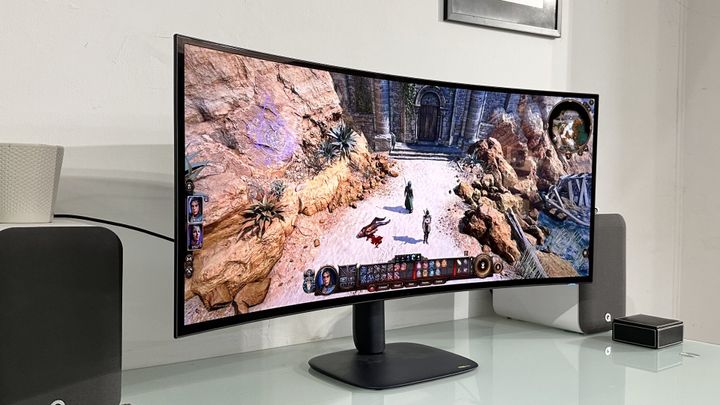
Alienware AW3926QW
A spacious 5K2K tandem OLED that nails text clarity and pricing, offset only by aggressive ABL and glare. The Alienware AW3926QW is an easy recommendation for enthusiasts seeking an expansive ultrawide display for both sharp desktop productivity and immersive gaming. Its biggest strength is the tandem WOLED panel paired with an RGB-stripe subpixel layout that eliminates text fringing while delivering immaculate contrast. The chief catch is that its glossy finish demands light control, and aggressive ABL can throttle brightness in large, bright scenes. Against its closest rival, the LG 39GX950B, the Alienware costs roughly $700 less while offering far sharper text rendering.
2 published review links
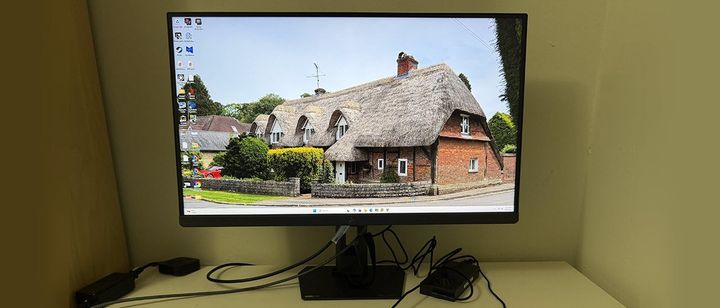
Asus ROG Strix XG27AQGNV
A 360Hz IPS esports monitor that pairs G-Sync Pulsar strobing with exceptional calibration controls. The Asus ROG Strix XG27AQGNV is built for competitive PC gamers who want the motion clarity and responsiveness of OLED without the risk of burn-in or the brightness compromises of older strobing implementations. Its chief strength is NVIDIA G-Sync Pulsar, which allows simultaneous backlight strobing and variable refresh rates, producing motion clarity that rivals high-end OLED displays alongside granular 400-step overdrive and 0.01-step gamma tuning. The primary drawback is its ordinary IPS contrast ratio and lack of local dimming, which leaves HDR content looking flat and gray in dark scenes. For pure competitive esports, it edges out conventional 360Hz LCDs and closely trails OLED rivals in contrast while delivering higher sustained full-screen brightness.
1 published review link
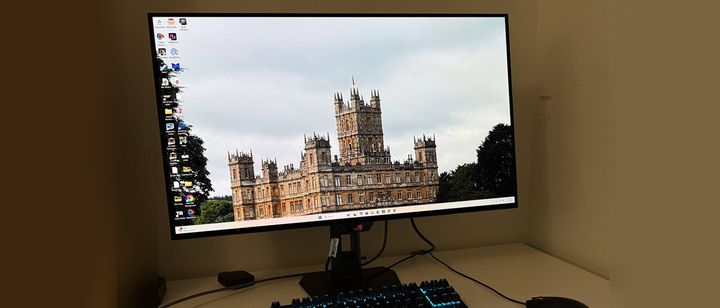
Asus ROG Strix XG32UQWMS
Tandem OLED brightness and dual-mode speed at a surprisingly approachable price. The Asus ROG Strix XG32UQWMS is built for PC gamers who want top-tier 4K visual fidelity without sacrificing competitive esports refresh rates. Its biggest asset is the fourth-generation LG Tandem WOLED panel, which delivers substantially higher SDR full-screen brightness and punchier highlights than earlier WOLED displays while offering an instant 480Hz 1080p mode for fast-paced shooters. The primary concession is connectivity: it omits USB-C display input and Power Delivery, relying strictly on traditional DisplayPort and HDMI ports paired with a USB-B upstream cable. Compared with QD-OLED rivals like the MSI MPG 321URX, the Asus maintains truly inky black levels in ambient light thanks to its TrueBlack Glossy coating, making it one of the most compelling 32-inch gaming monitors available.
1 published review link
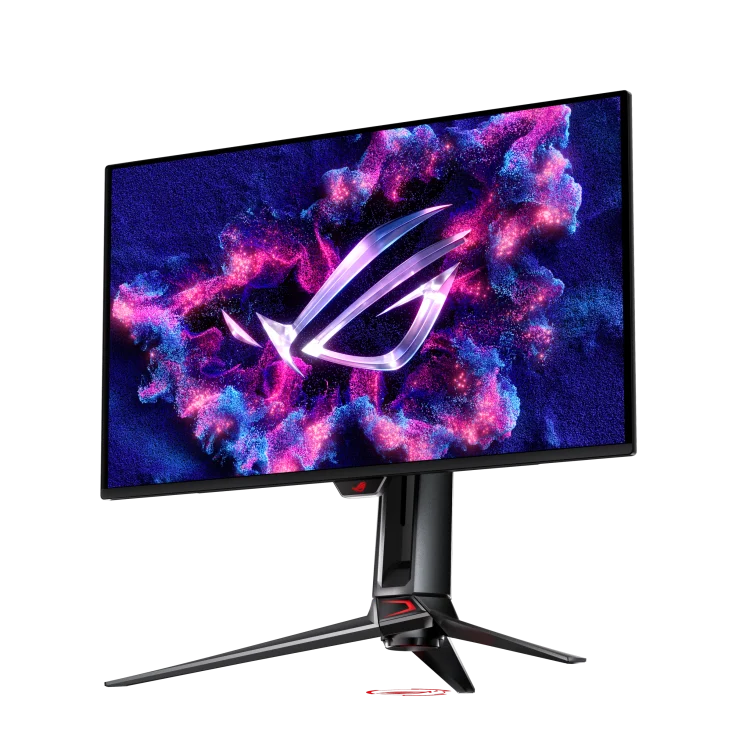
27-inch 4K 240Hz QD-OLED; not PG27UCDP
A fast, sharp OLED for a capable gaming PC. The combination of 4K detail and a 240Hz refresh rate gives this 27-inch OLED its appeal. Driving demanding games at those settings requires a serious GPU. Bright room lighting can weaken perceived blacks, and long stretches of static desktop content still warrant attention to OLED care and warranty terms.
4 published review links
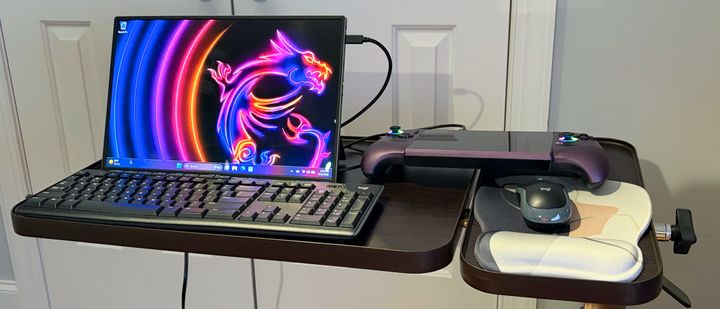
Asus ZenScreen OLED (MQ16FC)
Superb OLED contrast and rich color in an affordable, lightweight portable monitor. The Asus ZenScreen OLED (MQ16FC) is a compelling companion display for traveling creatives, remote professionals, and laptop users who prioritize rich contrast and color fidelity on the go. Its biggest strength is an OLED panel with near-infinite contrast and wide color gamut coverage at a surprisingly accessible price. The chief compromise is modest overall brightness that tops out under 300 nits, alongside a lack of built-in speakers. Compared to IPS rivals like the ViewSonic TD1656-2K that trade deeper blacks for sharper 1600p resolutions and touchscreen support, Asus delivers unbeatable shadow depth and saturation for the money.
1 published review link

AWOL Vision Aetherion Max RGB Laser UST Projector
A reference-class RGB laser UST projector pairing high brightness with class-leading DLP contrast. The AWOL Vision Aetherion Max is ideal for home cinema enthusiasts who want a massive 100- to 200-inch picture capable of handling bright living rooms. Its biggest strength is a rare combination of raw brightness, full Rec.2020 color, and a 7-level iris that produces contrast previously unseen in DLP projectors. The primary catch is its steep $4,499 launch price and occasional automated keystone quirks during setup. Against the cheaper sister model Aetherion Pro, it offers the extra light output needed to battle ambient light, while outpointing rivals like the Hisense PX4-Pro in black-floor control and HDMI 2.1 gaming features.
1 published review link
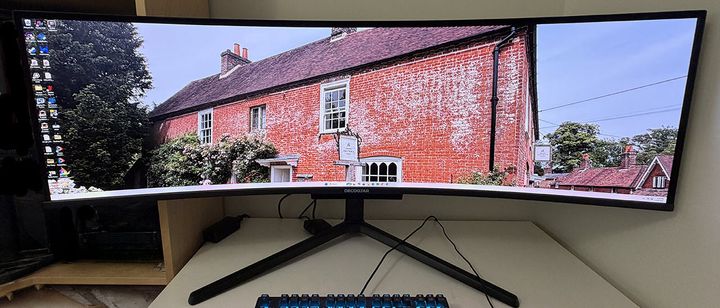
DG49OLED240
A versatile 49-inch QD-OLED ultrawide monitor with rapid 240Hz response and surprisingly capable audio. The Deco Gear DG49OLED240 is an outstanding choice for sim racers, flight enthusiasts, and power multitaskers who want to eliminate the bezel gap of a twin-monitor desk setup. Its greatest strengths are pristine motion clarity at 240Hz, vibrant quantum-dot color coverage exceeding 112% of DCI-P3, and built-in 2.1-channel sound that outclasses most monitor speakers. The primary drawbacks are an unintuitive on-screen display menu and slightly dark factory gamma tracking. Compared to the Samsung Odyssey OLED G9, it matches panel performance and adds more practical 90W USB-C connectivity, often at a lower street price.
1 published review link

Dell UltraSharp 32 4K QD-OLED Monitor U3226Q
1 published review link
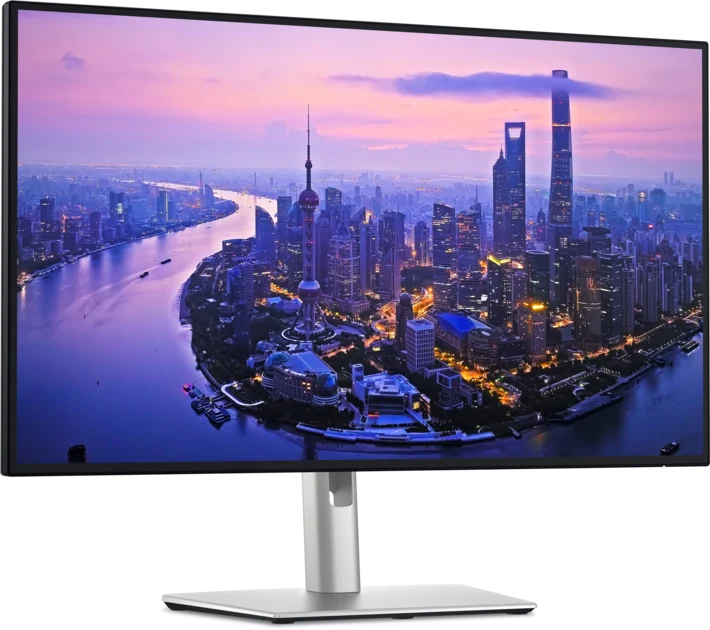
27-inch 4K IPS Black office monitor
A desk upgrade for work, not an HDR showcase. Sharp 4K text, a smoother 120Hz refresh rate and a Thunderbolt hub make this Dell a practical office monitor. It is especially appealing when one screen needs to double as a laptop dock. The limited HDR performance means an OLED makes more sense if games and films are the priority.
2 published review links
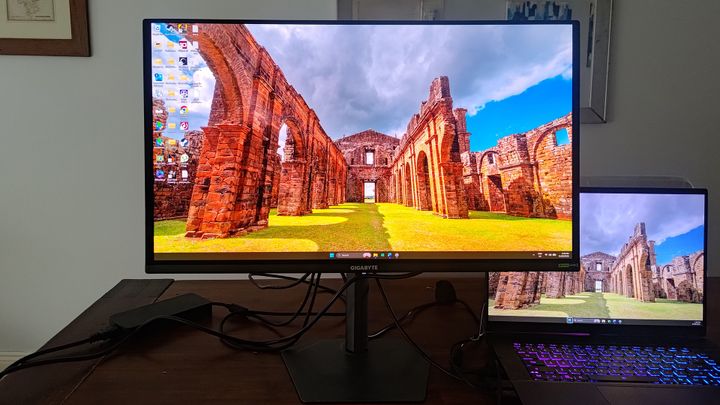
Gigabyte GO27Q24A
A trimmed-down 240Hz QD-OLED monitor that brings exceptional motion and contrast to budget gamers. The Gigabyte GO27Q24A is an appealing choice for competitive and SDR PC gamers seeking OLED motion clarity without spending flagship money. Its biggest strength is pairing a fast 240Hz refresh rate and near-instantaneous 0.03ms response times with rich QD-OLED contrast at an accessible street price. The primary catch is subdued overall brightness, maxing out at roughly 204 nits in SDR and 434 nits in HDR, alongside omitted features like USB-C and built-in USB ports. While higher-end rivals like the Gigabyte MO27Q2A and Dell Alienware AW2725DF offer superior 1000-nit HDR highlights, the GO27Q24A comfortably undercuts them on price.
1 published review link
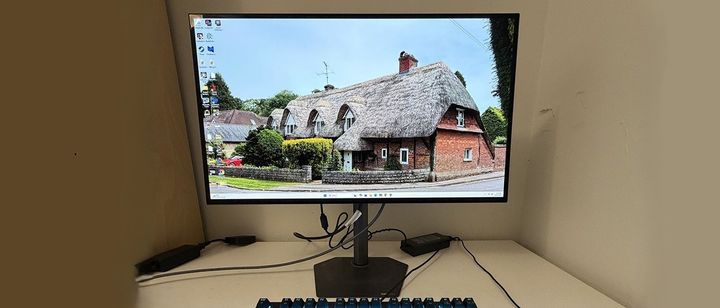
Gigabyte GO27Q24G
An affordable 240Hz WOLED gaming monitor with brilliant contrast and deep blacks, tempered by fringe-prone text. Gamers seeking responsive OLED performance without a flagship price tag should keep the Gigabyte GO27Q24G near the top of their list. Its primary strength is blistering gaming speed and infinite contrast, using an LG MLA+ WOLED panel that preserves genuine ink-black levels even in moderately lit spaces. The catch is that its RWBG subpixel layout and 111 PPI pixel density introduce noticeable fringing around desktop typography, while connectivity excludes a USB hub and meaningful laptop charging. Compared to QD-OLED competitors like the Alienware AW2726DM, it holds up better in daylight without purple tinting, but falls behind in overall color brightness.
1 published review link
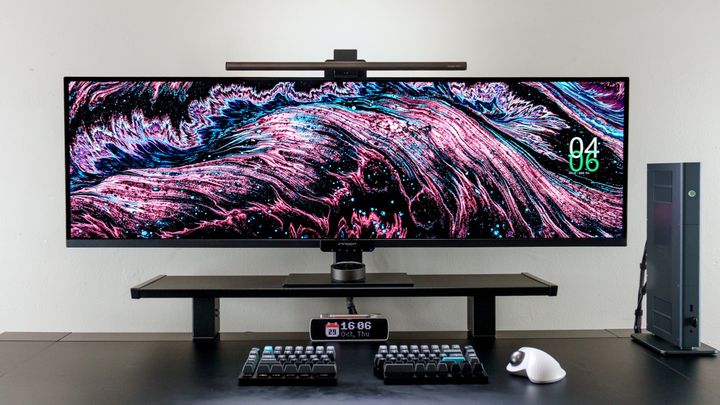
Innocn E49M1R
A rare flat 49-inch super ultrawide with blistering Mini-LED brightness that demands a deep desk. The Innocn E49M1R is tailored for productivity power users, CAD modelers, and video editors who need the seamless workspace of two 27-inch monitors without the distortion of curved screens. Its 1,760 Mini-LED local dimming zones produce deep blacks and searing HDR highlights that rival much more expensive displays. The primary catch is that sitting close to a flat 49-inch VA panel causes noticeable color and contrast washout toward the outer corners. Compared to curved alternatives like the Samsung Odyssey Neo G9, it preserves true straight lines for precise drafting, though it lacks gaming speed and USB-C laptop charging.
2 published review links
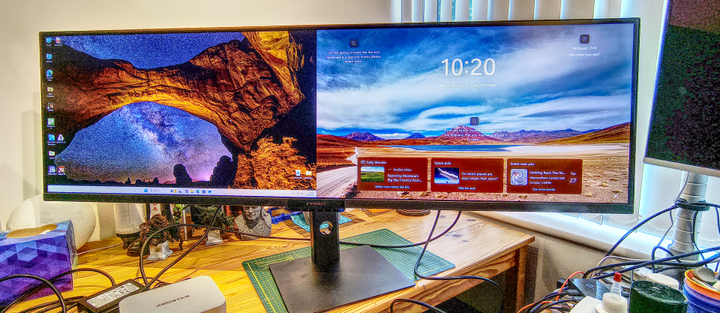
E49M1R
A flat 49-inch Mini-LED ultrawide built for distortion-free precision over gaming immersion. The Innocn E49M1R is tailored for CAD architects, video editors, financial traders, and multitaskers who need the continuous screen real estate of two 27-inch monitors without curved geometric warping. Its 1,760-zone Mini-LED backlight delivers bright SDR performance and deep native 3000:1 VA contrast. However, keeping a 49-inch panel completely flat introduces noticeable brightness and color shifting along the far outer edges from normal seated angles. While curved alternatives like the Samsung Odyssey Neo G9 offer deeper immersion for gaming, the E49M1R stands practically alone for users demanding perfectly straight lines across a massive 32:9 desktop.
1 published review link

KYY X90G Quad Portable Monitor
A sturdy folding multi-screen rig that transforms a laptop into a four-display workstation at the cost of weight. The KYY X90G is designed for mobile analysts, coders, and remote workers who need massive visual real estate without packing multiple individual monitors. Its chief strength is delivering three freestanding 15.6-inch screens on a single alloy chassis that can run off one USB-C connection if power permits. The main drawback is its heft: at nearly 6.5 pounds and over 44 inches wide when deployed, it strains typical laptop bags and small hotel desks. Compared to standard dual-screen extenders like the KYY X90D, it doubles the auxiliary workspace but demands far more power and desk space.
1 published review link
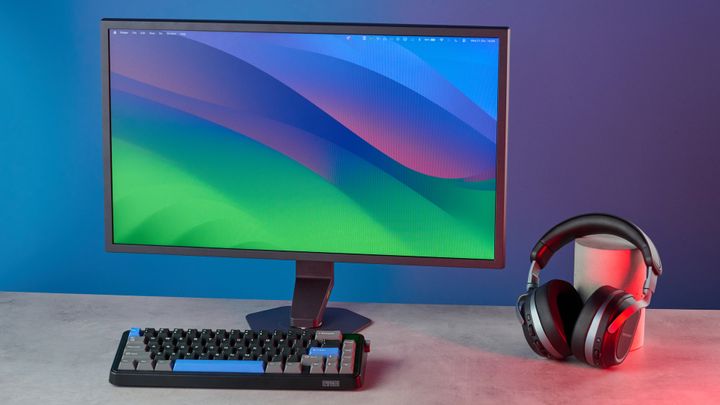
LG UltraGear 25G590B
A historic 1,000Hz refresh rate paired with modest 1080p IPS visuals and a steep price tag. The LG UltraGear 25G590B is engineered specifically for uncompromising competitive esports players who want the lowest input latency and smoothest motion possible without having to drop to lower render resolutions. Its standout strength is delivering a native 1,000Hz refresh rate at 1080p, producing virtually seamless input immediacy when paired with high-end PC hardware. The major catch is that it relies on a standard IPS panel with 1ms response times, 1080p resolution, and poor HDR contrast for a four-figure asking price. Compared to 480Hz OLED rivals like the Sony Inzone M10S or LG's own 27GX790A, it offers higher refresh rates but falls short on contrast, visual fidelity, and pure pixel response speed.
2 published review links
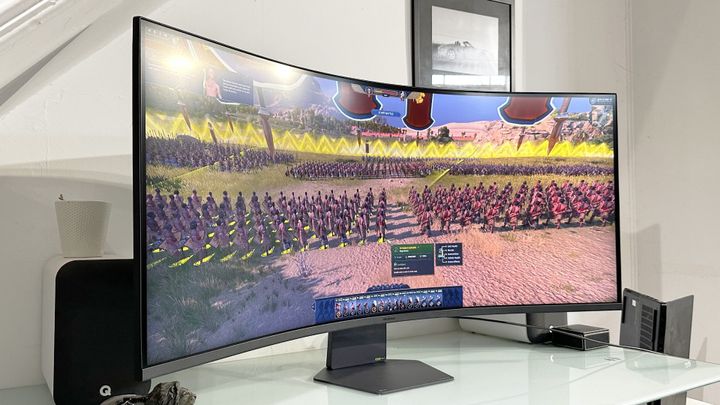
LG UltraGear Evo 52G930B
Massive 52-inch 5K2K curved monitor delivers unmatched immersion but compromises on VA pixel speed and HDR. The LG UltraGear Evo 52G930B is aimed squarely at simulation racers, flight sim fans, and strategy gamers who want an expansive 51.6-inch ultrawide desktop experience without the coarse pixel grid of 1440p displays. Its biggest strength is sheer panoramic immersion, combining 5120x2160 clarity with a wrap-around 1000R curve and a 240Hz refresh rate. Its biggest catch is panel technology: at $1,699 to $1,999, it uses a standard edge-lit VA panel that suffers from sluggish dark-pixel transitions and mediocre HDR. Against rivals like LG's own 45-inch OLED and Samsung's 57-inch Neo G9 Mini LED, the 52G930B provides taller vertical viewing area and zero burn-in risk, but it falls well short of OLED motion clarity and contrast.
1 published review link

MSI MPG 322UR QD-OLED X24
A 4K 240Hz QD-OLED monitor that pairs top-tier picture quality with uncompressed DisplayPort 2.1. The MSI MPG 322UR QD-OLED X24 is designed for enthusiasts seeking an uncompromising desktop display for high-end PC gaming, console play, and color work. Its greatest strength is Samsung's tandem QD-OLED panel paired with full-bandwidth 80 Gbps DisplayPort 2.1a, which allows uncompressed 4K 240Hz output without relying on display stream compression. The primary trade-off is the absence of integrated speakers, alongside an AI presence sensor that can be overly eager out of the box. Compared to rivals like the Asus ROG Swift PG32UCDM, the MSI delivers superior interface bandwidth and better ambient contrast control at a lower launch price.
1 published review link
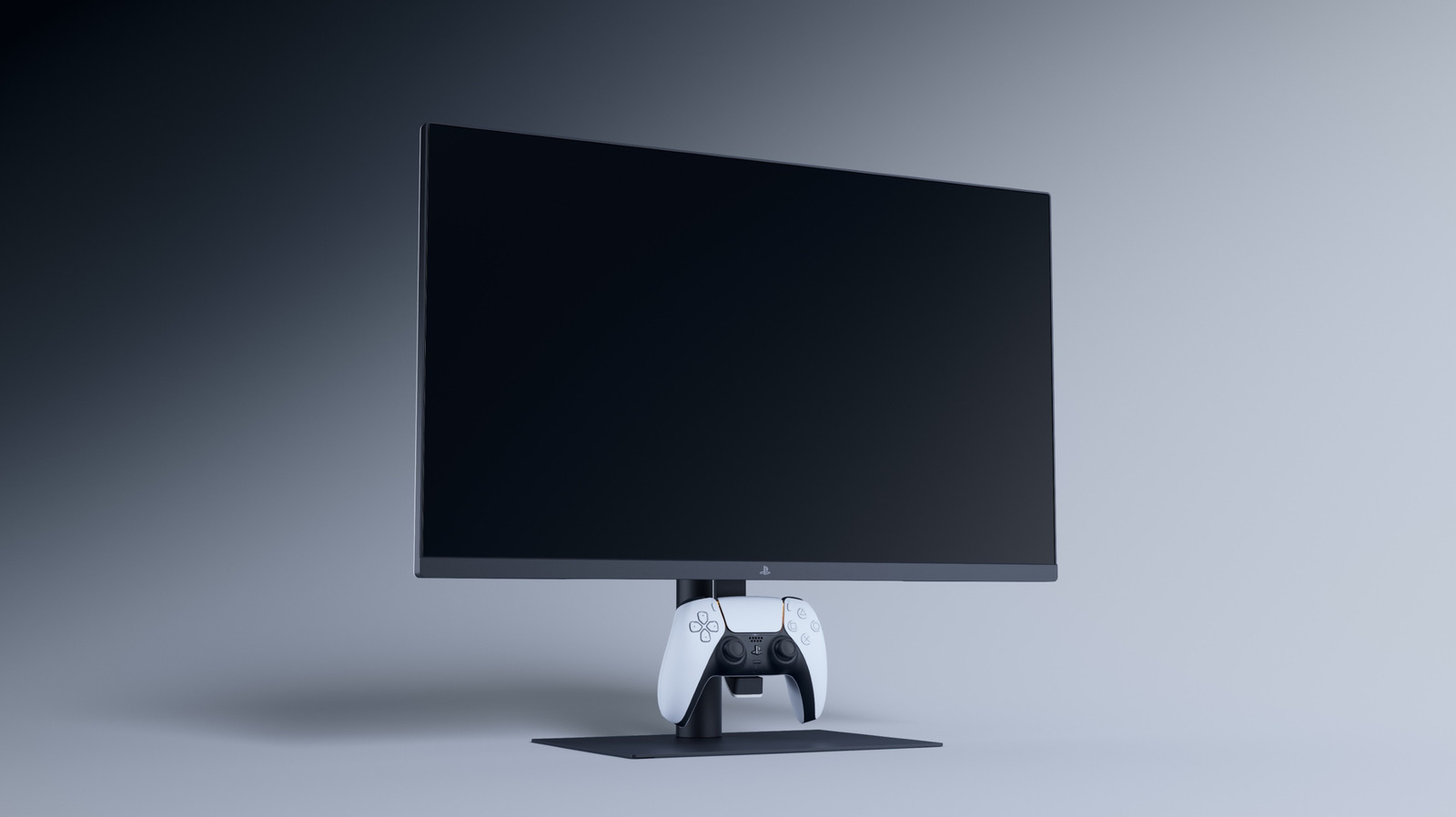
Sony 27-inch Gaming Monitor with DualSense Charging Hook
A capable 1440p gaming monitor with a uniquely convenient DualSense charging hook. The Sony 27-inch Gaming Monitor with DualSense Charging Hook is best suited for console and PC hybrid players who keep a PS5 on their desk and want an all-in-one charging station. Its greatest asset is the convenient swing-down charging dock paired with a speedy 240Hz IPS panel and HDMI 2.1 VRR support. The primary drawback is an ergonomic compromise: the stand cannot tilt, and the display caps out around 350 nits with no local dimming for true HDR highlights. Against general-purpose rivals like the LG UltraGear 27GR83Q-B, you trade stand flexibility for seamless PlayStation Link integration and controller charging.
1 published review link
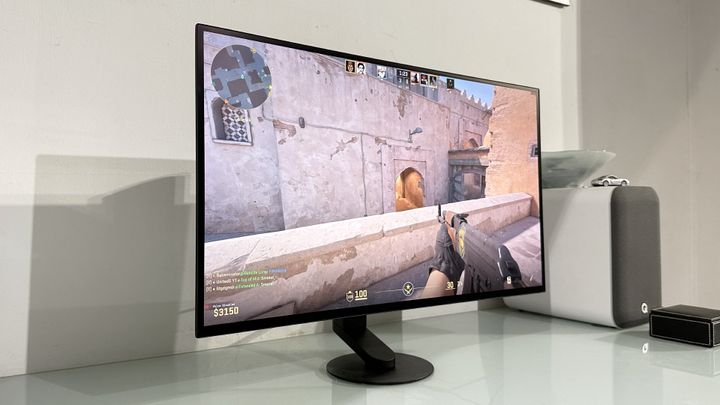
Sony INZONE M10S II
A blisteringly fast 540Hz Tandem OLED built specifically for competitive esports. The Sony INZONE M10S II is tailored for competitive esports players who prioritize frame rates and motion clarity above all else. Its combination of a 540Hz native refresh rate, 0.02ms pixel response times, and an effective anti-reflective coating delivers class-leading responsiveness without the glare typical of glossy displays. The main drawback is its $1,099 price tag alongside the omission of modern USB-C video input. Gamers seeking richer cinematic contrast or higher resolutions will find better value in 32-inch 4K OLEDs, but pure tournament competitors will struggle to find a faster package.
2 published review links
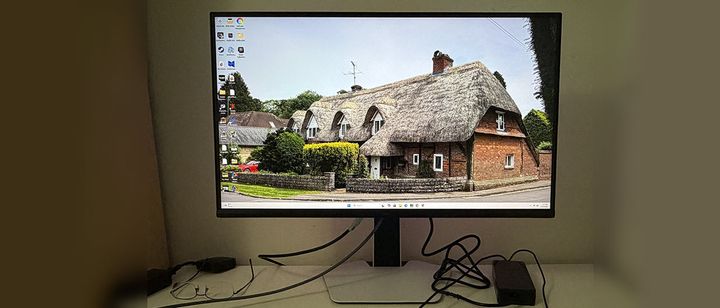
TCL 27C2A Pro
A blisteringly bright 4K Mini LED display divided by plastic build and dimming quirks. The TCL 27C2A Pro is built for gamers who play in sunlit rooms and want searing HDR highlights without the constant anxiety of OLED burn-in. Its 2,304-zone QD-Mini LED backlight delivers exceptional peak brightness and a versatile dual-mode 4K 160Hz or 1080p 320Hz switch. However, reviewers sharply split over its performance: Tom's Hardware praised its contrast and simultaneous strobing with adaptive sync, while IGN criticized its cheap-feeling plastic construction and aggressive local dimming that clips small highlights. If you play mostly in bright environments it is a strong LCD contender, but shoppers in dimmer rooms will get cleaner micro-contrast from similarly priced OLED rivals.
1 published review link

TCL A1s Projector
A portable Google TV projector with effortless setup that falters on contrast, color and gaming latency. The TCL A1s is suited for shoppers who want an all-in-one streaming projector for casual bedroom movie nights and occasional dark-room viewing. Its greatest strengths are seamless Google TV integration with native Netflix support and a smart carry handle that doubles as an adjustable tilt stand. However, the picture lacks punch due to limited brightness, flat contrast, and narrow color saturation. Compared to rivals like the NexiGo PJ40 Pro and XGIMI Elfin series, the A1s provides superior automated alignment tools but trails behind in image depth and gaming responsiveness.
1 published review link
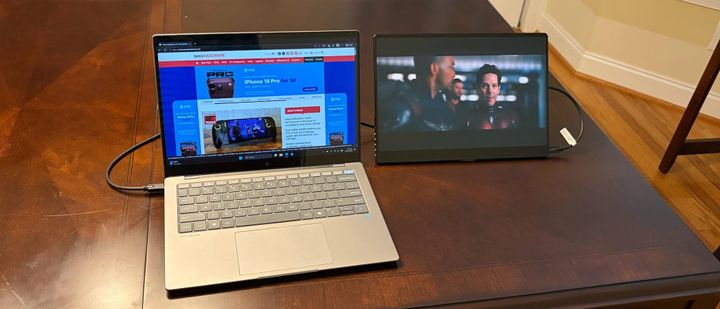
UPERFECT GR14BU
A sharp 3K 120Hz OLED portable monitor that punches well above its price despite minor quirks. The UPERFECT GR14BU is an appealing choice for mobile workers and casual gamers who want deep OLED contrast, wide color, and low motion blur in a portable 14-inch footprint. Its 2880 x 1800 resolution and responsive 10-point touch deliver excellent sharpness and smooth navigation. The primary catch is power delivery: running solely on host USB-C bus power caps brightness at around 140 nits, and the OSD lacks an sRGB clamp to rein in oversaturated desktop colors. Compared to rivals like the Asus ZenScreen OLED MQ16FC, it offers a sharper display, double the refresh rate, and touch support at a lower price point.
2 published review links

Uperfect GR14BU
1 published review link
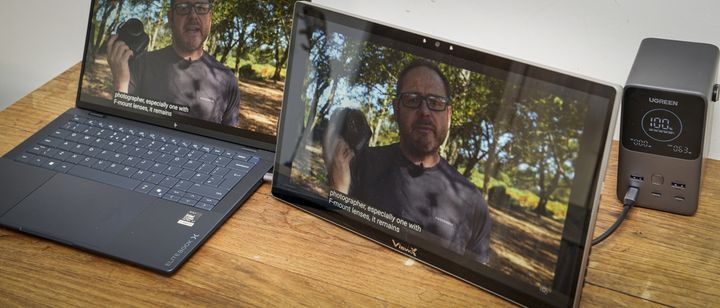
ViewX Liber 15.6-inch monitor
A novel glasses-free 3D portable monitor with sharp 4K 2D viewing, held back by a narrow sweet spot and high price. The ViewX Liber is best suited for tech enthusiasts and spatial media creators who want portable, glasses-free stereoscopic viewing without wearing a headset. Its standout feature is an onboard AI processor that converts 2D media and handles eye tracking without overburdening the host computer. However, the 3D experience requires sitting within a strict 40-degree sweet spot, and moving off-axis causes noticeable flickering and ghosting. Compared to rivals like Acer's SpatialLabs View, the Liber eases host PC requirements but remains an expensive early-adopter display with basic sRGB color coverage.
1 published review link
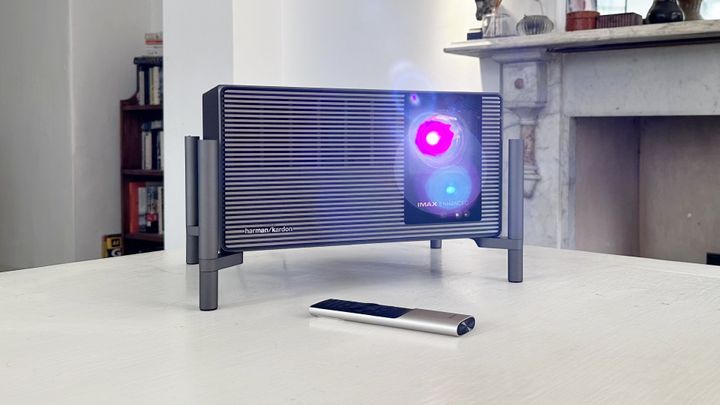
Xgimi Titan Noir Max
An extraordinarily bright 4K laser projector with class-leading contrast that stumbles on 4K VRR gaming. The Xgimi Titan Noir Max is aimed squarely at home theater enthusiasts seeking huge, theater-grade projection with deep black levels and massive light output. Its crowning achievement is pairing an RGB triple-laser engine capable of roughly 5,000 sustained lumens with a mechanical dual-iris system that pushes native contrast close to 10,000:1. The major drawback is its $5,999 launch price and a frustrating firmware behavior that downscales the image to 1080p when variable refresh rate is enabled at 4K. Compared with lifestyle beamers and Xgimi's own Horizon series, the Titan Noir Max produces noticeably punchier highlights and cleaner dark scenes, but you need an external streamer and an appropriate room to make it worthwhile.
1 published review link


Amazon Ember 4-Series with Fire TV
1 published review link
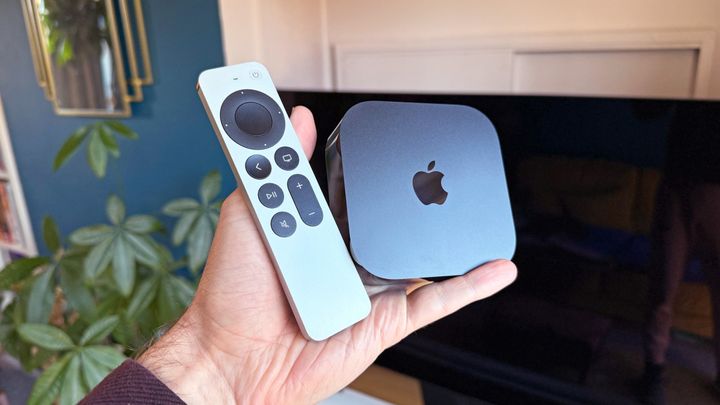
Apple TV 4K (4th Gen)
Reference-grade streaming performance held back by a steep price hike. Buy the Apple TV 4K (4th Gen) if you want the cleanest, ad-free TV operating system, class-leading upscaling, and seamless integration with Apple hardware. Its biggest strengths are reference-level picture processing, snappy navigation powered by the A19 chip, and a new Find My remote with an onboard speaker. The primary catch is the steep $299 launch price, which more than doubles the cost of its predecessor. Compared to rivals like the Google TV Streamer and Amazon Fire TV Cube, it delivers far superior AV refinement and privacy, but at more than twice the price.
4 published review links
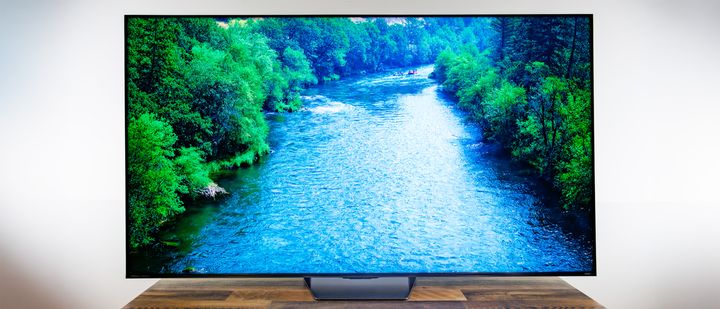
75-inch
An exceptionally bright RGB Mini-LED display with vibrant colors held back by out-of-the-box accuracy. The Hisense 75UR8SG is best suited for shoppers looking for an expansive, bright living-room screen for daytime TV, movies, and high-refresh-rate gaming. Its primary strength is the direct RGB Mini-LED backlight, which delivers remarkable color volume and luminous HDR highlights. The main catch is mediocre factory color tuning and black levels that trail traditional Mini-LED benchmarks like the TCL QM8L. While not quite an OLED killer in dark rooms, it remains a compelling, feature-rich screen when purchased at its typical sale price.
1 published review link

Hisense UR8 RGB MiniLED TV
A dazzling RGB Mini-LED display with massive brightness that trades away ultimate black level depth. The Hisense UR8 is a compelling option for living rooms that get plenty of daylight and for gamers seeking ultra-high refresh rates. Its RGB Mini-LED backlight pushes brightness past 3,500 nits and delivers vivid colors without any risk of OLED burn-in. The tradeoff is in dark-room contrast, where reviewers found noticeable blooming and black levels that trail dedicated OLEDs and top-tier conventional Mini-LED sets like the TCL QM8. Shoppers choosing between this and an LG OLED will get far more room-filling brightness here, but sacrifice perfect viewing angles and ink-like shadows.
1 published review link
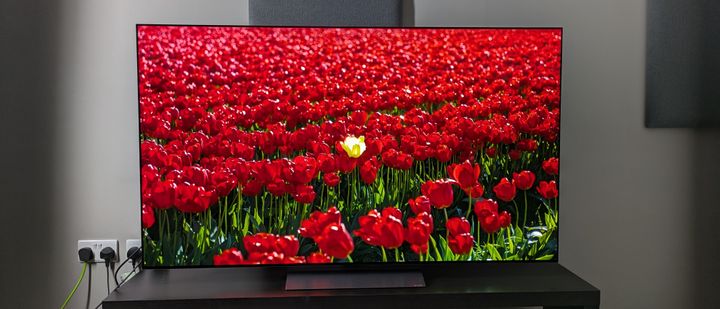
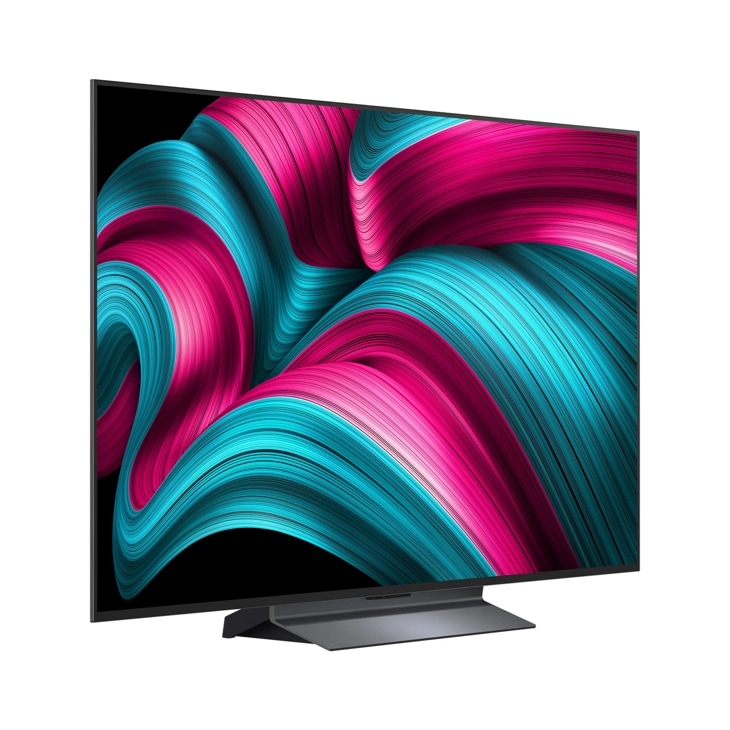
2025 55-inch C5; reviews include 65-inch samples
An older OLED worth buying for the saving. The 55-inch C5 remains appealing for dark-room films and gaming, with OLED contrast and a useful set of HDMI gaming features. Its case against a newer C6 depends on the discount. Think carefully about reflections in a bright room, and confirm the exact screen size rather than borrowing conclusions from a different panel.
3 published review links
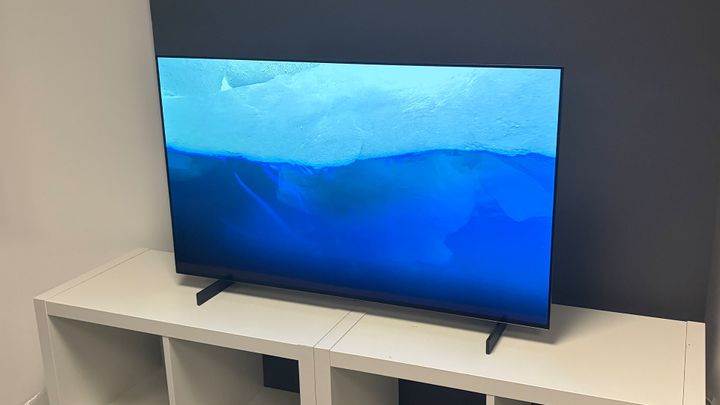
OLED42C6
A superb compact OLED that doubles as an elite gaming display, tempered only by modest brightness gains. The LG C6 42-inch is ideal for PC gamers and movie enthusiasts who want reference-grade contrast in a compact footprint suitable for a desk or smaller room. Its standout strength is exceptional picture processing powered by the Alpha 11 AI Gen 3 processor, paired with four full-bandwidth HDMI 2.1 ports and a 165Hz refresh rate. The biggest compromise is that the 42-inch model misses out on the Tandem OLED panel and Brightness Booster technology found on larger sizes, alongside thin built-in speakers. Compared to the outgoing LG C5 42-inch, improvements are subtle, making a discounted predecessor the stronger pure-value choice if available.
1 published review link
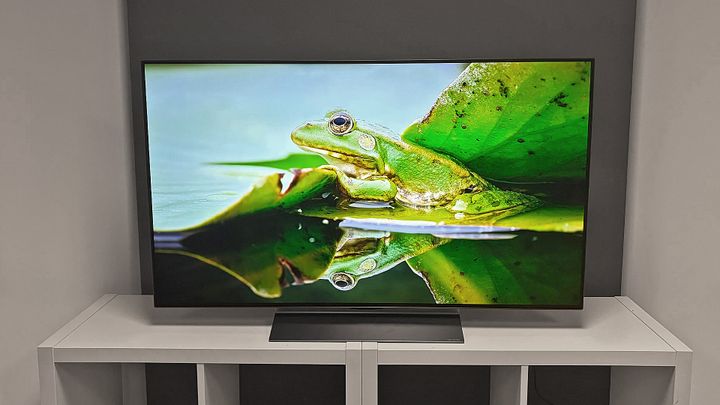
OLED48C6
A versatile compact OLED that pairs punchy tandem brightness with stellar gaming chops. The 48-inch LG C6 is an outstanding choice for anyone seeking a premium display for a compact living space, bedroom cinema, or an immersive desk setup. Its biggest asset is the jump to an RGB Tandem OLED panel driven by the Alpha 11 AI Gen 3 processor, delivering exceptional full-array contrast, richer color volume, and far higher specular highlights than previous generations. The primary catch for desk users is its low 92 ppi pixel density, which leaves fine text softer than on 32-inch 4K monitors, alongside occasional VRR flicker in dark gaming sequences. Against dedicated desktop rivals like the Asus ROG Swift PG32UCDM Gen3, it sacrifices DisplayPort and higher refresh rates in exchange for a vastly larger screen, integrated smart TV streaming, and superior HDR brightness.
1 published review link
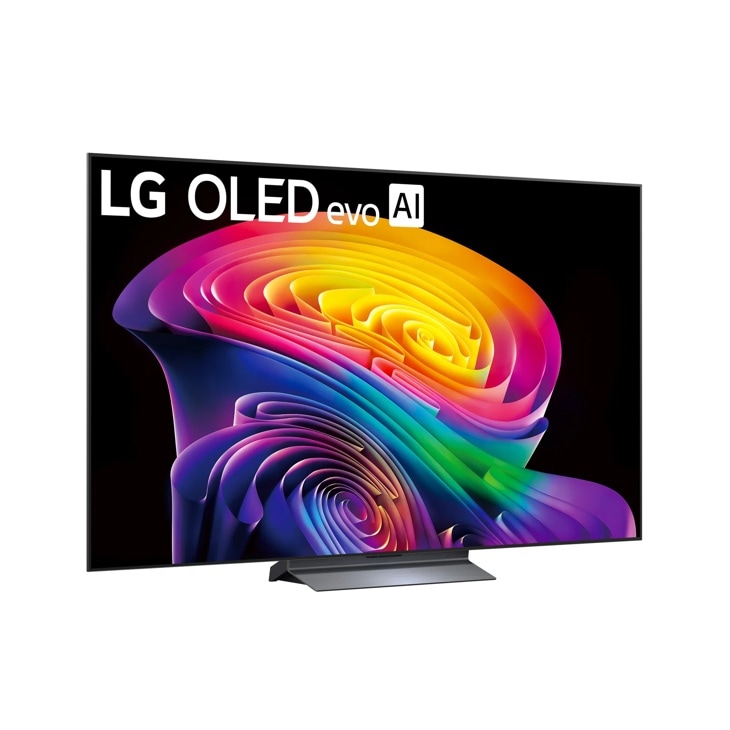
2026 OLED65C6PUA; not the larger C6H panel
Compare a discounted C5 before paying for the newer processing, and judge bright-room reflections in the room where it will live.
6 published review links

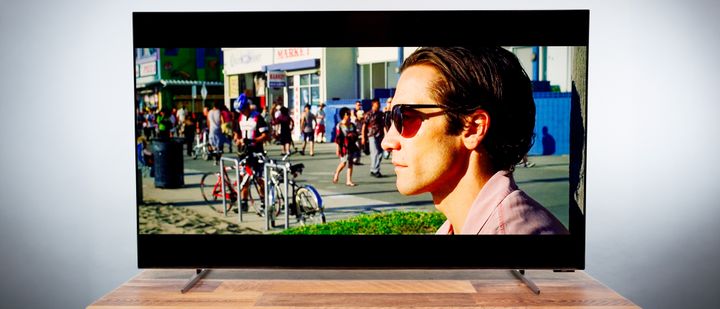
65-inch model
A responsive, wallet-friendly 120Hz OLED whose modest HDR brightness suits dim living rooms best. The 65-inch Roku Pro Series OLED is built for budget-conscious cinephiles and console gamers who want authentic OLED contrast without paying typical OLED premiums. Its biggest asset is responsiveness paired with infinite black levels, achieving class-leading gaming latency in lab tests. The notable catch is limited HDR peak brightness, which leaves specular highlights dimmer than on higher-end sets. It undercuts rivals like the LG B6 on list price, though LG offers slightly punchier HDR highlights and a more dedicated gaming dashboard.
3 published review links
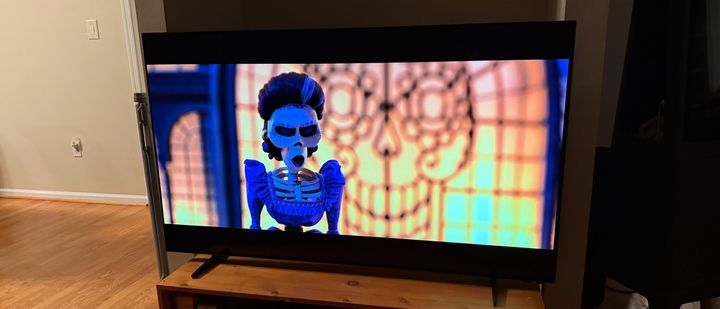
65-inch
An aggressively priced 120Hz OLED TV boasting record-breaking gaming latency, balanced by modest peak brightness. The 65-inch Roku Pro Series OLED is an appealing entry point for movie fans and console gamers seeking true OLED black levels and responsive performance on a strict budget. Its standout asset is speed: PCMag measured an ultra-fast 8.8 ms input lag at 4K/60Hz, making it the most responsive TV the outlet has benchmarked. The primary compromise is panel luminance, as peak HDR brightness tops out between 574 and 639 nits in lab tests, meaning it cannot combat glare in sun-drenched rooms like premium OLEDs or mini-LEDs. While an LG C-series set delivers brighter highlights and broader processing controls, Roku delivers remarkable contrast and gaming performance per dollar.
2 published review links
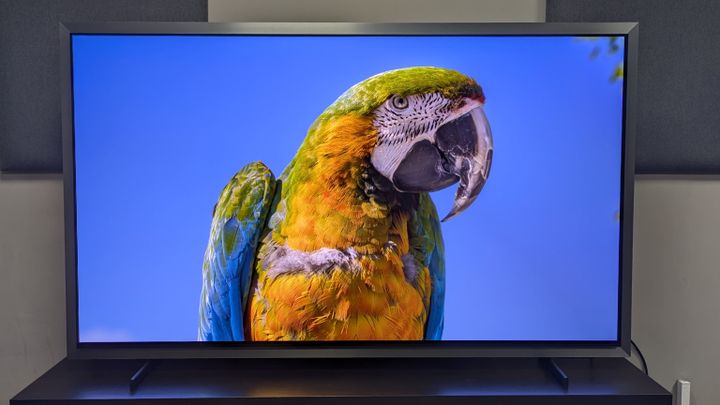
65-inch model I tested
Class-leading brightness and elite gaming speed define Samsung's flagship OLED, despite a polarizing new frame. The Samsung S95H is an exceptional flagship television designed for home theater enthusiasts and demanding gamers who want OLED contrast without sacrificing bright-room performance. Its standout strength is its blistering QD-OLED brightness, which pairs with an effective Glare Free matte screen to disperse daytime reflections far better than glossy panels. The primary compromises remain Samsung's persistent lack of Dolby Vision support and a thicker, artsy frame design that eliminates the previously included One Connect box. Compared with its chief rival, the LG G6, the S95H delivers higher color volume and superior daylight reflection diffusion, though the LG retains Dolby Vision and maintains deeper perceived black levels under direct ambient light.
2 published review links
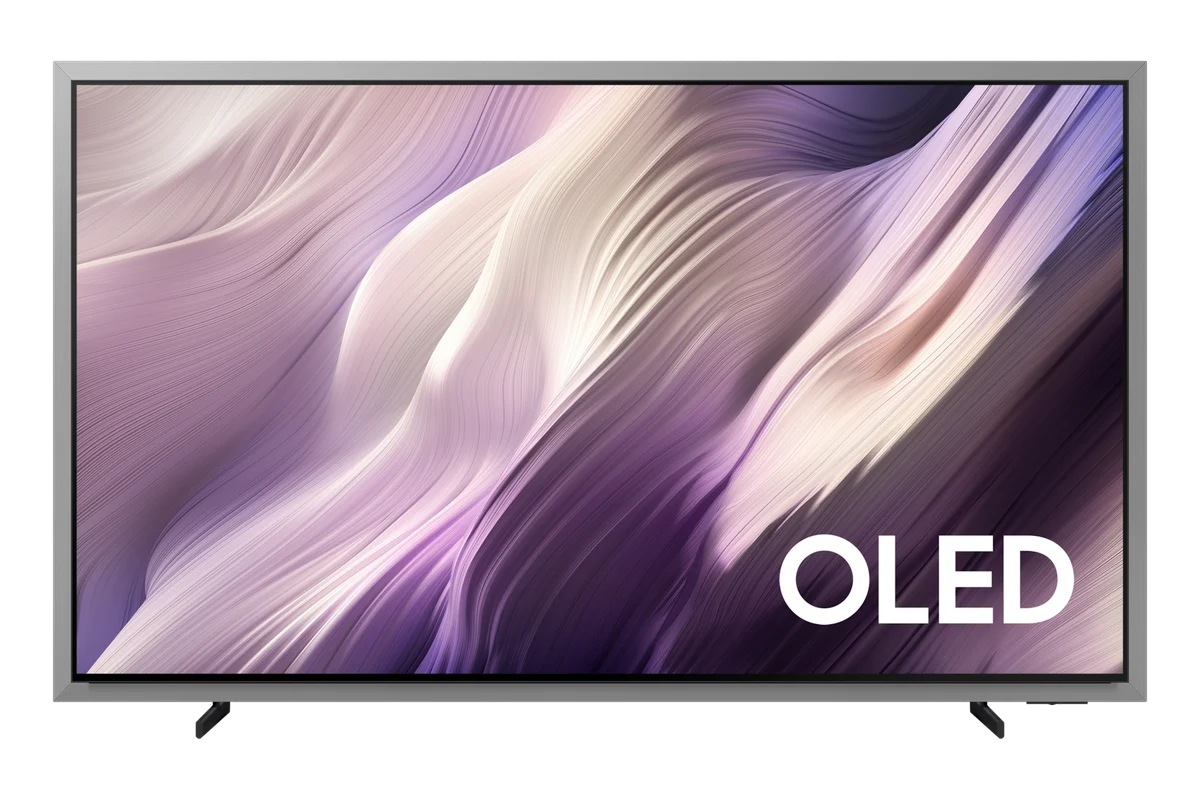
2026 QN77S95HAFXZA; 77-inch RTINGS test sample
LG is the alternative if Dolby Vision matters. Panel technology can vary across a TV range; these findings apply to the tested 77-inch model.
3 published review links

OQ65A3K8HG-UK
An outdoor 4K TV with 2,000-nit brightness and 120Hz gaming that holds up in direct daylight. The Sylvox Cinema Helio QLED (OQ65A3K8HG) is built for homeowners who want daytime patio movie screenings and outdoor console gaming without contending with washed-out screens. Its primary strength is an ultra-bright 2,000-nit panel paired with native 120Hz refresh rates, HDMI 2.1 inputs, and input lag measured under 8 milliseconds. The main compromises are an audible internal cooling fan measured at 32 dB, the lack of an included stand, and black levels that lose depth when struck by direct sun. However, it undercuts rival full-sun sets like Samsung's The Terrace by thousands of dollars while adding Dolby Vision and Google TV.
1 published review link

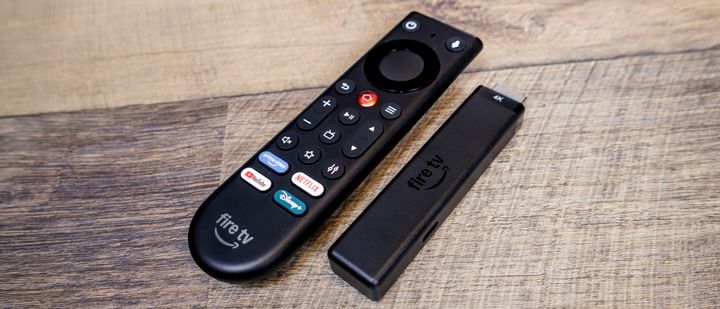
Amazon Fire TV Stick 4K
A snappy, outlet-free 4K streamer hindered by the loss of Dolby Vision and sideloading. The Amazon Fire TV Stick 4K is an appealing choice for viewers wanting to revive a sluggish smart TV without spending much money or monopolizing an electrical outlet. Its primary strength is the responsive Vega OS, which speeds up navigation while drawing power directly from a TV USB port. The biggest drawback is the omission of Dolby Vision and the end of Android app sideloading. Shoppers looking for full dynamic HDR support will find better picture fidelity in the Roku Streaming Stick 4K+ or Fire TV Stick 4K Max.
1 published review link
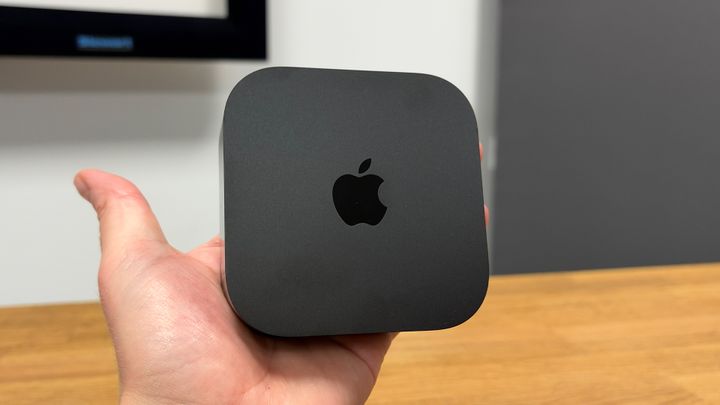
128GB of storage
Unrivalled video processing and polish paired with a jarring $299 price tag. The 2026 Apple TV 4K is built for home cinema enthusiasts and dedicated Apple users who want superior video upscaling, snappy A19 navigation, and a completely ad-free home screen. Its biggest strengths are class-leading picture processing, Wi-Fi 7 connectivity, and a redesigned Siri Remote with Find My Precision Finding. The central drawback is its $299 launch price, which more than doubles the entry cost of its predecessor. While rivals like the $100 Roku Ultra deliver far better everyday value for casual streaming, Apple's box remains the most capable premium player on the market.
3 published review links

Eufy E21 Baby Monitor
Sharp 4K video and hybrid connectivity without a monthly subscription fee. The Eufy E21 is an ideal choice for parents seeking exceptional visual clarity and the flexibility of both a dedicated handheld screen and a smartphone app. Its biggest strength is its sharp 4K sensor and hybrid connectivity, which lets you monitor locally via secure radio frequency or remotely over Wi-Fi without paying a recurring subscription fee. The primary drawback is its bulky, top-heavy camera body, which makes the included crib mount clamp tricky to stabilize securely. Compared to subscription-heavy rivals like the Nanit Pro, the E21 delivers comparable video fidelity and versatile local-or-cloud viewing while eliminating long-term ownership costs.
1 published review link

Silver 100 8G
A three-way standmount speaker delivering floorstander bass and clarity, but demanding on room space and power. The Monitor Audio Silver 100 8G is best suited for listeners who want the low-end authority and scale of a floorstanding speaker without giving up standmount placement flexibility. Its biggest strength is its true three-way acoustic design, pairing an 8-inch woofer with a dedicated midrange driver to produce articulate vocals and tight, deep bass. The primary catch is its demanding physical footprint and load; at 12.1 kg and 354 mm deep, it requires robust stands, clearance from back walls, and an amplifier comfortable delivering power into 4 ohms. Compared to rivals like the KEF R3 Meta, the Silver 100 8G offers punchier low-end impact and dynamic slam, though the KEF creates a slightly wider, more forgiving soundstage.
1 published review link

Vodafone TV
A slick Freely 4K streamer and Sky rival held back by cloud gaming lag and contract lock-in. The Vodafone TV streaming box is an appealing choice for existing Vodafone mobile or broadband subscribers looking for an all-in-one entertainment hub with Freely live streaming, catch-up apps, and bundled Netflix and HBO Max. Its biggest asset is seamless broadband-delivered live television in crisp 4K with Dolby Vision and Dolby Atmos, which eliminates the need for an aerial or dish. The primary catch is that you must lock into a 24-month plan with annual price hikes, and its built-in cloud gaming suffers from latency. Compared to Sky Stream, it offers better bundled streaming value on mid-tier plans, though Sky delivers a more unified guide and flexible rolling terms.
1 published review link
Reviews, comparisons and hands-on reports from tech publishers.