Monitors & TVs / Review roundup
Roku Pro Series OLED TV
65-inch
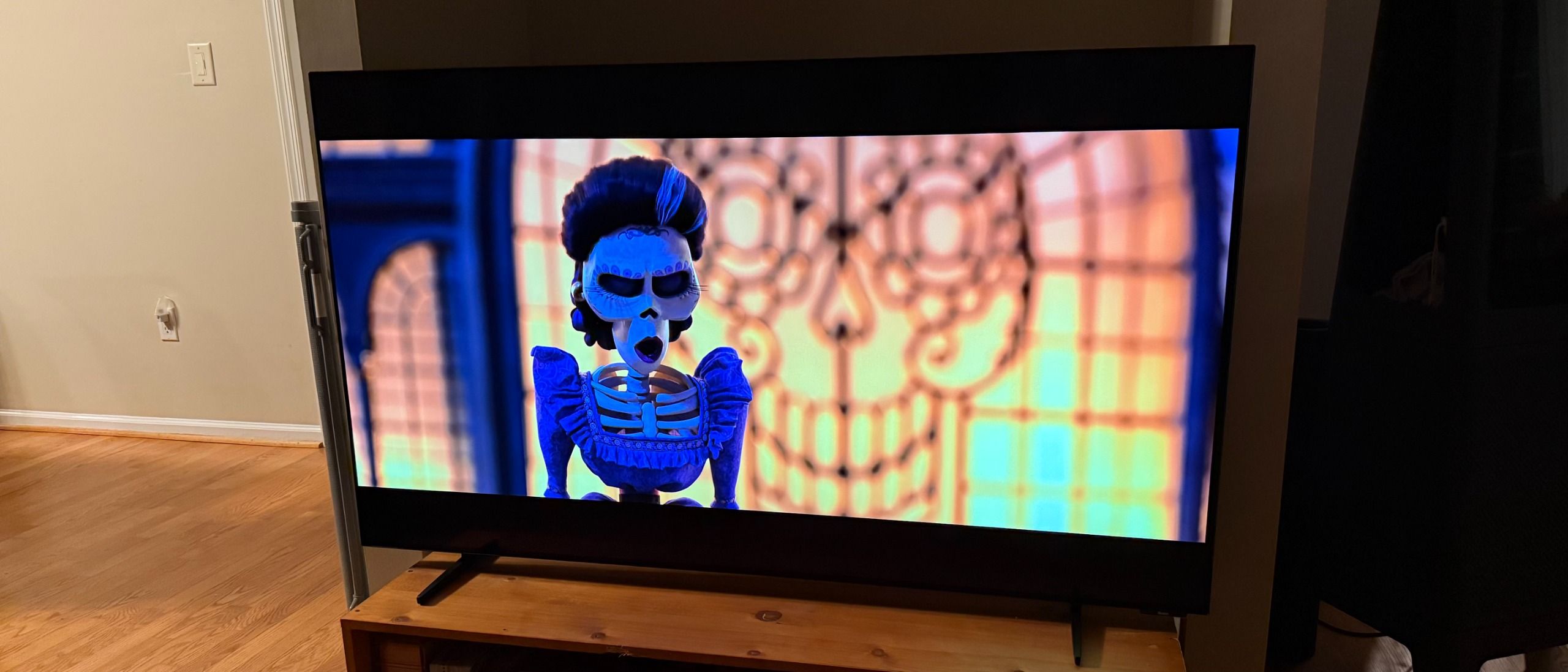
- 4.0/5PCMag
An aggressively priced 120Hz OLED TV boasting record-breaking gaming latency, balanced by modest peak brightness.
The 65-inch Roku Pro Series OLED is an appealing entry point for movie fans and console gamers seeking true OLED black levels and responsive performance on a strict budget. Its standout asset is speed: PCMag measured an ultra-fast 8.8 ms input lag at 4K/60Hz, making it the most responsive TV the outlet has benchmarked. The primary compromise is panel luminance, as peak HDR brightness tops out between 574 and 639 nits in lab tests, meaning it cannot combat glare in sun-drenched rooms like premium OLEDs or mini-LEDs. While an LG C-series set delivers brighter highlights and broader processing controls, Roku delivers remarkable contrast and gaming performance per dollar.
Buy it if
- Gamers wanting ultra-low latency and native 120Hz 4K performance on a budget
- Dark-room cinema watching with perfect per-pixel black levels and zero haloing
- Shoppers who prefer an uncluttered, responsive smart TV platform
Skip it if
- Bright living rooms with direct sunlight or prominent windows
- Viewers expecting punchy specular HDR highlights above 1,000 nits
- Buyers planning to rely strictly on built-in speakers without an external soundbar
Where to buy
We may earn a commission from purchases or qualifying sign-ups through our links. Affiliate links explained
What reviewers liked
- Infinite contrast with pixel-level control and zero backlight blooming
- Class-leading low gaming input lag (8.8 ms at 4K60 and 4.8 ms at 1080p120)
- Clean, intuitive Roku OS platform with broad streaming app support
- Tool-free, height-adjustable stand designed to fit soundbars cleanly
- Backlit remote featuring a physical lost-remote finder button
What they didn’t
- Peak HDR brightness tops out around 574 to 639 nits, well below mid-tier OLED rivals
- Screen reflections can wash out dark scenes in brightly illuminated spaces
- Only two of the four HDMI ports support full HDMI 2.1 bandwidth for 4K/120Hz
- Thinner design eliminates the side-firing soundstage drivers found on the Mini-LED Pro
Key specs
- Launch price
- $1,199.99 for 65-inch ($999.99 for 55-inch)
- Reported price
- $999.99 (frequently discounted to $799.99 during major retail sales)
- Screen size
- 65 inches (also available in 55 inches)
- Display type
- 4K WOLED (3,840 x 2,160)
- Refresh rate
- 120Hz native
- HDR formats
- Dolby Vision, HDR10+, HDR10, HLG
- Peak HDR brightness
- 574 to 639 nits (10% window)
- Input lag
- 8.8 ms at 4K/60Hz, 4.8 ms at 1080p/120Hz
- Variable refresh rate
- AMD FreeSync Premium, HDMI VRR, ALLM
- HDMI inputs
- 4 (2x HDMI 2.1 up to 4K/120Hz, 1x eARC)
- Smart TV system
- Roku OS with Roku Smart Picture Max
- Remote
- Roku Voice Remote with backlighting and remote finder
In depth
Picture quality: brightness, contrast, colour
Because it relies on self-emissive OLED technology, the Pro Series delivers infinite contrast, true blacks, and zero light bleed or haloing around bright objects. Out-of-the-box color accuracy is also a highlight: Tom's Guide measured an accurate Delta-E of 2.3 and 70.7% coverage of the Rec. 2020 color space, while PCMag highlighted rich, natural tones across nature documentaries and films. However, full-field luminance remains modest. Tom's Guide measured 331 nits in a 10% SDR window, and PCMag noted full-screen luminance settles near 496 nits. While it looks exceptional in dim or dark rooms, it lacks the overall punch needed to cut through heavily lit spaces.
Motion, refresh rate and gaming features
Gaming responsiveness is where the Pro Series OLED truly excels. The set features a 120Hz native panel with support for Auto Low Latency Mode (ALLM), HDMI Variable Refresh Rate (VRR), and AMD FreeSync Premium. In PCMag lab evaluations, the display clocked an input lag of just 8.8 ms with a 4K 60Hz signal and 4.8 ms at 1080p 120Hz. That broke the publication's previous record for television input lag, beating out premium flagships. Combined with the instant response times native to OLED pixels, motion is fluid and free of visible smearing.
HDR performance
Roku supports the full sweep of high dynamic range formats on this panel, including Dolby Vision, HDR10+, HDR10, and HLG, supplemented by automated scene-by-scene adjustments via Roku Smart Picture Max. Despite wide format support, peak luminance is capped relative to competitors. Tom's Guide recorded peak HDR brightness of 574 nits in a 10% window using HDR Dark mode, while PCMag measured up to 639 nits. By comparison, midrange OLEDs like the LG C6 reach 1,365 nits and Samsung's S90H hits 1,497 nits in the same tests. Specular highlights like torches or neon signs look crisp against inky backgrounds, but they do not deliver the dazzling peak luminance found on costlier sets.
Design, stand and ports
The Pro Series OLED adopts an ultra-slim chassis with minimal borders and sleek metal trim. It comes with a tool-free tabletop stand that can be adjusted in height to clear most soundbars, accompanied by built-in velcro straps for tidy cable routing. Physical connectivity includes four HDMI ports (two support full 4K 120Hz bandwidth and one handles eARC), USB-C, USB-A, digital optical audio out, and an Ethernet jack. A notable compromise highlighted by TechRadar and CNET is audio: the razor-thin panel meant Roku had to drop the side-firing soundstage speakers present on the Mini-LED Pro Series, resulting in somewhat thin onboard sound that benefits from a dedicated soundbar.
Viewing angles, reflections and burn-in risk
Off-axis viewing is practically pristine; colors and black levels maintain their integrity even when sitting well away from the center of the sofa. Reflection handling is functional, but Tom's Guide noted the screen filter is more reflective than the anti-glare coatings found on premium competitors, meaning light fixtures opposite the TV can create visible glare in dark movie scenes. As with all OLED displays, permanent image retention remains a potential long-term consideration with static content, though the TV includes automated pixel maintenance cycles and Roku's Backdrops artwork screensaver to minimize wear.
Price and value
Launching at $1,199.99 for the 65-inch version (and $999.99 for the 55-inch), the Pro Series OLED was engineered to lower the price barrier to OLED ownership. TechRadar and PCMag both observed that aggressive retail discounts frequently lower the 65-inch price to $999, and promotional sales have pushed it as low as $799.99. At that discounted level, reviewers agree it offers unusual value for buyers seeking true OLED contrast and top-tier console gaming speed without paying a premium.
Is it worth the money?
The 65-inch model enters the market hundreds below typical OLED introductory prices, and promotional discounts under $1,000 make it one of the most affordable ways to obtain a 120Hz OLED screen.
Also consider
- LG B-Series OLED (B4 / B6)
Provides four full HDMI 2.1 ports and slightly higher peak HDR luminance, though often costs more outside of major clearance sales.
- Roku Pro Series Mini-LED (2025)
Delivers dramatically brighter HDR performance for sunlit living rooms and fuller built-in audio, but trades away OLED's perfect black levels.
- Hisense U6SF Pro / U7
Affordable Mini-LED alternatives that produce significantly higher full-field brightness for daylight viewing, though with slight backlight blooming.
Reviews we read
This roundup summarizes professional reviews and published specifications; Next Interrupt did not test the product. Roundup updated October 22, 2026. How we work
- TechRadar — Roku Pro Series OLED TV review: an affordable way to OLED
- WIRED — Roku Pro Series OLED TV Review (2026)
- PCMag — Roku 65-Inch Pro Series OLED TV Review: Breakthrough OLED Pricing, Top-Tier Gaming Speed