 Watch on YouTube ↗
RTINGS Home Theater ·
Monitors & TVs / Review roundup
2026 QN77S95HAFXZA; 77-inch RTINGS test sample
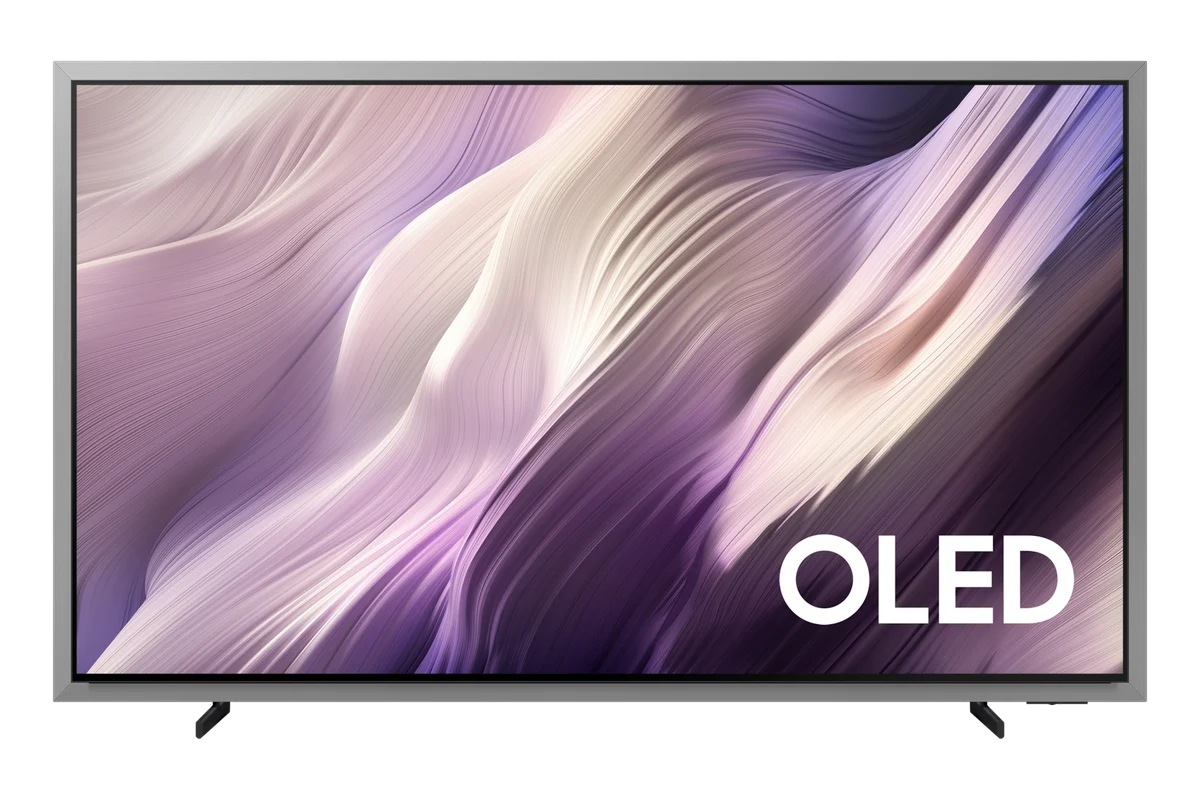
The 77-inch Samsung S95H is best suited to high-end home cinema owners and serious PC gamers who want top-tier color volume, up to 165Hz refresh rates, and a clean picture-frame wall mount. Its greatest strength is outstanding peak brightness paired with an effective matte anti-reflective treatment that diffuses direct specular glare. The main drawback remains Samsung's ongoing lack of Dolby Vision support and black levels that lift when ambient room light hits the QD-OLED panel. Compared to LG's flagship G-series, the S95H offers higher gaming refresh rates and richer color saturation, but LG models maintain deeper perceived blacks in bright rooms and support Dolby Vision.
We may earn a commission from purchases or qualifying sign-ups through our links. Affiliate links explained
The 77-inch S95H relies on Samsung's latest QD-OLED panel, driven by the NQ4 AI Gen3 processor. RTINGS recorded perfect black levels and infinite contrast in dark rooms, noting the absence of any blooming or haloing around intense bright highlights. Smart Home Sounds and SamMobile observed that color reproduction is where the QD-OLED panel separates itself, producing vibrant, deeply saturated reds and greens that maintain richness even at high luminance levels. CNET noted that while the S95H provides impactful brightness and rich saturation, rival LG models maintain slightly more balanced shadow detail out of the box.
Samsung equips the S95H with OLED HDR Pro processing, producing specular highlights that stand out sharply against pitch-black backgrounds. The quantum dot layer preserves high color brightness in HDR scenes, preventing bright fire, neon, and sunlit elements from washing out toward white. Smart Home Sounds observed improvements in fine HDR gradation and depth compared to previous models. The principal catch remains Samsung's ongoing absence of Dolby Vision; all Dolby Vision streams and physical discs fall back to base HDR10 or HDR10+, leaving tone mapping entirely to the TV's internal algorithm.
Gaming is one of the strongest areas of performance on the S95H. PCMag and RTINGS noted that all four onboard HDMI ports support the full HDMI 2.1 standard at up to 4K at 165Hz, accommodating top-tier gaming PCs as well as 120Hz console output from the PlayStation 5 and Xbox Series X. Input lag measures exceptionally low in Game Mode, and the OLED panel delivers near-instantaneous pixel response times to virtually eliminate trailing blur. The TV includes VRR, AMD FreeSync Premium Pro, and Samsung's Game Bar overlay to quickly manage frame rates and display aspect ratios on the fly.
Samsung shifted the S95H to what it terms FloatLayer design, framing the display in a clean, beveled metal border intended to mount flush against the wall like a picture frame. This model is also integrated with the Samsung Art Store, letting owners display museum artwork when the panel is idle. CNET found that while the gallery appearance is sleek, managing art mode manually is less seamless than on dedicated Frame hardware. For connectivity, four HDMI 2.1 ports sit directly on the chassis, with support for an optional wireless One Connect breakout box to streamline wall installations.
Off-axis viewing is practically flawless; RTINGS found colors and contrast remain consistent even when viewed from extreme side angles, making the 77-inch screen ideal for wide seating arrangements. Samsung's Glare Free matte coating disperses direct reflections from lamps and windows exceptionally well. However, RTINGS and CNET emphasized that in rooms with abundant ambient light, the lack of an internal polarizing filter causes perceived black levels to rise noticeably into a dark purplish haze. As with all OLEDs, standard care regarding prolonged static logos or art displays is recommended to mitigate long-term burn-in risks.
The 77-inch Samsung S95H debuted at an MSRP of $4,499.99 (frequently listed against a baseline of $4,299.99). Retail discounts in late 2026 typically bring transaction prices down to around $3,698 to $3,699.99. While the price matches its flagship billing, reviewers such as CNET point out that previous-generation OLEDs and discounted competing models deliver comparable real-world dark-room performance at savings of $1,000 or more.
Early sales have reduced street prices by $600 to $800, though it remains an expensive premium over older flagship OLEDs with comparable contrast.
Watch on YouTube ↗RTINGS Home Theater ·
Includes Dolby Vision support and a glossy anti-reflective coating that keeps black levels deep under bright ambient lighting.
Offers similar QD-OLED dark-room contrast and punchy brightness at a substantially discounted previous-generation price.
Delivers flagship OLED brightness, four HDMI 2.1 ports, and Dolby Vision for around $1,000 less at current retail clearances.
This roundup summarizes professional reviews and published specifications; Next Interrupt did not test the product. Roundup updated October 30, 2026. How we work