Monitors & TVs / Review roundup
Asus ROG Strix XG27AQGNV
Asus ROG Strix XG27AQGNV
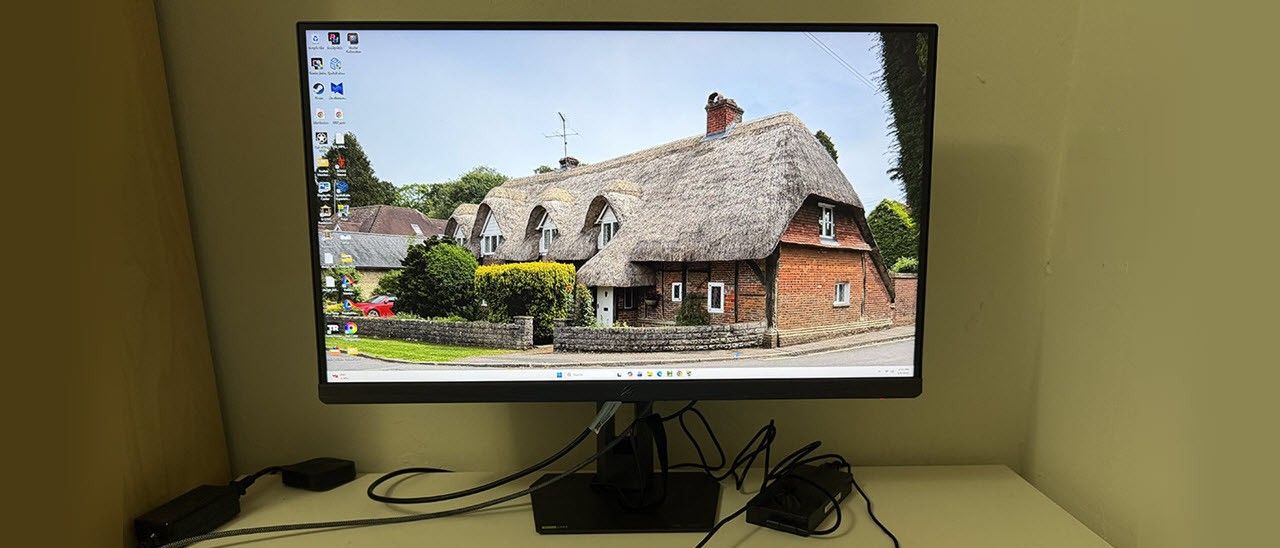
- Editor's ChoiceTom's Hardware
A 360Hz IPS esports monitor that pairs G-Sync Pulsar strobing with exceptional calibration controls
The Asus ROG Strix XG27AQGNV is built for competitive PC gamers who want the motion clarity and responsiveness of OLED without the risk of burn-in or the brightness compromises of older strobing implementations. Its chief strength is NVIDIA G-Sync Pulsar, which allows simultaneous backlight strobing and variable refresh rates, producing motion clarity that rivals high-end OLED displays alongside granular 400-step overdrive and 0.01-step gamma tuning. The primary drawback is its ordinary IPS contrast ratio and lack of local dimming, which leaves HDR content looking flat and gray in dark scenes. For pure competitive esports, it edges out conventional 360Hz LCDs and closely trails OLED rivals in contrast while delivering higher sustained full-screen brightness.
Buy it if
- Competitive esports players seeking maximum motion clarity and low input lag
- Gamers who want OLED-like motion response without burn-in risk during long productivity or desktop sessions
- Users who demand granular calibration controls for gamma and overdrive
Skip it if
- You prioritize deep black levels and cinematic HDR contrast over competitive motion clarity
- You want wide color saturation that matches Quantum Dot or OLED panels
Where to buy
We may earn a commission from purchases or qualifying sign-ups through our links. Affiliate links explained
What reviewers liked
- NVIDIA G-Sync Pulsar delivers CRT- and OLED-like motion resolution without stutter or flicker
- Exceptionally fast 1.79ms draw time measured by Tom's Hardware with 360Hz refresh rate
- Granular OSD controls including 0.01 gamma increments and 400-step variable overdrive
- High SDR brightness reaching 534 nits with no risk of permanent panel burn-in
- Sturdy stand with full tilt, swivel, pivot, and height adjustments
What they didn’t
- No local dimming zones, limiting HDR contrast to basic IPS levels
- DCI-P3 color coverage falls short of QD-OLED competitors at 88.5%
- Deeply recessed rear port bay can make thick cables awkward to route
Key specs
- Launch price
- $499
- Reported price
- $484 - $499
- Screen Size & Resolution
- 27-inch Fast IPS, 2560 x 1440 (QHD)
- Refresh Rate
- 360Hz
- Adaptive Sync
- NVIDIA G-Sync Pulsar, Adaptive-Sync
- Peak Brightness
- 534 nits (SDR max uncalibrated), 524 nits (HDR peak)
- Static Contrast Ratio
- 1,119:1 (uncalibrated SDR), 973:1 (calibrated)
- Color Coverage
- 120% sRGB, 88.5% DCI-P3 (measured by Tom's Hardware)
- Ports
- 1x DisplayPort 1.4 (DSC), 2x HDMI 2.1, 3x USB 3.2 Gen 1 Type-A, 1x USB-B upstream, 3.5mm audio jack
- Weight
- 14.33 lbs (6.5 kg) with stand
In depth
Picture quality: brightness, contrast, colour
The ROG Strix XG27AQGNV relies on a 27-inch Fast IPS panel lit by an edge W-LED array. In SDR testing, Tom's Hardware measured an uncalibrated maximum brightness of 534 nits, providing ample luminance for brightly lit rooms. Out of the box, static contrast measured 1,119:1 with a black level of 0.477 nit, which settled to 973:1 and an ANSI contrast of 826:1 after calibration to 200 nits. Color performance is tuned toward accuracy rather than extreme oversaturation: Tom's Hardware recorded 120% coverage of the sRGB space, translating to 88.5% DCI-P3 coverage, while the dedicated sRGB picture mode achieved 98.4% coverage. The monitor stands out for its on-screen calibration controls, which allow gamma adjustments in unusually fine 0.01 increments and brightness tuning graduated directly in nits, allowing users to hit a precise 2.2 gamma target.
Motion, refresh rate and gaming features
Motion clarity is the primary selling point of the display. Built around NVIDIA's G-Sync Pulsar technology, the monitor pairs variable refresh rate operation with variable backlight strobing, eliminating both motion blur and frame tearing simultaneously across varying frame rates. Running at 360Hz natively, Tom's Hardware measured a 1.79ms draw time with an LDAT sensor, calling it the fastest LCD panel they had tested and noting its motion clarity visually matched 240Hz OLEDs. Total input lag performed on par with 540Hz displays. To fine-tune ghosting and pixel overdrive, Asus includes a 400-step overdrive setting alongside GamePlus gaming overlays like crosshairs, alignment markers, and frame counters.
HDR performance
HDR capabilities are basic compared to modern Mini-LED and OLED monitors. Peak brightness in HDR mode reached 524 nits in Tom's Hardware measurements, which matches its SDR output. Because the monitor uses standard edge backlighting without local dimming zones, HDR contrast remains at 1,047:1. Highlight detail and daytime outdoor scenes appear bright and punchy, helped by Asus's intentional saturation boost in HDR mode, but dark scenes display noticeable gray lift and lack deep black performance. Furthermore, adjustments made to the SDR contrast slider do not automatically translate to HDR mode, requiring manual tuning to prevent highlight clipping.
Design, stand and ports
The monitor features standard Republic of Gamers styling with an 8mm (0.31-inch) bezel on the top and sides, weighing 14.33 pounds (6.5 kg) with its stand attached. The ergonomic stand supports 4.25 inches (110 mm) of height adjustment, 45 degrees of swivel, -5 to +20 degrees of tilt, and a 90-degree pivot into portrait mode, with standard 100x100mm VESA compatibility. Connectivity consists of one DisplayPort 1.4 port supporting DSC, two HDMI 2.1 ports, a 3.5mm headphone jack, one USB-B upstream port, and a three-port USB 3.2 Gen 1 Type-A hub. Tom's Hardware observed that the input bay is deeply recessed, which can make plugging in bulky cables somewhat awkward. The chassis does not include integrated speakers.
Viewing angles, reflections and burn-in risk
The panel uses a matte anti-glare finish that disperses ambient reflections without harsh glare spikes. In viewing angle evaluations, Tom's Hardware observed a slight red tint when the screen was viewed at 45 degrees off-axis both horizontally and vertically, though gamma and brightness levels remained stable without the wash-out seen on TN panels. Because it uses an IPS LCD rather than organic emissive diodes, the display carries zero risk of burn-in or panel degradation, making it suitable for static UI elements, web browsing, and long productivity sessions.
Price
The Asus ROG Strix XG27AQGNV launched at an MSRP of roughly $499. Retail listings have settled between $484 on Amazon and $499 at outlets like Newegg. While entry-level 1440p 240Hz IPS screens sell for less, this price positions the monitor right alongside competing 27-inch 240Hz OLED alternatives, appealing directly to gamers who want premium motion performance without OLED text fringing or burn-in vulnerability.
Is it worth the money?
Competitively priced against 240Hz QHD OLEDs, trading perfect black levels for 360Hz refresh rates, zero burn-in risk, and G-Sync Pulsar clarity.
Also consider
- Acer Predator XB273U F5
A competing 360Hz QHD G-Sync Pulsar IPS display that delivers nearly identical motion features but measured slightly slower draw times in lab testing.
- Asus ROG Strix OLED XG27AQDMG
A 240Hz glossy WOLED monitor that provides true blacks and infinite contrast for single-player games, but carries burn-in considerations.
- Acer Nitro XV273U F5
A 540Hz IPS gaming monitor for esports competitors wanting maximum raw refresh rates without relying on strobing tech.
Reviews we read
This roundup summarizes professional reviews and published specifications; Next Interrupt did not test the product. Roundup updated October 20, 2026. How we work