Graphics cards / Review roundup
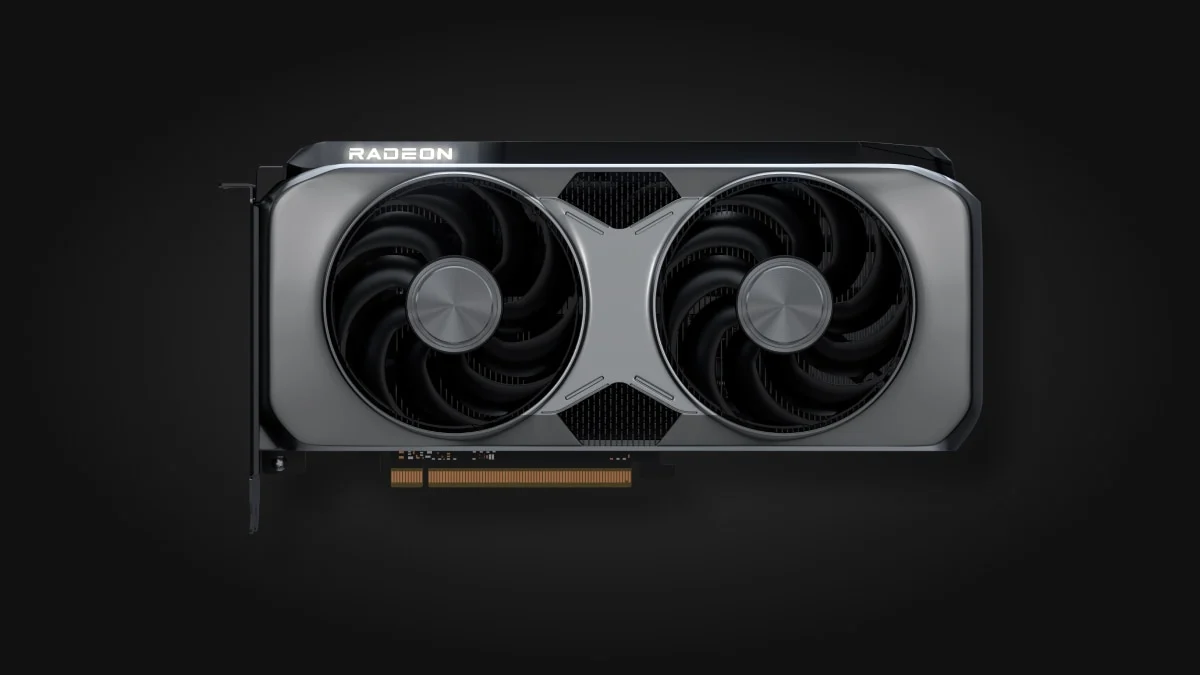
Radeon RX 9070
Desktop GPU, 16GB; non-XT reference specifications
- 4.0 / 5PCMag
- 8 / 10IGN
- 4.0 / 5Tom's Hardware
A cool, power-efficient 1440p graphics card with generous memory that sits in the shadow of its XT sibling
The Radeon RX 9070 delivers smooth framerates at 1440p and entry-level 4K while consuming just 220 watts, pairing strong rasterization speed with 16GB of VRAM that outclasses Nvidia's competing GeForce RTX 5070 in memory capacity. AMD's RDNA 4 architecture also brings noticeable ray tracing gains and an updated ML-based upscaler in FSR 4. However, Nvidia still leads in heavy ray tracing titles and DLSS ecosystem breadth, and AMD's own RX 9070 XT offers 11 to 14 percent more performance for only $50 more at list price. It is best suited for 1440p gamers looking for high efficiency and lasting VRAM without paying above MSRP.
Buy it if
- Gamers running 1440p high-refresh-rate monitors who want high raster framerates
- Builders working with 650W power supplies seeking high energy efficiency
- Shoppers wanting 16GB of VRAM for long-term texture demands without paying flagship prices
Skip it if
- You can find the Radeon RX 9070 XT in stock for within $50 of the non-XT price
- Your library relies heavily on full path tracing and Nvidia-specific features like DLSS Ray Reconstruction
Where to buy
We may earn a commission from purchases or qualifying sign-ups through our links. Affiliate links explained
What reviewers liked
- Lower 220W total board power draw runs noticeably cooler and quieter than the XT model
- 16GB VRAM provides more buffer headroom than the competing 12GB GeForce RTX 5070
- Noticeable generational leap in ray tracing performance compared to RDNA 3
- Standard dual 8-pin power connectors avoid the 12V-2x6 cable standard
What they didn’t
- The Radeon RX 9070 XT delivers roughly 11 to 14 percent more speed for a modest $50 price jump at MSRP
- Nvidia continues to lead in heavy ray tracing and overall upscaler adoption
Key specs
- Launch price
- $549
- Reported price
- $510 to $550
- Architecture
- RDNA 4 (Navi 48, TSMC N4P)
- Compute Units / Stream Processors
- 56 CUs / 3,584 Stream Processors
- Game / Boost Clock
- 2,070 MHz / 2,520 MHz
- VRAM
- 16GB GDDR6
- Memory Bus & Bandwidth
- 256-bit, 640 GB/s (20 Gbps)
- Total Board Power (TBP)
- 220W
- Power Connectors
- 2x 8-pin PCIe
- Recommended PSU
- 650W
- Display Outputs
- 1x HDMI 2.1b, 3x DisplayPort 2.1a
In depth
Gaming performance at 1080p, 1440p and 4K
Across professional testing, the Radeon RX 9070 established itself as a dedicated 1440p card with capable 4K credentials. In Tom's Hardware's 16-game rasterization suite, the card logged a geometric mean of 86.6 fps at 1440p Ultra, trailing the RX 9070 XT's 97.5 fps by 11 percent while staying ahead of the GeForce RTX 5070. Gamers Nexus reported 96 fps average in Starfield at 1440p, outpacing the RTX 5070 by 15 percent and trailing the 9070 XT by 10 percent. In TechSpot's testing, titles like The Witcher 3 Remastered pushed beyond 100 fps at 1440p Ultra raster settings. At 1080p, framerates routinely reach high-refresh territory, but the card is largely CPU-limited at that resolution. At 4K Ultra native, Tom's Hardware recorded a 52.2 fps average across 16 titles, while TweakTown recorded a 67 fps average across its benchmark suite, confirming that moderate 4K gaming is viable, particularly when paired with upscaling.
Ray tracing and upscaling (DLSS/FSR)
AMD's RDNA 4 silicon introduces redesigned Ray Accelerators that narrow the historical ray tracing deficit against Nvidia. In TechSpot's six-game ray tracing suite at 1440p, the RX 9070 ran 13 percent slower than the RX 9070 XT and 16 percent behind the RTX 5070, yet outpaced AMD's previous-generation flagship Radeon RX 7900 XTX by 26 percent. In Metro Exodus Enhanced at 1440p, TechSpot observed the RX 9070 matching the RTX 5070 frame-for-frame. In heavy ray tracing titles like Alan Wake 2 and Cyberpunk 2077, however, Nvidia maintains a noticeable lead. For upscaling, RDNA 4 introduces FSR 4, which transitions AMD to machine-learning reconstruction on dedicated AI matrix cores. Reviewers at TechPowerUp and IGN noted that FSR 4 substantially narrows the visual quality gap with Nvidia DLSS compared to older spatial FSR algorithms, though DLSS remains present in a broader selection of current titles.
Power draw, heat and noise
Power consumption is the RX 9070's standout metric. AMD set the Total Board Power to 220W, a steep drop from the RX 9070 XT's 304W limit. TechSpot measured the card drawing 15 to 23 percent less power than the 9070 XT under full gaming workloads. Gamers Nexus recorded real-world power draw of 224W under a heavy ray-traced scene, yielding superior frames-per-watt efficiency compared to both the 9070 XT and the 250W-rated RTX 5070. Because most board partners re-use thermal solutions designed for the hotter XT variant, models such as the PowerColor Hellhound and Sapphire Pulse operate with low fan speeds and minimal noise. TechPowerUp noted that partner designs stay whisper-quiet under sustained load while maintaining moderate GPU core and junction temperatures.
Memory (VRAM) and future-proofing
The RX 9070 carries 16GB of GDDR6 memory on a 256-bit bus, providing 640 GB/s of bandwidth. This gives it a tangible hardware advantage over the direct Nvidia competitor in this tier, the GeForce RTX 5070, which ships with a 12GB frame buffer on a 192-bit interface. Outlets including PCMag and Tom's Hardware highlighted that 16GB provides essential headroom for modern titles running ultra textures, complex ray tracing structures, and frame generation without inducing memory allocation stutters at 1440p and 4K. For users planning to keep their card for three or four years, this extra memory allocation is a strong consideration.
Size, power connector and PSU needs
Unlike many high-end current-generation cards, the RX 9070 avoids the 16-pin 12V-2x6 power connector, relying instead on two standard 8-pin PCIe power plugs. AMD recommends a 650W power supply, allowing existing mid-range PC builders to drop the GPU into older systems without buying a replacement power unit. Baseline reference designs measure approximately 292 mm long and occupy two to 2.5 expansion slots, while custom three-fan cards from partners like ASRock and Gigabyte measure roughly 296 mm to 300 mm. Most mid-tower cases accommodate the card without clearance issues.
Price versus competing cards
AMD launched the Radeon RX 9070 at $549, positioning it squarely against Nvidia's $549 GeForce RTX 5070 and just below the $599 Radeon RX 9070 XT. At launch, PCMag and TechSpot noted that the 9070 sat in an awkward spot because spending $50 more (a 9 percent premium) on the RX 9070 XT netted 11 to 14 percent higher framerates. In subsequent months, however, retail pricing diverged: while the RX 9070 XT suffered tighter stock and sold above its sticker price, the RX 9070 frequently sold at MSRP or dipped closer to $510 to $530. Against the RTX 5070, the RX 9070 offers superior rasterization speed and 4GB more VRAM, though Nvidia maintains the edge in software ecosystem support and full-path ray tracing performance.
Is it worth the money?
The RX 9070 offers strong frame rates per dollar against the RTX 5070, but if the RX 9070 XT is available near its $599 MSRP, the $50 upgrade remains a more compelling value.
Benchmarks
PERFORMANCE
Benchmarks
1080p Medium · 14-game rasterization average
Higher is better · FPSGeForce RTX 5060 Ti 16GB scores 24.9% lower average frame rate than Radeon RX 9070 in this test.
Tom’s Hardware · full test results ↗ · Original chart ↗Published June 10, 2025 · checked 2026-10-06
June 2025 review; Ryzen 7 9800X3D, 32GB DDR5-6000, Windows 11 24H2. PowerColor RX 9060 XT 16GB Reaper, PNY RTX 5060 Ti 16GB OC, Asus RTX 5060 Dual, RTX 5070 Founders Edition, PowerColor RX 9070 Reaper. Native rendering; no upscaling or generated frames.
Historical review snapshot. Tests use this publication’s common system and suite; game patches and drivers can differ between the included cards. Results are kept separate from other review suites.
Test data and methodology
| Product | Result | Against first measured model |
|---|---|---|
| Radeon RX 9070 | 159.1 | 0% |
| GeForce RTX 5060 Ti 16GB | 119.5 | -24.9% |
| Radeon RX 9060 XT 16GB | 116.5 | -26.8% |
| GeForce RTX 5060 | 102.2 | -35.8% |
| GeForce RTX 5070 | 148.8 | -6.5% |
Bars start at zero. Results apply to the tested configuration and settings. Percentage differences use the first measured model as the baseline; they are not a combined rating. A suite average is not the frame rate of every game. 1% lows describe the slowest portion of frames and help expose uneven delivery. Missing products are never assigned zero.
Help choosing
Compare before you buy
Key differences, review evidence and who should buy each model.
Also consider
- AMD Radeon RX 9070 XT
Delivers 11 to 14 percent higher gaming performance and stronger 4K capability for only a $50 jump at official MSRP.
- Nvidia GeForce RTX 5070
Matches the $549 launch price and provides superior heavy ray tracing and broader DLSS support, though it is limited to 12GB of VRAM.
- Nvidia GeForce RTX 5060 Ti 16GB
Costs less and provides 16GB of video memory, but performs significantly slower in native 1440p and 4K rasterization.
Reviews we read
This roundup summarizes professional reviews and published specifications; Next Interrupt did not test the product. Roundup updated October 17, 2026. How we work
- Tom's Hardware — AMD Radeon RX 9070 XT and RX 9070 review: Excellent value, if supply is good
- TechSpot — AMD Radeon RX 9070 Review
- Gamers Nexus — Incredibly Efficient: AMD RX 9070 GPU Review & Benchmarks vs. 9070 XT, RTX 5070
- PCMag — Sapphire Pulse AMD Radeon RX 9070 Review
- TechPowerUp — PowerColor Radeon RX 9070 Hellhound Review