Graphics cards / Review roundup
GeForce RTX 5060 Ti 16GB
Desktop GPU, 16GB model; not the 8GB version
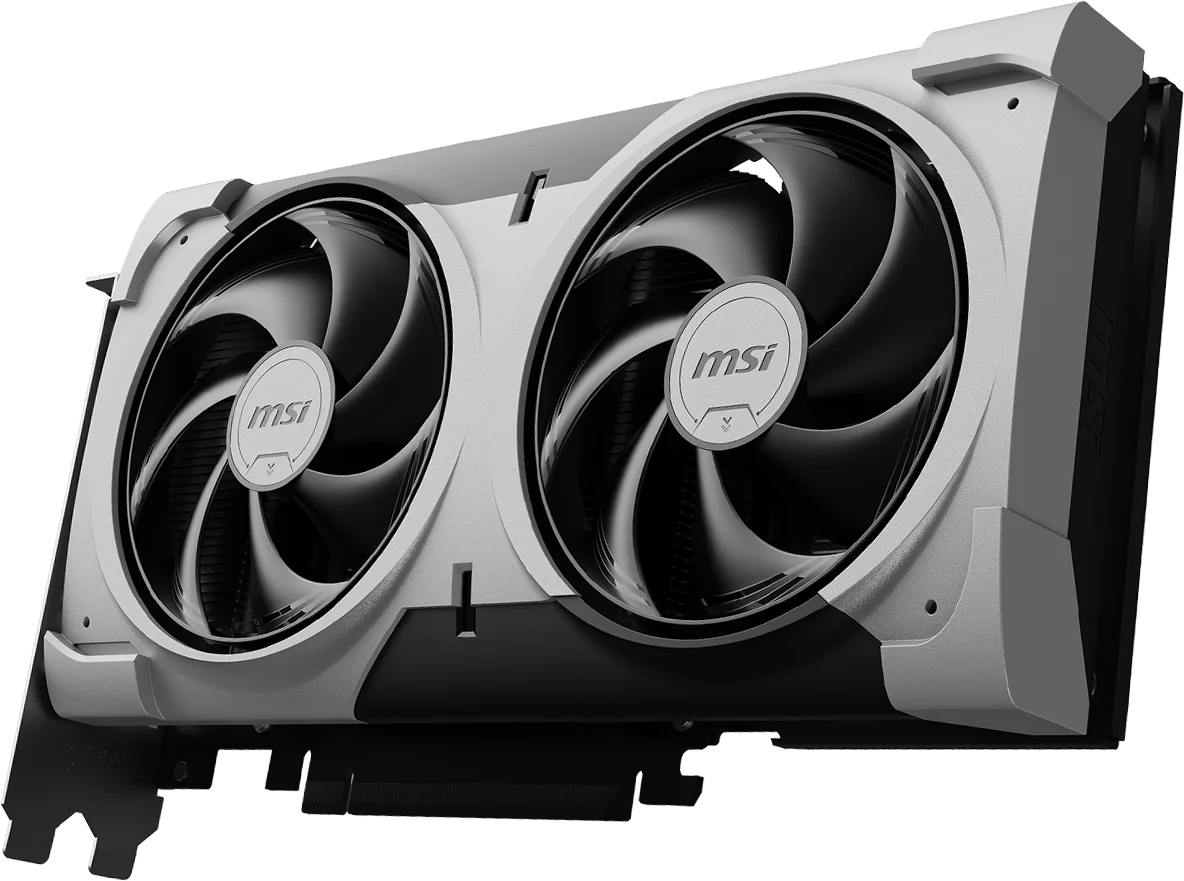
- 90%TweakTown
- 75/100TechSpot
A capable 1440p graphics card with generous VRAM that relies heavily on upscaling to justify its price
The GeForce RTX 5060 Ti 16GB is best suited for PC gamers upgrading from older GTX or RTX 20- and 30-series GPUs who want dependable 1440p performance with ample memory headroom. Its biggest strength is the generous 16GB GDDR7 buffer, which completely eliminates the severe stuttering and texture degradation plaguing 8GB graphics cards in modern releases. The main catch is a modest 15% generational rasterization improvement over the RTX 4060 Ti, meaning raw performance gains rely considerably on DLSS 4 and multi-frame generation. Compared to its primary rival, AMD's Radeon RX 9060 XT 16GB, the Nvidia card delivers identical traditional rasterization speeds while commanding a premium for superior ray tracing and AI reconstruction features.
Buy it if
- Gamers upgrading from RTX 2060, 3060, or older GTX-series GPUs for 1440p gaming
- Players wanting 16GB of VRAM to avoid modern texture bottlenecks and stutter
- Small-form-factor builds that require standard 8-pin power and modest 180W cooling
Skip it if
- You already own an RTX 4060 Ti or RTX 4070, where gen-on-gen gains are modest
- You play strictly rasterized titles where the cheaper Radeon RX 9060 XT matches it
- You are hunting for native 4K gaming without aggressive upscaling
Where to buy
We may earn a commission from purchases or qualifying sign-ups through our links. Affiliate links explained
What reviewers liked
- Generous 16GB GDDR7 VRAM eliminates stutter and texture pop-in seen on 8GB cards
- Impressive power efficiency with a modest 180W total board power draw
- Standard single 8-pin connector and compact dual-slot designs fit older and small cases
- DLSS 4 with Multi Frame Generation delivers smooth 1440p framerates in demanding titles
What they didn’t
- Modest traditional raster uplift of only 15% over the prior-generation RTX 4060 Ti
- Narrow 128-bit memory bus limits bandwidth to 448 GB/s despite GDDR7 speeds
- Pricing can creep uncomfortably close to the significantly faster RTX 5070
Key specs
- Launch price
- $429
- Reported price
- $410 to $450
- Architecture
- NVIDIA Blackwell (GB206, TSMC 4N)
- CUDA Cores
- 4,608
- VRAM
- 16GB GDDR7 (128-bit, 28 Gbps, 448 GB/s)
- Base / Boost Clock
- 2,407 MHz / 2,572 MHz
- Total Board Power
- 180W
- Power Connector
- 1x 8-pin PCIe (most partner models)
- Bus Interface
- PCIe 5.0 x8
- Display Outputs
- 1x HDMI 2.1b, 3x DisplayPort 2.1b
In depth
Gaming performance at 1080p, 1440p and 4K
In rasterized benchmarks, reviewers found the RTX 5060 Ti 16GB delivers a comfortable experience at 1080p and 1440p, though it provides only a modest bump over older hardware. Tom's Hardware recorded an average 15% uplift in raw rendering over the RTX 4060 Ti 16GB. In TechSpot's testing, the card averaged 71 fps across an 18-game suite at native 1440p. Individual results show solid playability: TechSpot logged 78 fps in Marvel's Spider-Man 2 at 1080p Very High, 74 fps in Final Fantasy XVI at 1440p with DLSS Quality, and 66 fps in Assassin's Creed Shadows at 1440p Balanced. In heavier titles, Starfield ran at 51 fps at 1440p native. Moving to 4K quickly pushes the GB206 die beyond its comfort zone; Starfield managed 32 fps while Star Wars Outlaws bottomed out at 20 fps. TweakTown noted that 3DMark Steel Nomad Light scores placed the card 30% ahead of the older RTX 3060 Ti, confirming that players upgrading across two generations will notice a substantial improvement, whereas RTX 40-series owners will see comparatively flat gains.
Ray tracing and upscaling (DLSS/FSR)
Ray tracing workloads highlight the architectural strengths of Blackwell, provided players engage Nvidia's software stack. TweakTown's 3DMark Port Royal testing showed the RTX 5060 Ti outscoring AMD's Radeon RX 9060 XT by 11%, demonstrating solid hardware ray tracing efficiency. However, native ray tracing in heavy titles like Cyberpunk 2077 or Alan Wake 2 still stresses the silicon at 1440p, making DLSS mandatory for smooth play. Tom's Guide highlighted DLSS 4 and Multi Frame Generation as the card's most compelling feature, allowing supported titles to push well above 100 fps at 1440p while maintaining sharp edge detail and temporal stability. In TechSpot's direct comparison between DLSS 4 and AMD FSR 4, the Blackwell GPU consistently generated fewer motion artifacts, cleaner hair and wire definition, and less shimmering in fine textures, cementing Nvidia's lead in image reconstruction.
Power draw, heat and noise
Energy efficiency is one of the card's most universally praised traits. Rated at a modest 180W total board power, the RTX 5060 Ti draws significantly less power than previous-generation mid-tier offerings. TechPowerUp measured real-world gaming power consumption between 170W and 180W under full load. Partner thermal designs handle this output with minimal effort. In testing of dual-fan models like the MSI Ventus 2X and Gaming OC, TechPowerUp and TweakTown recorded operating temperatures between 60°C and 66°C during intense gaming loops. Fan noise remained very low, typically measuring between 26 dB and 31 dB under load, while idle fan-stop features keep the fans completely dormant during desktop usage and video streaming.
Memory (VRAM) and future-proofing
Reviewers universally agreed that opting for the 16GB model rather than the 8GB variant is critical. While both cards share the exact same GB206 processor with 4,608 CUDA cores and a 128-bit memory bus, the extra capacity fundamentally alters the gaming experience. TechSpot's side-by-side testing revealed severe frame drops on the 8GB version when memory capacity saturated: in Marvel's Spider-Man 2 at 1080p Very High, the 8GB card managed only 49 fps against 78 fps on the 16GB model, while The Last of Us Part II showed 1% low frame rates more than four times higher on the 16GB card. With 28 Gbps GDDR7 chips providing 448 GB/s of bandwidth, the 16GB model has adequate headroom for high-resolution textures, ray tracing data structures, and creative AI models, ensuring the card will not choke on future titles.
Size, power connector and PSU needs
Physical installation is straightforward and avoids the hassles seen with higher-tier graphics cards. Because total board power is held to 180W, most add-in board manufacturers stick to a standard single 8-pin PCIe power cable, bypassing the 12V-2x6 high-power connector and adapter requirements entirely. Both TweakTown and TechPowerUp noted that cards like the MSI Ventus 2X measure around 240mm to 250mm long and take up only two expansion slots, making them suitable for compact Mini-ITX and Micro-ATX enclosures. Nvidia recommends a 550W to 600W power supply, allowing users to upgrade older desktop rigs without replacing their existing power supply. Reviewers noted that the card runs on a PCIe 5.0 x8 interface, which can introduce mild bandwidth penalties on older PCIe 3.0 motherboards if VRAM is exceeded, though the 16GB buffer makes that scenario rare.
Price versus competing cards
At its official $429 MSRP, the RTX 5060 Ti 16GB carries a $50 markup over the flawed $379 8GB version, an upcharge reviewers considered well worth paying. However, competitive pressure is fierce. TechSpot pointed out that AMD's Radeon RX 9060 XT 16GB matches the RTX 5060 Ti in native 1440p rasterization (70 fps versus 71 fps across 18 games) while often retailing for less. Meanwhile, Tom's Hardware cautioned that street price creep on custom 16GB boards can push the card toward $500, dangerously close to the faster GeForce RTX 5070 ($549 MSRP), which offers around 30% higher rendering throughput. Reviewers concluded that if purchased near its $429 list price, the 5060 Ti 16GB hits an attractive balance of modern VRAM and DLSS features, but marked-up editions lose their luster against higher-tier GPUs.
Is it worth the money?
At its $429 launch price, the 16GB model is worth the $50 upgrade over the flawed 8GB card, but street prices above $480 run into competition from the faster RTX 5070.
Benchmarks
PERFORMANCE
Benchmarks
1080p Medium · 14-game rasterization average
Higher is better · FPSRadeon RX 9060 XT 16GB scores 2.5% lower average frame rate than GeForce RTX 5060 Ti 16GB in this test.
Tom’s Hardware · full test results ↗ · Original chart ↗Published June 10, 2025 · checked 2026-10-06
June 2025 review; Ryzen 7 9800X3D, 32GB DDR5-6000, Windows 11 24H2. PowerColor RX 9060 XT 16GB Reaper, PNY RTX 5060 Ti 16GB OC, Asus RTX 5060 Dual, RTX 5070 Founders Edition, PowerColor RX 9070 Reaper. Native rendering; no upscaling or generated frames.
Historical review snapshot. Tests use this publication’s common system and suite; game patches and drivers can differ between the included cards. Results are kept separate from other review suites.
Test data and methodology
| Product | Result | Against first measured model |
|---|---|---|
| GeForce RTX 5060 Ti 16GB | 119.5 | 0% |
| Radeon RX 9060 XT 16GB | 116.5 | -2.5% |
| GeForce RTX 5060 | 102.2 | -14.5% |
| GeForce RTX 5070 | 148.8 | 24.5% |
| Radeon RX 9070 | 159.1 | 33.1% |
Bars start at zero. Results apply to the tested configuration and settings. Percentage differences use the first measured model as the baseline; they are not a combined rating. A suite average is not the frame rate of every game. 1% lows describe the slowest portion of frames and help expose uneven delivery. Missing products are never assigned zero.
Also consider
- AMD Radeon RX 9060 XT 16GB
Offers comparable native 1440p rasterization performance and 16GB of VRAM, often at a slightly lower retail price.
- NVIDIA GeForce RTX 5070
Delivers roughly 30% higher rendering speed for shoppers who can stretch their budget to the $550 price class.
- Intel Arc B580
A budget-friendly 12GB alternative that provides solid 1080p performance for buyers spending under $300.
Reviews we read
This roundup summarizes professional reviews and published specifications; Next Interrupt did not test the product. Roundup updated October 29, 2026. How we work
- Tom’s Guide — GeForce RTX 5060 Ti 16GB review
- TechSpot — Direct GPU comparison using DLSS and FSR
- TweakTown — GeForce RTX 5060 Ti 16GB review