Well-reviewed products that fit what you want to spend.
We summarize professional reviews; we don't test products ourselves.We may earn a commission from purchases or qualifying sign-ups through our links. Affiliate links explainedHow we work
Desktops & mini PCs budgets
Check whether memory, storage and the operating system are included. Add a display and peripherals if needed. These shortcuts are spending limits, not quoted prices. USD, before tax and shipping.
Within your budget
Checking retailers…
Price needs checking
We have neither a current offer nor a recorded reference price for these models. They are not confirmed to fit your budget.
A good starting point for a desk-based Mac when you already have a display.
A whisper-quiet, ultra-compact desktop with excellent networking, held back by modest power and soldered RAM. The Bosgame E6 Eco is best for home office workers, students, and homelab hobbyists seeking a compact, low-power desktop for everyday computing and lightweight network tasks. Its primary strengths are whisper-quiet dual-fan cooling, an efficient sub-20W power draw, and modern connectivity including Wi-Fi 7 and dual LAN ports. The main compromise is the entry-level Intel Core 3 304 silicon and 12 GB of non-upgradeable soldered RAM, which rule out intensive creative work and modern gaming. Compared to similarly equipped rivals like the Beelink EQi 304, the E6 Eco turns in slightly higher benchmark scores and features standard M.2 NVMe storage rather than finicky embedded memory.
top-end M5 Ultra, 256GB of unified memory, and 4TB of storage
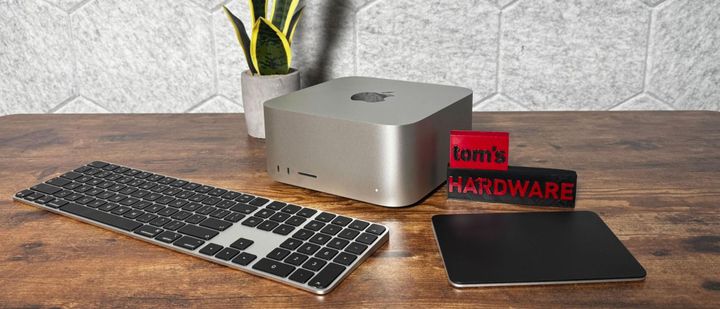
Unmatched local AI and creative speed packed into a silent desktop, but priced strictly for enterprise budgets. The M5 Ultra Mac Studio is built for machine learning researchers, high-end video colorists, and 3D visual effects artists who need massive memory capacity in a compact, whisper-quiet desktop. Its biggest asset is 1.2 TB/s of unified memory bandwidth paired with 256GB of RAM, enabling local execution of large AI models without the complexity of multi-GPU server racks. The catch is the prohibitive price tag, driven higher by industry-wide memory cost inflation and Apple's non-upgradable soldered design. Compared to multi-GPU x86 workstations, it consumes a fraction of the electrical power and runs almost silently, though dedicated Nvidia hardware retains the lead in rasterized 3D gaming and CUDA-exclusive pipelines.
AMD Ryzen AI 9 HX 470 variant with 64 GB of memory and a 1 TB SSD
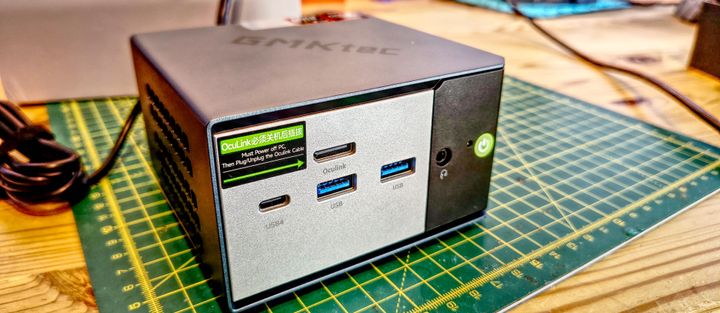
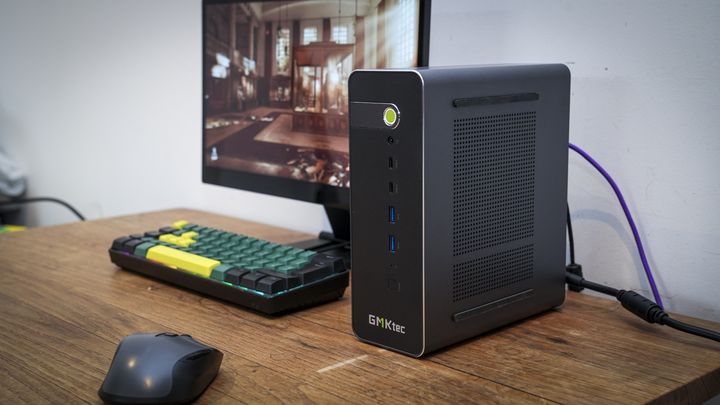
A compact desktop with serious Zen 5 processing power, generous memory, and versatile high-speed expansion. The GMKtec NucBox EVO X1 PRO is best for software developers, content creators, and compact workstation users who need heavy multi-core CPU performance alongside a massive memory footprint. Its standout strength is packing AMD's 12-core Ryzen AI 9 HX 470, 64 GB of fast LPDDR5X RAM, and a native OCuLink port into a chassis barely larger than a stack of drink coasters. The primary drawback is its steep $1,599 launch price and completely soldered memory, which prevents post-purchase RAM upgrades. Against rivals like the Beelink SER9, the EVO X1 PRO costs more upfront but offers native OCuLink expansion and double the base RAM capacity.
Quick verdict. ServeTheHome sees the 128GB EVO-X3 as a local-AI workstation, with strong integrated inference performance and OCuLink for an external accelerator. The reviewer found its limited USB connections a bigger compromise than its computing capability.
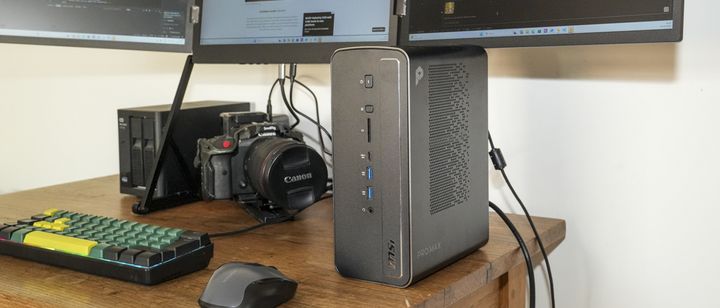
A compact 4-liter AI workstation with 96GB allocatable VRAM, hampered only by soldered memory and an enterprise price. The MSI Pro Max Edge AI+ is tailored for AI researchers, enterprise teams, and software developers who need to run large language models offline without recurring cloud bills or privacy risks. Its biggest asset is the AMD Ryzen AI Max+ 395 paired with 128GB of unified memory, which allows up to 96GB to be allocated directly to graphics tasks for running 120-billion-parameter models. The main catches are its steep $5,499 entry cost and non-upgradeable soldered memory. Compared with the Apple Mac Studio, MSI offers an open x86 Windows and Linux environment with strong multi-core processing, though at a significantly higher initial cash outlay than entry-level Apple configurations.
Apple provided our review unit with 24GB of unified memory rather than the base 16GB
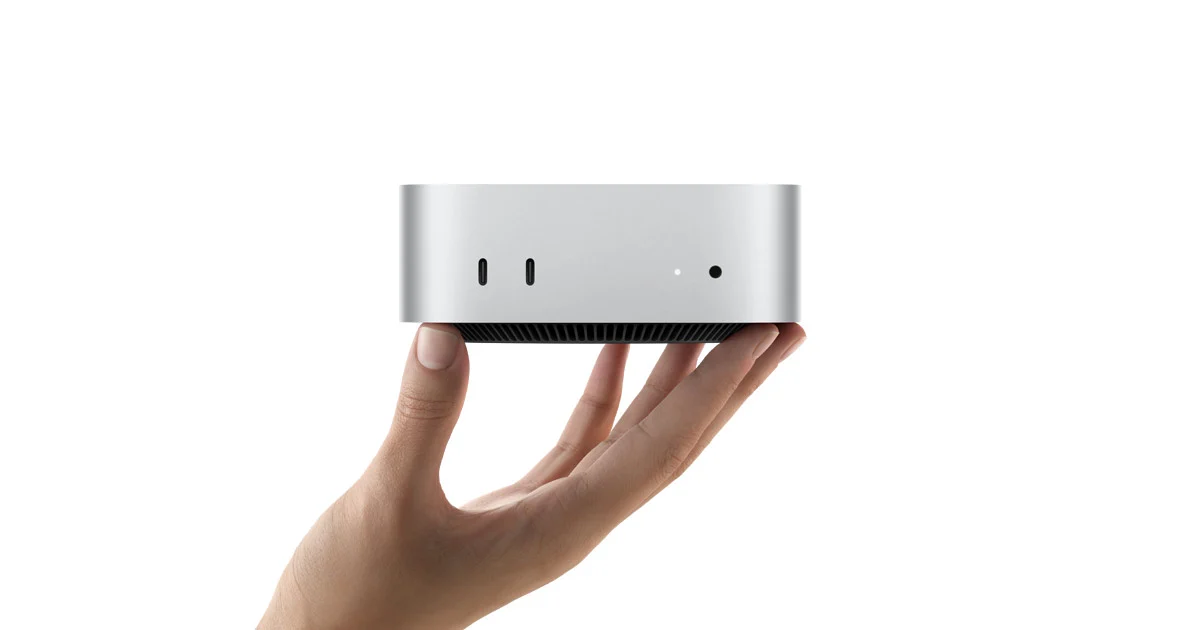
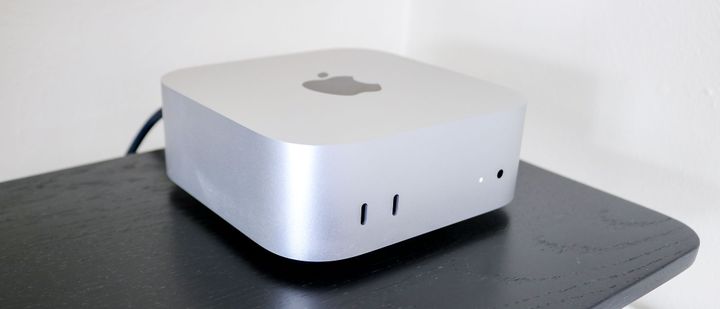
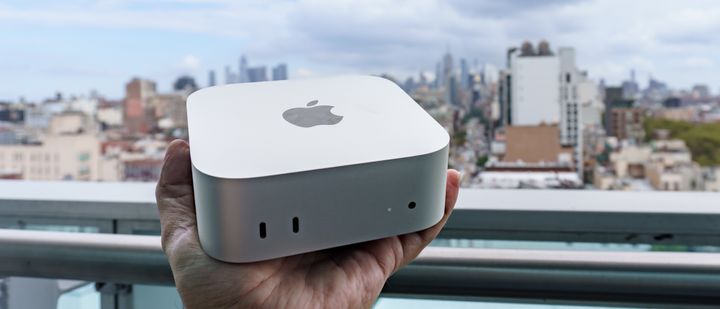
A blistering 2nm desktop upgrade marred by steep price jumps and soldered storage. The Mac mini M6 is an excellent choice for desktop users and creative workers who want class-leading single-core speed, silent operation, and compact efficiency in Apple's ecosystem. Its biggest strength is the 2nm M6 processor, which delivers chart-topping CPU responsiveness and capable 1080p graphics while sipping just 4W at idle. The primary catch is financial: a $300 price jump over the previous generation, paired with permanently soldered storage and aggressive upcharges for memory. Compared to rival x86 mini PCs and Apple's own iMac M6, the mini provides unmatched compute density per cubic inch, though shoppers starting without peripherals will find the all-in-one iMac a more straightforward value.
Pro-grade speed and Thunderbolt 5 in a tiny chassis, weighed down by a steep entry price. The Apple Mac Mini (2026, M5 Pro) is designed for creative professionals and software developers who require workstation-level multi-core compute and fast memory throughput in a minimal footprint. Its greatest asset is the combination of an 18-core M5 Pro processor and three Thunderbolt 5 ports capable of 120 Gbps bandwidth while operating near-silently. The primary drawback is its price, which starts at $1,699 for only 512GB of non-upgradable storage and quickly climbs toward Mac Studio territory when upgraded. Against the base M6 Mac Mini, the M5 Pro provides far superior sustained multi-threaded rendering and memory bandwidth, but casual users will find the cheaper M6 model a more economical desktop choice.
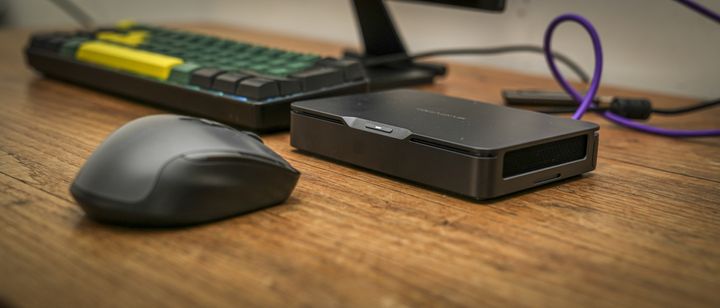
A pocketable mini PC with seamless session portability and a steep price tag. The Khadas Mind Pro is designed for hybrid creators and professionals who want to transport an active Windows workspace between offices without shutting down. Its standout feature is an integrated 7.98Wh standby battery packed into a 0.43-liter aluminum chassis, keeping running applications alive during your commute. The primary obstacle is the steep $2,599 price tag, which climbs even higher if you invest in official modular peripherals like external GPU docks. Compared to Apple's Mac mini M4, the Mind Pro offers unmatched session mobility and modular expandability, but it demands a substantial price premium.
Enormous mini-PC power and 64GB of RAM let down by a steep price tag. The GMKTec NucBox EVO-X1 Pro is built for power users, developers, and creatives who need 64GB of fast system memory and dedicated eGPU support in an ultra-compact chassis. Its biggest strengths are the 12-core AMD Ryzen AI 9 HX 470 processor, swift Gen 4 storage, and native OCuLink connectivity for high-speed desktop graphics docking. However, the steep asking price and soldered RAM make it a tough sell compared to its virtually identical HX 370 predecessor, which offers similar day-to-day performance for several hundred dollars less. If you need local AI inference capacity and massive memory out of the box, it delivers top-tier compute density.
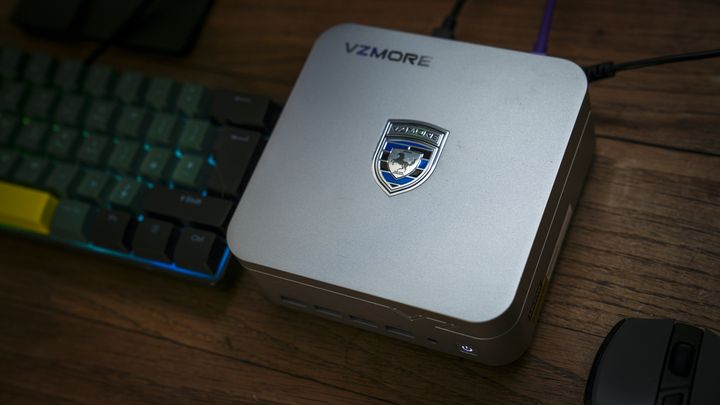
A compact Zen 5 mini PC with vapor-chamber cooling, let down by a steep launch price. The VZMORE AX9 Max AI is built for power users, developers, and home-lab builders who need high-throughput multithreading and local AI inferencing in a compact desk footprint. Its biggest strength is thermal discipline: the vapor-chamber cooling and dual-channel DDR5 architecture deliver sustained performance without thermal throttling or loud fan whine. The primary catch is its steep $1,499 starting price, which sits well above mainstream mini desktop competition. Against rivals like the Geekom A9 Max, the AX9 Max pulls ahead in benchmarks by shipping with proper dual-channel memory and running markedly cooler.
Ryzen AI Max+ PRO 495 processor over the Ryzen AI Max+ 395 may look modest, when you give it the additional boost of 196GB of unified memory and the internal space for up to 24TB of storage
A compact local AI workstation with massive unified memory, undermined by its towering four-figure price. The GMKtec EVO-X5 Pro is built for developers and researchers who need to run 300B-parameter language models and heavy AI-accelerated creative workloads entirely offline on their desk. Its standout strength is the combination of AMD's 16-core Ryzen AI Max+ PRO 495 processor with 192GB of unified memory, allowing up to 160GB to be allocated directly to graphics. The critical drawback is the price: starting at $6,799 at retail, it represents an extreme investment that makes little financial sense for routine creative or office computing. While it undercuts workstation rivals like the Minisforum MS-S1 MAX-P495, shoppers working with smaller models will find far better value in 128GB systems like GMKtec's own EVO-X3.