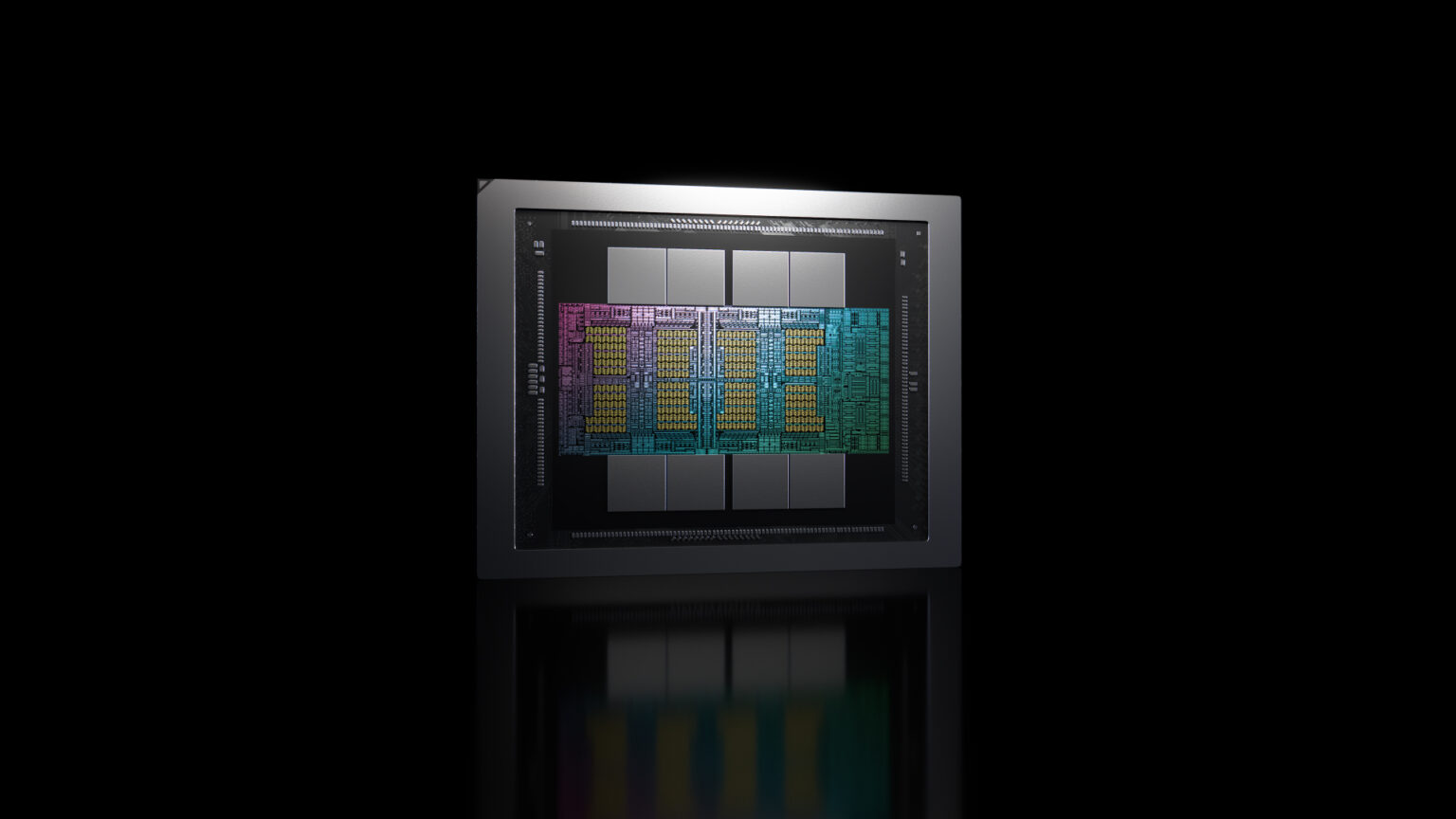
Nvidia unveiled the Rubin HPC graphics processor at the SC26 supercomputing conference, announcing a chip equipped with more than 50,000 CUDA cores. Built as part of the Vera Rubin platform, the processor is scheduled for release in 2028. It is specifically aimed at accelerating high-performance computing, data analytics, and scientific simulations rather than focusing primarily on artificial intelligence training and inference. [1][2][4][5]
The architecture incorporates seventh-generation NVLink interconnects for multi-GPU communication, alongside a sparse data acceleration mechanism designed to keep compute cores continuously supplied with information. Nvidia targets common scientific routines including sparse matrix calculations, stencil computations, reductions, and sorting. However, the company has not yet revealed key technical specifications, withholding details on memory capacity, bandwidth, power consumption, native FP64 throughput, and pricing. [1][2][4][5]
Nvidia positions the hardware for agentic workflows in fields such as climate modeling, molecular research, and genomics, arguing that faster simulations will shorten the trial-and-error discovery loop for AI agents. Ian Buck, Nvidia vice president of hyperscale and high-performance computing, noted that quicker simulations translate directly to faster discoveries, as rivals including Intel showcase competing simulation processors at the same event. [1][2][4][5]