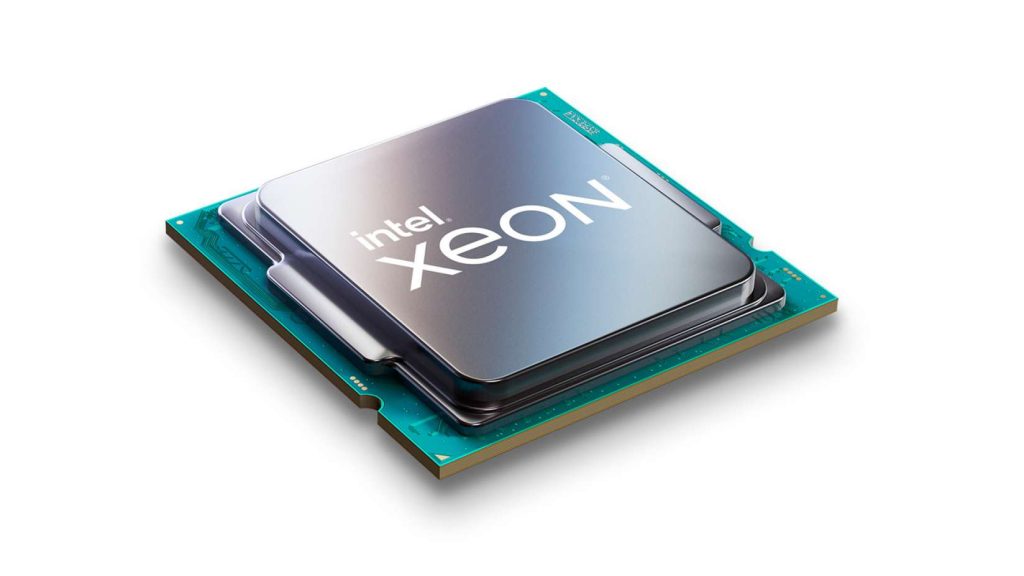
Intel showcased its upcoming high-performance computing lineup at SC26, introducing architectural specifications for its next-generation Diamond Rapids Xeon server processors and its GPU D-series accelerators. Diamond Rapids, built on an 18A-P process, scales up to 256 performance cores, 1.28GB of last-level cache, and 1.6TB/s of memory bandwidth. Alongside the CPUs, Intel detailed air-cooled PCIe accelerator cards, including the Intel-branded GPU D270 with 160GB of LPDDR5X memory and 1.5TB/s of bandwidth, as well as partner models scaling to 480GB. Intel did not disclose a launch date for Diamond Rapids. [1][2]
The new hardware targets mixed artificial intelligence and scientific computing workloads. Diamond Rapids integrates Intel Advanced Performance Extensions, AVX 10.2, and enhanced Advanced Matrix Extensions. The GPU D-series spans data formats from FP4 and MXFP4 to double-precision FP64. Intel is highlighting memory capacity on the D270 to minimize host-to-card data transfers, claiming vendor benchmarks showed up to 5.9x higher FP64 financial throughput than Nvidia's RTX PRO 6000 Blackwell Server Edition while operating at 350W versus 600W. [1][2]
Jeff McVeigh, vice president and general manager of Data Center Strategic Programs at Intel, framed the roadmap around heterogeneous computing environments where CPUs orchestrate workloads while dedicated accelerators manage AI tasks. [1]