Long-haul flights and larger ears
Bose QuietComfort Ultra
Deeper ear cups prevent contact against the outer ear, and the lightweight 250 g frame distributes pressure gently during 10-hour flights.
Our verdict
Both flagship headphones set the standard for premium travel audio, but each leans into different strengths. The Sony WH-1000XM6 is the superior choice for audiophiles and commuter callers who want deeper EQ control, slightly stronger vocal cancellation, and rapid 3-minute charging. The Bose QuietComfort Ultra remains the benchmark for physical comfort, offering deeper ear cups that avoid ear fatigue on long-haul flights, alongside native USB-C digital audio streaming.
Long-haul flights and larger ears
Deeper ear cups prevent contact against the outer ear, and the lightweight 250 g frame distributes pressure gently during 10-hour flights.
Discerning music listeners and EQ tweaking
The Sony companion app features a complete 10-band equalizer and LDAC support, providing far more sonic precision than Bose's basic three-band slider.
Noisy office calls and rapid recharging
A 12-microphone array with six beamforming voice mics isolates speech cleanly, and a 3-minute top-up delivers 3 hours of playback.
Lossless wired playback from modern laptops
Direct USB-C digital audio input allows lossless listening while charging simultaneously, bypassing headphone jacks.
Both models silence low-frequency airplane rumble effortlessly, but Sony pulls slightly ahead against conversational mid-range frequencies. SoundGuys measured an 87% average loudness reduction on the XM6 compared to 85% on the QC Ultra. Sony's QN3 processor and 12-microphone array attenuate chatter and keyboard clatter more consistently than Bose.
At 250 grams, the Bose QuietComfort Ultra is 4 grams lighter than the Sony XM6 and features noticeably deeper ear cavities. While Sony restored folding hinges and reduced its carry case size, reviewers note that the XM6's shallower earcups can still pinch or rub against larger ears during long sessions.
Sony provides better dynamic clarity, treble openness, and low-end definition. Rolling Stone highlighted Sony's comprehensive 10-band equalizer in the Sound Connect app, whereas Bose restricts adjustments to a simple three-band EQ with a slightly rolled-off high treble response.
Bose includes Bluetooth 5.4 with Snapdragon Sound support alongside native USB-C digital audio input. This lets users stream uncompressed digital audio from laptops or phones while charging. The Sony XM6 supports Bluetooth 5.3 and LDAC, but limits wired listening strictly to an analog 3.5 mm cable.
In independent testing, both provide generous endurance: SoundGuys measured 37 hours and 14 minutes on the XM6 with ANC enabled, while RTINGS recorded 37 hours on the Bose. Sony wins on charging convenience, delivering 3 hours of playback from a 3-minute charge compared to 15 minutes for 3 hours on the Bose.
Sony deploys six dedicated beamforming voice microphones backed by advanced noise-rejection algorithms. Testers reported that the XM6 isolates spoken dialogue significantly better on windy sidewalks and in busy coffee shops, whereas Bose allows more background noise to bleed through on voice calls.
| Spec | Sony WH-1000XM6 | Bose QuietComfort Ultra |
|---|---|---|
| Price | $449.99Commonly discounted between $378 and $398 during promotional sales events. | $449.00Regularly discounted between $369 and $399 across major electronics retailers. |
| Weight | 254 g (8.96 oz) | 250 g (8.8 oz) |
| Rated Battery (ANC On) | 30 hours | 30 hours |
| Lab-Tested Battery (ANC On) | 37 hours 14 mins (SoundGuys) | 37 hours (RTINGS) |
| Quick Charge Speed | 3 mins for 3 hours | 15 mins for 3 hours |
| Bluetooth Version | 5.3 | 5.4 |
| Supported Codecs | LDAC, AAC, SBC, LC3 | aptX Adaptive, aptX Lossless, AAC, SBC |
| Wired Audio Options | 3.5 mm analog only | USB-C digital audio and 3.5 mm analog |
| Microphones | 12 total (6 beamforming voice) | Adaptive array |
The Sony WH-1000XM6 takes the overall win thanks to marginally stronger vocal attenuation, far deeper EQ customization, superior voice call clarity, and ultra-fast charging. However, travelers with larger ears or buyers who want digital USB-C wired listening should choose the Bose QuietComfort Ultra for its fatigue-free fit and flexible connectivity.
This comparison summarizes professional reviews and published specifications; Next Interrupt did not test these products. Updated November 16, 2026. How we work
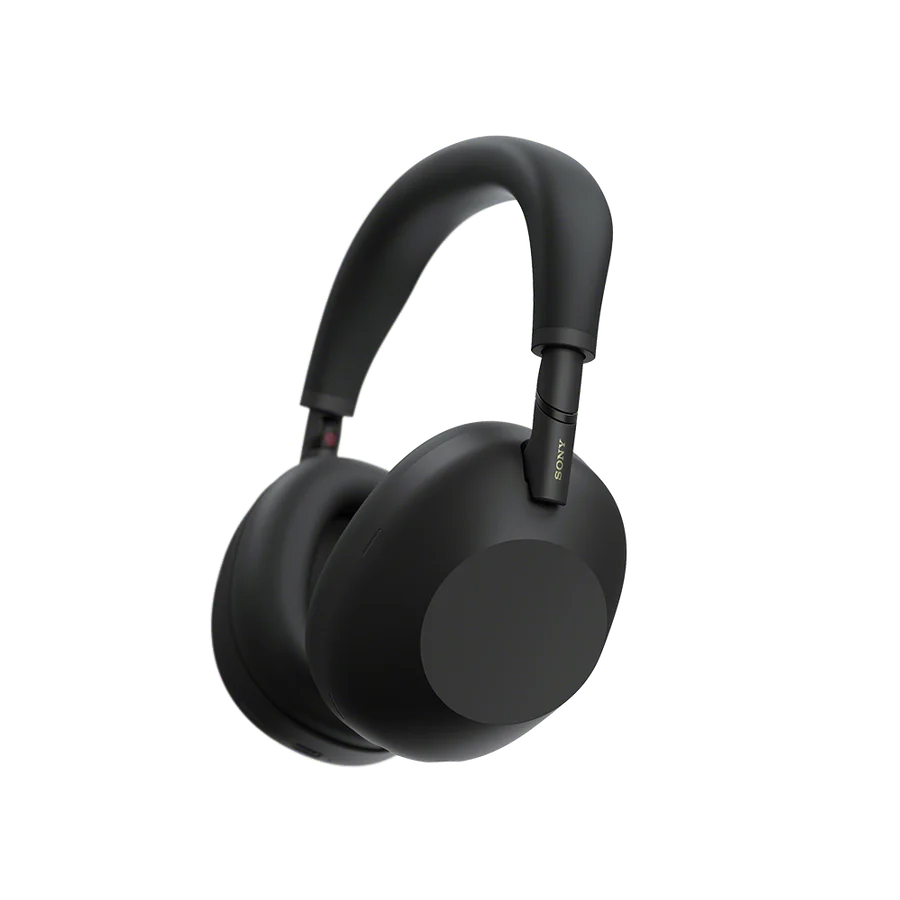
Over-ear headphones; not WF-1000XM6 earbuds
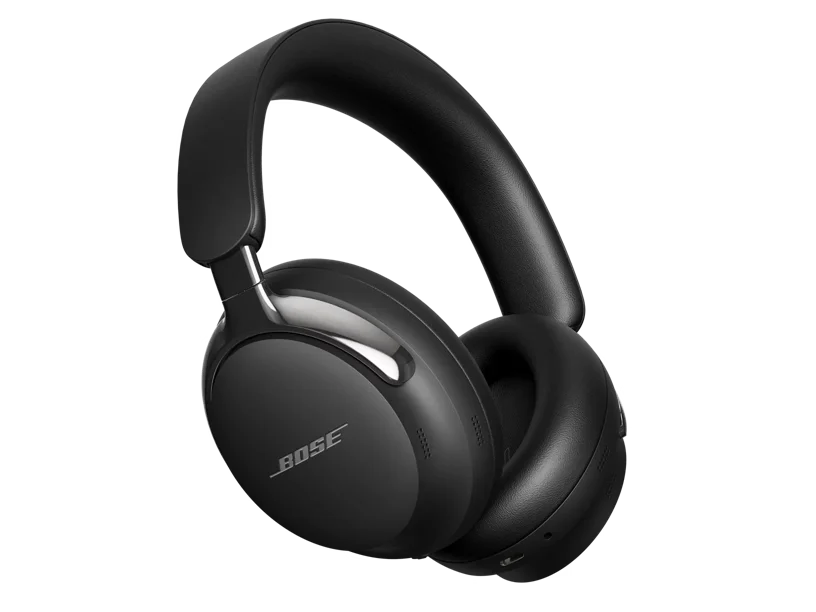
Headphones, 2nd generation; not earbuds or original model
We don’t have matching benchmark results for these models yet. Compare their specifications and review findings above.
Help choosing
Key differences, review evidence and who should buy each model.
Compare AirPods Pro 3 and Bose QuietComfort Ultra Earbuds 2 for iPhone integration, fit, noise cancellation, battery evidence and current retailer offers.
Read comparison →ProcessorsShould you pay more for the Ryzen 7 9850X3D? Compare sourced gaming and power tests, AM5 build costs and the upgrade case against the 9800X3D.
Read comparison →Graphics cardsRTX 5070 or RX 9070 for a gaming PC? Compare 12GB versus 16GB memory, native gaming, ray-tracing tradeoffs and current prices.
Read comparison →Graphics cardsCompare RTX 5070 Ti and RX 9070 XT using sourced gaming benchmarks, ray-tracing tradeoffs, board requirements and current retailer prices.
Read comparison →Handheld gamingChoose between Nintendo Switch 2 and Steam Deck OLED by game library, handheld experience, compatibility, storage and total ownership cost.
Read comparison →VR headsetsIs Quest 3 worth the extra over Quest 3S? Compare lens clarity, 512GB versus 128GB storage, comfort and the cost of starting VR.
Read comparison →SSD storageCompare the 2TB Samsung 990 PRO and WD_BLACK SN850X for gaming, application performance, cooling and exact-model retailer pricing.
Read comparison →LaptopsCompare the 13-inch M5 MacBook Air and base-M5 14-inch MacBook Pro for portability, sustained work, displays, ports and configuration costs.
Read comparison →PhonesCompare iPhone 18 Pro and Galaxy S26 Ultra for phone size, ecosystem, camera use, S Pen and the value of upgrading an existing flagship.
Read comparison →