Watches & wearables / Review roundup
Luna Band
beige option
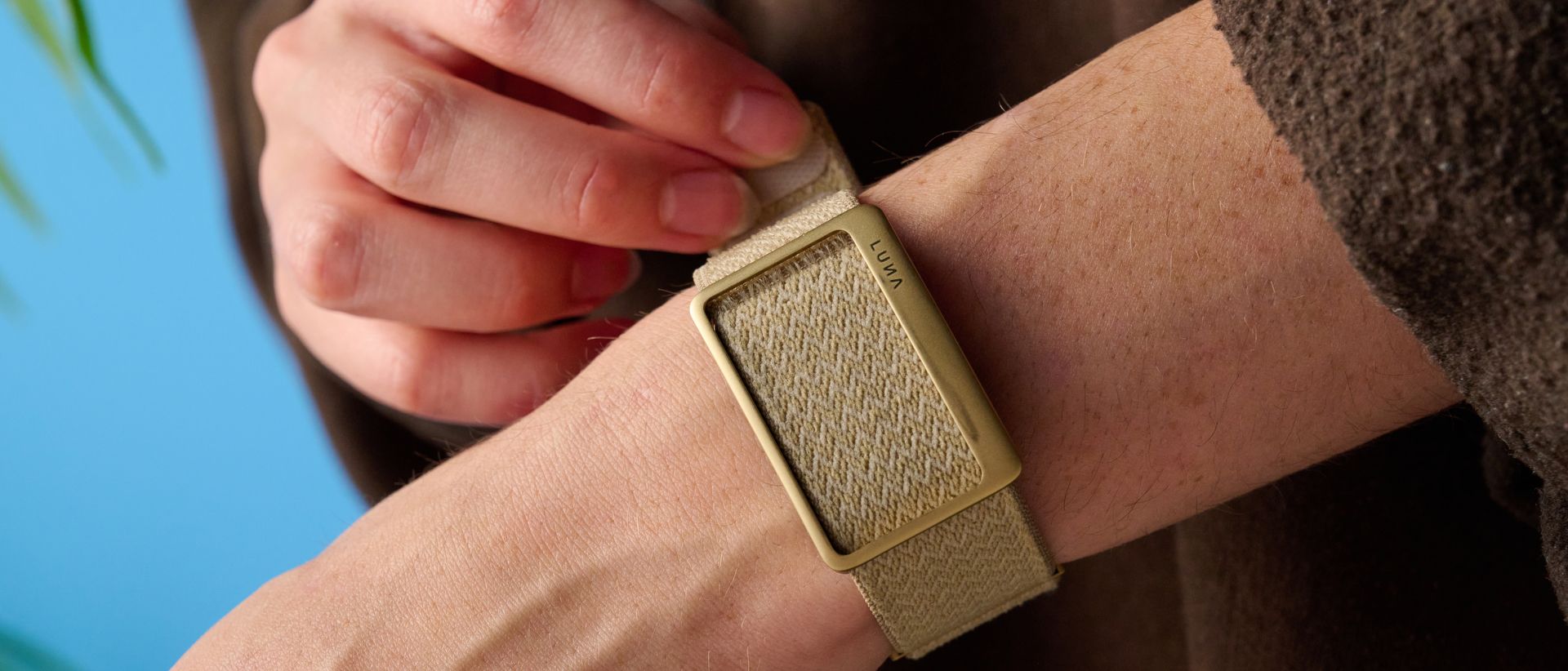
A comfortable, subscription-free Whoop rival held back by half-baked software
The Luna Band is aimed at fitness enthusiasts who want a screenless, unobtrusive health tracker without committing to recurring membership fees. Its standout qualities are its lightweight 24g chassis, 10-day battery life, and completely free LifeOS platform. However, the wearable launched in an unfinished state, plagued by unchangeable activity goals, unreliable auto-workout detection, and grayed-out features. While it undercuts Whoop significantly on total cost of ownership, Whoop remains vastly superior in algorithmic maturity and athletic training analytics.
Buy it if
- Wearers seeking a discreet, screenless band who refuse to pay monthly subscription fees
- Shoppers looking for reliable multi-day sleep tracking and sleep latency metrics
- Anyone wanting a lightweight 24g tracker that runs up to 10 days on a charge
Skip it if
- Athletes who need dependable automatic workout detection and deep athletic metrics
- Users who insist on customizing their daily step, calorie, and sleep targets
- Shoppers who want complete features out of the box rather than software promises
Where to buy
We may earn a commission from purchases or qualifying sign-ups through our links. Affiliate links explained
What reviewers liked
- No recurring subscription fees for health metrics or LifeOS AI features
- Lightweight 24-gram chassis with a comfortable, breathable woven nylon strap
- Verified 10-day battery life matching manufacturer claims
- Detailed sleep tracking that captures latency from the moment you lie down
- Water resistance rated to 5 ATM, suitable for pool and ocean swimming
What they didn’t
- Companion LifeOS app feels unfinished, with critical features labelled 'Coming Soon'
- Daily targets for steps, sleep, and active calories cannot be customized
- Unreliable automatic exercise tracking often misses or truncates workouts
- Lacks SpO2 and VO2 Max metrics at launch
Key specs
- Launch price
- $149
- Reported price
- $149
- Launch Price
- $149
- Weight
- 20–24 g
- Display
- Screenless
- Battery Life
- Up to 10 days
- Charging Time
- 60–90 minutes via magnetic cradle
- Water Resistance
- 5 ATM (up to 50 m)
- Sensors
- Optical heart rate (green/red/IR), skin temperature, 6-axis accelerometer & gyroscope
- Strap Sizes
- S–M (240 mm) and M–L (295 mm) included in the box
- Subscription
- None (free lifetime LifeOS access)
- Compatibility
- iOS and Android
In depth
Design and comfort
The Luna Band adopts a minimalist, screen-free form factor designed to disappear on the wrist. Weighing 20 to 24 grams, it is roughly 6.5 grams lighter than the competing Whoop strap. The package includes two nylon straps with hook-and-loop fasteners spanning small-to-medium (240 mm) and medium-to-large (295 mm) wrist sizes. Testing the beige configuration, Tom's Guide found the band aesthetically refined and comfortable even on slender wrists, noting that the breathable fabric avoids trapping heat and sweat compared to traditional silicone bands. The Independent also praised its daily comfort, though noted that the woven material takes a while to dry once saturated with water. With a 5 ATM water resistance rating, Tom's Guide wore the band in the ocean and in showers without experiencing slippage or water ingress.
Health and fitness tracking accuracy
Under the hood, the Luna Band houses multi-channel optical heart rate sensors using green, red, and infrared LEDs with four photodiodes, accompanied by a skin temperature sensor and an accelerometer. Sleep tracking emerged as a bright spot in evaluations: Tom's Guide highlighted that the tracker logs sleep latency from the moment a user lies down rather than waiting for sleep onset, providing clear stratification of sleep stages and heart rate variability (HRV). The Independent found that baseline health metrics aligned well with a Garmin Venu after an initial week of calibration, though the band missed restless tossing and turning, and periodically registered low skin temperatures. Fitness tracking proved far more erratic. Tom's Guide reported that during a 30-minute run with heart rate sustained between 144 and 162 BPM, the band auto-detected only a four-minute workout and provided virtually no post-run aerobic analysis. Furthermore, key biomarkers like blood oxygen saturation (SpO2) and VO2 Max remained non-functional at launch, tagged with 'Coming Soon' graphics.
Battery life
Luna rates the tracker for up to 10 days of continuous operation between charges, and testing backed up this estimate. Tom's Guide charged the band four times over a five-week evaluation period, consistently hitting the 10-day benchmark. This longevity beats the roughly seven-day endurance of the Fitbit Air and matches the Garmin Cirqa, though it trails the 14-day mark posted by Whoop 5.0 and the Amazfit Helio Strap. The Independent also verified roughly 10 days of runtime, but observed that the included magnetic charging cradle took longer than Luna's advertised 60-minute window, reaching around 75 percent battery capacity after an hour on the dock.
Smart features and app ecosystem
Rather than presenting endless technical charts, the companion LifeOS app is intended to deliver lifestyle coaching, combining sleep, recovery, and daily exertion into a single daily Peak Score. In practice, reviewers found the software experience severely hindered by missing functionality. Tom's Guide described the interface as feeling like a 'Coming Soon wasteland,' pointing out that core daily targets are rigid: the software fixes defaults at seven hours of sleep, 5,000 steps, 410 active calories, and 8 km of movement, with no way for users to edit their own targets. The in-app AI chatbot was unable to assist with customization. The Independent noted that the Peak Score algorithm occasionally provided counterproductive recommendations, such as suggesting strenuous exercise after poor sleep simply to recover missed daily score points. Promised voice controls and supplemental tracking micro-apps were also absent during testing.
Compatibility (iPhone/Android)
The Luna Band synchronizes wirelessly over Bluetooth to both iOS and Android devices through the LifeOS application. Setup is quick, taking less than 10 minutes via a quick-start QR code in the retail box. While day-to-day pairing functions smoothly once connected, early consumer feedback across both app stores has cited occasional data synchronization lag when loading sleep cards and heart rate logs.
Price and subscriptions
The Luna Band retails for an upfront price of $149, which covers the hardware, two strap sizes, and the charger. Its strongest consumer selling proposition is that LifeOS features, recovery metrics, and AI recommendations are entirely subscription-free for the lifespan of the device. This eliminates the perpetual financial barrier of Whoop, which requires subscriptions ranging from $239 to $399 annually, and avoids the paywalled features found on Fitbit Premium. However, at $149 it sits at a price premium compared to the $99 entry-level Fitbit Air and Amazfit Helio Strap.
Is it worth the money?
At $149 upfront with no recurring subscription fees, the Luna Band delivers a lower total cost of ownership than Whoop, though it commands a premium over the $99 Fitbit Air while suffering from software omissions.
Also consider
- Whoop 5.0
The established benchmark for screen-free recovery tracking, offering far more polished training analytics and algorithms, though it requires a recurring membership fee.
- Garmin Cirqa
A $199 subscription-free, screenless band that provides superior workout tracking accuracy and native integration with the mature Garmin Connect platform.
- Fitbit Air
A more affordable $99 screen-free option backed by Google's mature health suite, though certain deep historical metrics sit behind Fitbit Premium.
Reviews we read
This roundup summarizes professional reviews and published specifications; Next Interrupt did not test the product. Roundup updated October 31, 2026. How we work