 Watch on YouTube ↗
Linus Tech Tips ·
Phones & tablets / Review roundup
2026 Pro, 256GB; not Pro Max
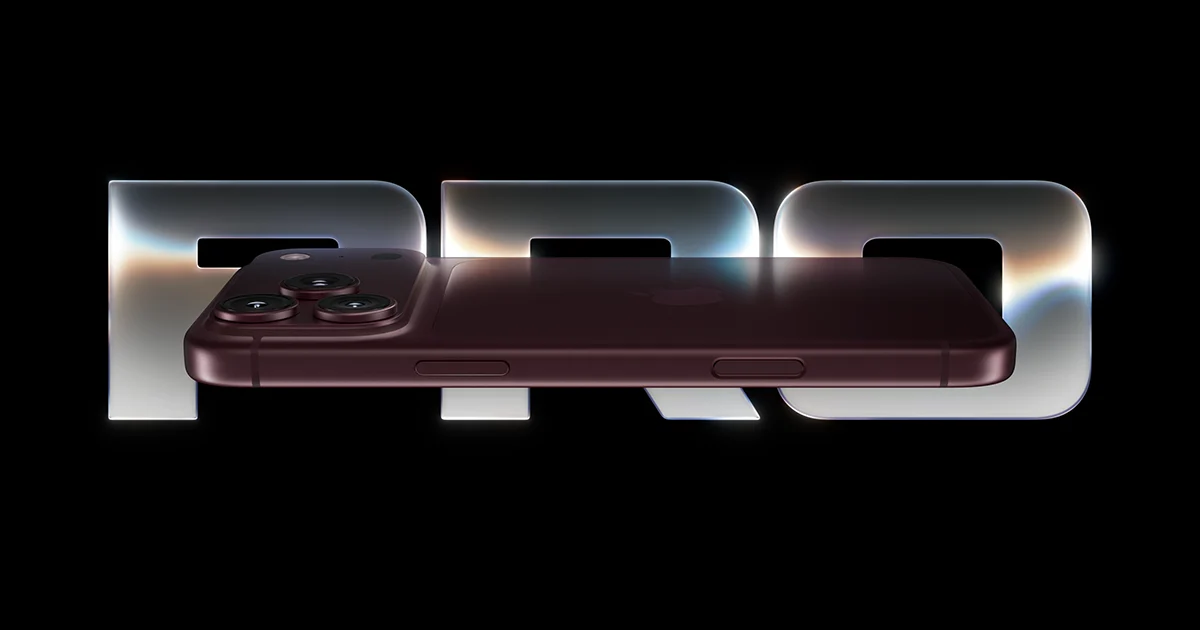
The Apple iPhone 18 Pro is the ideal choice for demanding users who want flagship-grade camera performance and top-tier processing in a manageable 6.3-inch frame. Its biggest strength is the new variable-aperture main camera paired with the efficient 2nm A20 Pro chip, which delivers faster task completion and noticeably longer battery life. The main catch is the steeper $1,199 starting price and an increase in weight to 211 grams. Compared to the Samsung Galaxy S26 Ultra, the iPhone 18 Pro offers faster everyday performance and superior video capture, though Samsung still holds the advantage in extreme long-range zoom.
We may earn a commission from purchases or qualifying sign-ups through our links. Affiliate links explained
The iPhone 18 Pro maintains the aluminum unibody framework paired with a matte frosted glass rear panel to accommodate wireless charging. Reviewers at GSMArena observed that while the overall visual silhouette matches the previous generation, Apple trimmed the Dynamic Island pill by embedding the Face ID infrared sensor beneath the display. This reduction allows iOS to present three concurrent Live Activities instead of two. Build durability remains top tier with second-generation Ceramic Shield front glass and an IP68 ingress rating certified for submersion down to 6 meters for 30 minutes. However, Tom's Guide noted that the internal additions—including a vapor chamber three times larger and the mechanical lens iris—push the weight up to 211 grams, making it feel noticeably denser in hand than older compact flagships.
The 6.3-inch Super Retina XDR OLED panel features an LTPO backplane capable of scaling between 1Hz and 120Hz depending on onscreen movement. In bench testing, GSMArena recorded 998 nits of full-screen sustained brightness in auto mode and 2,769 nits on a 10 percent white window against Apple's 3,000-nit peak claim. Sunlight legibility is further assisted by an anti-reflective coating that dampens outdoor reflections. What Hi-Fi? praised the screen for its crisp detail rendering and dynamic contrast during HDR video playback, while noting the minimum brightness drops cleanly to 1 nit for comfortable use in pitch-dark rooms.
The headline hardware change is a mechanical variable aperture on the 48MP main sensor, offering four discrete optical stops: f/1.48, f/1.8, f/2.8, and f/4.0. Tom's Guide found that shooting wide open at f/1.48 pulls in significantly more light and produces authentic optical background separation, whereas stopping down to f/4.0 sharpens multi-subject group shots from edge to edge. TechRadar highlighted the expanded Pro controls in the native camera app, allowing photographers to lock shutter speeds and manually choose f-stops. The 48MP 5x periscope telephoto and 48MP ultrawide sensors deliver crisp, color-matched daylight images. DXOMARK praised exposure accuracy but cited occasional white balance shifts and lens flaring under direct light sources. Long-distance zoom beyond 8x remains softer than dedicated dual-telephoto systems like Samsung's Galaxy Ultra line. Video recording remains unmatched across the category, offering smooth 4K Dolby Vision capture, manual aperture adjustment while rolling, and 60fps Cinematic Mode.
Powered by Apple's 2nm A20 Pro processor with 12GB of unified memory and a 96-bit memory bus, the phone sets new performance benchmarks. In Tom's Guide testing, Geekbench scores climbed 25 percent in single-core and 28 percent in multi-core over the iPhone 17 Pro, edging out Qualcomm Snapdragon 8 Elite Gen 5 chips by roughly 10 percent. Thanks to the redesigned thermal structure, sustained gaming loads experience far less aggressive throttling than earlier models. The 32-core Neural Engine smoothly handles on-device Siri AI requests, providing faster transcription and conversational context switching without generating excessive heat.
Endurance sees a measurable boost despite modest battery size changes (4,056 mAh for physical SIM versions and 4,288 mAh for US eSIM units). In Tom's Guide custom web browsing battery test, the iPhone 18 Pro ran for 16 hours and 17 minutes, outlasting the 17 Pro by 56 minutes. GSMArena achieved an Active Use Score of 16 hours and 43 minutes, and CNET recorded 94 percent remaining battery after three hours of Wi-Fi video streaming at maximum brightness. Wired charging speeds have substantially improved: GSMArena confirmed the phone supports fast USB-PD protocol drawing up to 53W bursts, taking the battery to 50 percent in just 15 minutes. Wireless MagSafe charging tops out at 25W, hitting 50 percent in 30 minutes.
The iPhone 18 Pro launches with iOS 27, which builds upon the Liquid Glass interface language with contextual Siri AI features and expanded home-screen widgets. TechRadar highlighted that Siri AI feels significantly more intuitive and reliable for complex cross-app workflows. Apple does not publish fixed multi-year software policies, but GSMArena points out that Apple actively supported 2019's iPhone 11 with iOS 27, giving buyers a realistic expectation of at least six to seven years of major operating system and security updates.
Apple shifted its flagship pricing structure, moving the base iPhone 18 Pro to $1,199. While this represents a $100 price increase over earlier baseline models, base storage now starts at 256GB rather than 128GB. Higher tiers are priced at $1,399 for 512GB, $1,599 for 1TB, and $1,799 for 2TB. Reviewers consider the entry-level 256GB model the best balance of value for most shoppers.
The baseline price jumped $100, but Apple doubled the entry-level capacity to 256GB, offsetting some of the hike for those who previously had to pay for a storage upgrade.
PERFORMANCE
Charts include only the measurements shown here, with settings and source links. Reviews may contain additional tests. Camera comparisons and subjective heat observations are discussed in the review findings.
Tom’s Guide · full test results ↗Published 2026-09-16 · checked 2026-10-13
continuous web surfing over 5G on 150 nits of screen brightness · iPhone 18 Pro: iPhone 18 Pro; iPhone 18 Pro Max: iPhone 18 Pro Max
Results apply to this publication’s tested models and settings. Check those details before comparing another review.
| Product | Result | Test scope |
|---|---|---|
| Apple iPhone 18 Pro | 977 | Reviewed model only |
Bars start at zero. Results apply to the tested configuration and settings. Missing products are never assigned zero.
Help choosing
Key differences, review evidence and who should buy each model.
Watch on YouTube ↗Linus Tech Tips ·
 Watch on YouTube ↗
Mrwhosetheboss ·
 Watch on YouTube ↗
Marques Brownlee ·
 Watch on YouTube ↗
The Verge ·
Offers an expansive 6.9-inch display and over 18 hours of battery life for an additional $100 if you do not mind carrying a heavier 249-gram phone.
Provides a built-in S Pen stylus and superior optical zoom reach past 10x, though in a wider form factor with slower wired charging.
Delivers comparable compact ergonomics and class-leading still photography processing at a lower retail entry price.
Shares a nearly identical exterior and display while costing significantly less on discounted retailer and carrier shelves.
This roundup summarizes professional reviews and published specifications; Next Interrupt did not test the product. Roundup updated November 15, 2026. How we work