Phones & tablets / Review roundup
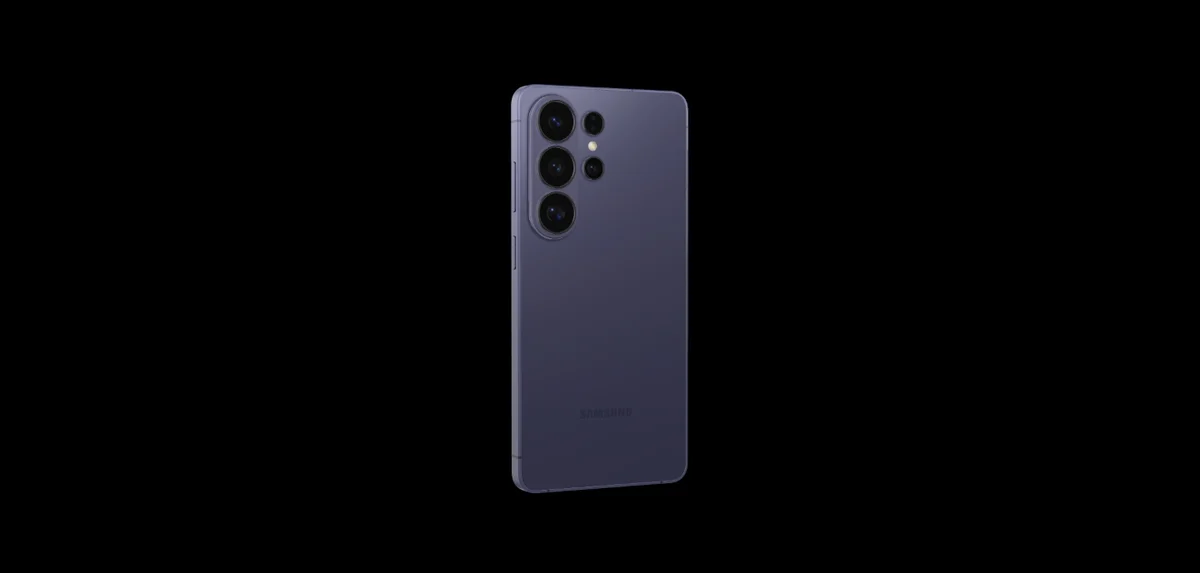
Samsung Galaxy S26 Ultra
US unlocked, 256GB / 12GB; regional radio variants differ
- 4.5 / 5Tom's Guide
- 4.5 / 5TechRadar
- 4.0 / 5PCMag
- 85 / 100TechSpot
A slimmer flagship with long endurance and a clever privacy display, but the premium price remains
The Samsung Galaxy S26 Ultra is the top choice for power users who want an integrated stylus, a versatile quad-lens camera, and multi-year software longevity. Its standout qualities are the 16-hour battery test result, faster 60W wired charging, and a hardware-level Privacy Display. The main catches are its steep $1,299 starting price and an oversized rear camera module that wobbles on flat surfaces. Compared to Apple's Pro Max flagship, Samsung offers greater zoom reach and stylus utility, though Apple maintains an edge in total battery endurance.
Buy it if
- Productivity users and note-takers who rely on an integrated stylus
- Frequent commuters wanting a built-in display privacy toggle
- Mobile photographers seeking optical zoom flexibility from 3x to 5x
Skip it if
- You want a compact or lightweight phone that fits easily into small pockets
- You already own a recent Ultra flagship and expect a revolutionary hardware overhaul
- You prefer built-in magnetic Qi2 wireless accessories without adding a case
Where to buy
We may earn a commission from purchases or qualifying sign-ups through our links. Affiliate links explained
What reviewers liked
- Endured for 16 hours and 10 minutes in Tom's Guide automated battery testing
- Upgraded 60W charging reached 84% in 30 minutes in GSMArena lab tests
- Innovative Privacy Display feature blocks side-angle viewing on demand
- Seven-year commitment for operating system upgrades and security patches
- Lighter 214-gram chassis with rounded corners improves hand feel
What they didn’t
- High $1,299 starting price for the base 256GB model
- Oversized rear camera housing rocks noticeably on flat surfaces
- Lacks built-in magnetic Qi2 wireless alignment without a dedicated case
Key specs
- Launch price
- $1,299.99 (256GB / 12GB)
- Reported price
- $1,149.99
- Display
- 6.9-inch Dynamic LTPO AMOLED 2X, 3120 x 1440, 1-120Hz, Privacy Display
- Processor
- Qualcomm Snapdragon 8 Elite Gen 5 for Galaxy
- RAM & Storage
- 12GB RAM; 256GB, 512GB, or 1TB UFS 4.1
- Rear Cameras
- 200MP main (f/1.4), 50MP ultrawide (f/1.9), 10MP 3x telephoto, 50MP 5x periscope
- Front Camera
- 12MP (f/2.2)
- Battery & Charging
- 5,000 mAh; 60W wired, 25W wireless
- Dimensions & Weight
- 163.6 x 78.0 x 7.9 mm, 214 g (7.55 oz)
- Durability
- Armor Aluminum frame, anti-reflective glass, IP68 water/dust resistance
- Software Support
- Android with One UI; 7 years of OS upgrades and security updates
In depth
Design and durability
Samsung refined the Ultra chassis by slightly softening the sharp corners of past generations and thinning the profile down to 7.9 mm. At 214 grams (7.55 ounces), Tom's Guide noted the phone is noticeably easier to handle for a 6.9-inch device than earlier models and rival heavyweights like the 233-gram iPhone. Samsung switched back to an Armor Aluminum frame from titanium, maintaining IP68 dust and water resistance. The bottom edge houses the integrated S Pen, which now features a subtly curved cap to match the reshaped corners. The main ergonomic complaint across reviews is the large camera island, which causes substantial wobble when typing on a desk.
Display
The 6.9-inch Dynamic LTPO AMOLED 2X panel runs at 3120 x 1440 resolution with an adaptive 1-to-120Hz refresh rate and an anti-reflective glass coating. The headline addition is Samsung's hardware-based Privacy Display, which electronically restricts horizontal viewing angles with a toggle to prevent shoulder surfing in public spaces. Reviewers at Tom's Guide and PCMag found the privacy filter remarkably effective on public transit. However, Tom's Guide noted that the new layer leaves the screen slightly dimmer in direct sunlight compared to the preceding generation.
Cameras (daylight, low light, zoom, video)
The rear array pairs a 200MP primary sensor (f/1.4) with a 50MP ultrawide, a 10MP 3x telephoto, and a 50MP 5x periscope zoom. In head-to-head testing against leading rivals, Tom's Guide found the larger aperture on the primary camera produced sharper, cleaner low-light exposures and richer shadow detail. TechRadar noted daylight shots are consistently vivid, and praised the Super Steady video stabilization for smoothing out walking motion. Zoom performance remains strong up to 10x hybrid magnification, but Android Authority and Tom's Guide noted that pushing to 30x and 100x Space Zoom results in noticeable digital artifacts and softer output.
Performance and gaming
Equipped with the customized Qualcomm Snapdragon 8 Elite Gen 5 for Galaxy platform and 12GB of RAM, the S26 Ultra showed significant benchmark gains. Tom's Guide reported that the phone took a clear lead in Geekbench multi-core tests, handling complex multitasking and video exports with zero stutter. Gaming was equally stable, with reviewers noting that the enlarged internal vapor chamber kept frame rates steady across demanding 3D titles. TechRadar observed that while the phone does warm up near the camera module under continuous stress testing, thermal throttling remained modest.
Battery life and charging speed
While battery capacity remains unchanged at 5,000 mAh, efficiency improvements delivered better runtimes. In Tom's Guide's automated web-surfing battery test over 5G, the S26 Ultra lasted 16 hours and 10 minutes, exceeding its predecessor by more than two hours. Wired charging received a long-awaited boost to 60W. In GSMArena's charging benchmark, the phone reached 51% in 15 minutes, 84% in 30 minutes, and finished a full recharge in 43 minutes with a compatible charger. Wireless charging supports 25W, though TechRadar criticized the absence of built-in Qi2 magnetic ring alignment in the bare chassis.
Software and update promise
Samsung ships the device with One UI over Android, backed by an industry-leading commitment of seven years of major operating system updates and security patches. Galaxy AI additions include real-time voice translation and automated briefing widgets, which TechRadar found practical for travel and daily scheduling. However, Android Authority and TechRadar observed that the expanding menu of AI settings feels crowded, with some secondary features rarely seeing regular use.
Is it worth the money?
The phone carries a steep $1,299 retail price, but major carriers and retailers frequently discount the base 256GB model to around $1,150 during seasonal promotions.
Benchmarks
PERFORMANCE
Benchmarks
Measurement coverage
- CPU: 2 tests
- GPU: 2 tests
- Battery: 1 test
- Charging: 1 test
- Display: 4 tests
Charts include only the measurements shown here, with settings and source links. Reviews may contain additional tests. Camera comparisons and subjective heat observations are discussed in the review findings.
Brightness HDR (nits)
Higher is better · nitsTom’s Guide · full test results ↗Published 2026-03-06 · checked 2026-10-06
Brightness HDR (nits) · Galaxy S26 Ultra: Galaxy S26 Ultra
Results apply to this publication’s tested models and settings. Check those details before comparing another review.
Test data and methodology
| Product | Result | Test scope |
|---|---|---|
| Samsung Galaxy S26 Ultra | 1806 | Reviewed model only |
Bars start at zero. Results apply to the tested configuration and settings. Missing products are never assigned zero.
Help choosing
Compare before you buy
Key differences, review evidence and who should buy each model.
Also consider
- Apple iPhone 17 Pro Max
Delivers longer overall battery life and MagSafe charging, though it lacks an integrated stylus and charges slower.
- Google Pixel 10 Pro XL
Offers cleaner Android software, immediate updates, and comparable camera quality at a lower initial retail cost.
Reviews we read
This roundup summarizes professional reviews and published specifications; Next Interrupt did not test the product. Roundup updated November 13, 2026. How we work