Phones & tablets / Review roundup
Google Pixel 11 Pro
2026, unlocked, 256GB / 12GB; not Pro XL
- 9/10Android Authority
- 4/5Trusted Reviews
- 3/5Tom's Guide
- 4/5TechRadar
A compact flagship with standout cameras and a bright display, tempered by middling battery speed and gaming power
The Pixel 11 Pro is best suited for shoppers wanting a genuinely compact phone with top-tier camera processing, clean software, and long-term support. Its main strength lies in its effortless imaging and comfortable 6.3-inch frame, which makes daily one-handed use seamless. However, its Tensor G6 chip still trails Qualcomm and Apple silicon in demanding 3D games, and 86-minute wired charging feels sluggish for a premium handset. While the Samsung Galaxy S26 Ultra delivers substantially more raw gaming muscle and faster top-ups, the Pixel 11 Pro offers a much more pocketable build and a more refined Android interface.
Buy it if
- Shoppers looking for a compact, one-handed flagship with top-tier camera capabilities
- Users who value clean Android software, helpful Gemini features, and seven years of updates
- Mobile photographers who want effortless Point-and-Shoot consistency and sharp 5x zoom
Skip it if
- Competitive mobile gamers who demand high frame rates in intensive 3D titles
- Shoppers needing rapid battery top-ups in under 45 minutes
- Pixel 10 Pro owners, as year-over-year performance gains are minimal
Where to buy
We may earn a commission from purchases or qualifying sign-ups through our links. Affiliate links explained
What reviewers liked
- Compact and ergonomic 6.3-inch build with IP68 water resistance
- Bright 120Hz LTPO OLED display with sharp 2856 x 1280 resolution
- Reliable daylight and low-light photo quality with useful 5x optical zoom
- Clean Android 17 interface backed by seven years of promised updates
- Base storage doubled to 256GB alongside Qi2 magnetic Pixelsnap charging
What they didn’t
- Tensor G6 trails rivals significantly in 3D gaming and heavy graphics tasks
- Sluggish 86-minute wired charging from empty to full
- Base configuration reduced to 12GB RAM despite a $100 launch price bump
- Rear HiLight notification LED offers limited everyday usefulness
Key specs
- Launch price
- $1,099 for 256GB / 12GB RAM
- Reported price
- $1,048 unlocked; heavily discounted on carrier trade-in deals
- Display
- 6.3-inch Super Actua LTPO OLED (2856 x 1280, 1-120Hz)
- Processor
- Google Tensor G6 with Titan M3 coprocessor
- Memory
- 12GB RAM (256GB model) / 16GB RAM (512GB/1TB)
- Storage
- 256GB (tested), 512GB, 1TB non-expandable
- Rear Cameras
- 50MP wide (f/1.68) + 48MP ultrawide + 48MP 5x telephoto
- Front Camera
- 42MP with autofocus
- Battery
- 4,850 mAh
- Charging
- 45W wired, 15W Qi2 magnetic wireless (Pixelsnap)
- Dimensions & Weight
- 152.7 x 71.9 x 8.4 mm; 204 grams
- Operating System
- Android 17 with 7 years of OS and security updates
In depth
Design and durability
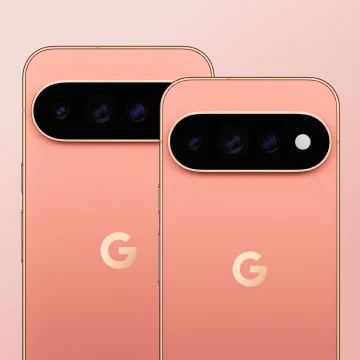
The Pixel 11 Pro keeps the pocket-friendly form factor introduced by its predecessor, measuring 152.7 x 71.9 x 8.4 mm and weighing 204 grams. It features a matte glass back paired with a polished metal frame, protected by Corning Gorilla Glass Victus 2 on both sides. The device retains an IP68 rating for water and dust resistance. The most noticeable aesthetic change is the full-width camera visor, which now uses a continuous pane of glass and integrates Google's HiLight multi-color LED module. Reviewers at Tom's Guide, TechRadar, and Android Authority noted that while the hardware feels dense and premium in hand, HiLight proves mostly gimmicky in practice, illuminating only for selected contact phone calls and Gemini voice queries rather than everyday app notifications.
Display
The 6.3-inch Super Actua LTPO OLED screen runs at a sharp resolution of 2856 x 1280 with an adaptive refresh rate spanning 1Hz to 120Hz. While Google touts a peak brightness of 3,600 nits, Tom's Guide measured peak brightness at 2,480 nits in testing, improving on the 2,333 nits recorded on the Pixel 10 Pro. What Hi-Fi? praised the panel's crisp detail and motion stability during video playback, though testers observed that HDR tone mapping can occasionally lack the cinematic contrast seen on Apple's flagship panels. Outdoor visibility under direct sunlight is effortless, and touch responsiveness remains fast even with damp fingers on the screen.
Cameras (daylight, low light, zoom, video)
The triple-camera array consists of a 50MP main sensor (f/1.68), a 48MP ultrawide sensor with macro functionality, and an upgraded 48MP 5x periscope telephoto camera backed by up to 120x Pro Zoom, complemented by a 42MP selfie shooter. Reviewers at Android Central and TechRadar singled out the new Magic Capture mode as a standout tool, capturing a steady video while Gemini automatically extracts high-resolution still photos. Daylight images deliver accurate colors and excellent dynamic range. For low light, Tom's Guide found the revamped Night Sight engine cuts exposure times noticeably while preserving star detail in astrophotography tests. Zoom photography remains sharp through 10x and usable up to 30x, though outlets found 120x yields fuzzy digital artifacts. Video records up to 4K at 60 fps natively, with cloud-based 8K Video Boost available for stabilization and color optimization.
Performance and gaming
Under the hood is Google's Tensor G6 chip paired with 12GB of RAM in the base model. In productivity and general navigation, testers at Android Authority found the phone completely smooth and responsive. However, synthetic benchmarks confirm it still lags rival silicon. Tom's Guide recorded Geekbench 6 scores of 2,664 single-core and 7,347 multi-core. In graphical tests, PCMag measured 2,963 points at 17.75 fps on 3DMark Wild Life Extreme, trailing the Samsung Galaxy S26+'s 7,381 points at 42.20 fps. In demanding 3D gaming sessions like Genshin Impact, PCMag and What Hi-Fi? noted occasional micro-stutters and chassis warmth during sustained combat, indicating that casual titles run fine but dedicated mobile gamers will face hardware bottlenecks.
Battery life and charging speed
Equipped with a 4,850 mAh battery, the Pixel 11 Pro delivers reliable all-day endurance for regular use, though it does not push multi-day boundaries. In standardized web browsing tests over cellular and Wi-Fi, Tom's Guide recorded 13 hours and 25 minutes, slightly behind the Pixel 10 Pro's 13 hours and 43 minutes. PCMag's video streaming rundown lasted exactly 13 hours at full display brightness. Charging speeds remain a sore point: despite 45W charging compatibility, Android Authority measured 86 minutes to recharge the 11 Pro from 0 to 100%, nearly matching the older model's 87 minutes and trailing the Galaxy S26 Ultra's 42-minute refuel. Qi2-compatible Pixelsnap wireless charging supports up to 15W with convenient magnetic alignment.
Software and update promise
The Pixel 11 Pro launches with Android 17, and Google promises seven full years of operating system upgrades, security patches, and quarterly Pixel Drops through 2033. Android Authority praised Google's refined software environment, which integrates subtle Gemini tools such as automated voice-to-text filler word removal, seamless call screening, and contextual summaries. System navigation feels polished and bloat-free. On the enthusiast side, Gadget Hacks reported that Google has restricted instant open kernel source downloads to an application process, which poses friction for custom ROM communities despite the strong official long-term support window.
Price and storage options
The unlocked Pixel 11 Pro starts at $1,099 for the 256GB storage tier with 12GB of RAM, an increase of $100 over the starting price of its predecessor, though the base storage has doubled from 128GB. Upgrading to 512GB costs $1,219, while the 1TB configuration retails for $1,449, both featuring 16GB of RAM. Color options include Obsidian, Olive, and Canyon. Typical unlocked street prices hover around $1,048 at major retailers like Amazon, and carrier promotions frequently discount the device through installment credits.
Is it worth the money?
The $100 launch price bump is partly offset by doubling base storage to 256GB, though lowering the base RAM to 12GB and slow top-up speeds make it less aggressive in value compared to discounted rivals.
Benchmarks
PERFORMANCE
Benchmarks
Measurement coverage
- Battery: 1 test
- Charging: 1 test
Charts include only the measurements shown here, with settings and source links. Reviews may contain additional tests. Camera comparisons and subjective heat observations are discussed in the review findings.
continuous web browsing over a 5G connection
Higher is better · minutesTom’s Guide · full test results ↗Published 2026-08-19 · checked 2026-10-13
continuous web browsing over a 5G connection · Google Pixel 11 Pro: Google Pixel 11 Pro
Results apply to this publication’s tested models and settings. Check those details before comparing another review.
Test data and methodology
| Product | Result | Test scope |
|---|---|---|
| Google Pixel 11 Pro | 805 | Reviewed model only |
Bars start at zero. Results apply to the tested configuration and settings. Missing products are never assigned zero.
Also consider
- Samsung Galaxy S26 Ultra
Offers much faster charging, superior Snapdragon 3D gaming performance, and an integrated S Pen stylus at a similar price point.
- Apple iPhone 17 Pro
Delivers longer battery endurance, faster video rendering, and more uniform gaming frame rates in a similarly compact size.
- Google Pixel 11
Saves $200 while offering the same Tensor G6 processor and primary camera, skipping only the 5x optical telephoto lens and stainless accents.
Reviews we read
This roundup summarizes professional reviews and published specifications; Next Interrupt did not test the product. Roundup updated November 17, 2026. How we work
- TechRadar — Google Pixel 11 Pro review
- Tom's Guide — Google Pixel 11 Pro and Pro XL review
- Android Authority — The Pixel 11 Pro should be a disappointment, but after 3 weeks with the phone I can't put it down
- Android Central — I spent a week testing the Google Pixel 11 Pro and Pro XL, and they're harder to recommend despite some fun new Gemini features
- Trusted Reviews — Google Pixel 11 Pro Review
- What Hi-Fi? — Google Pixel 11 Pro