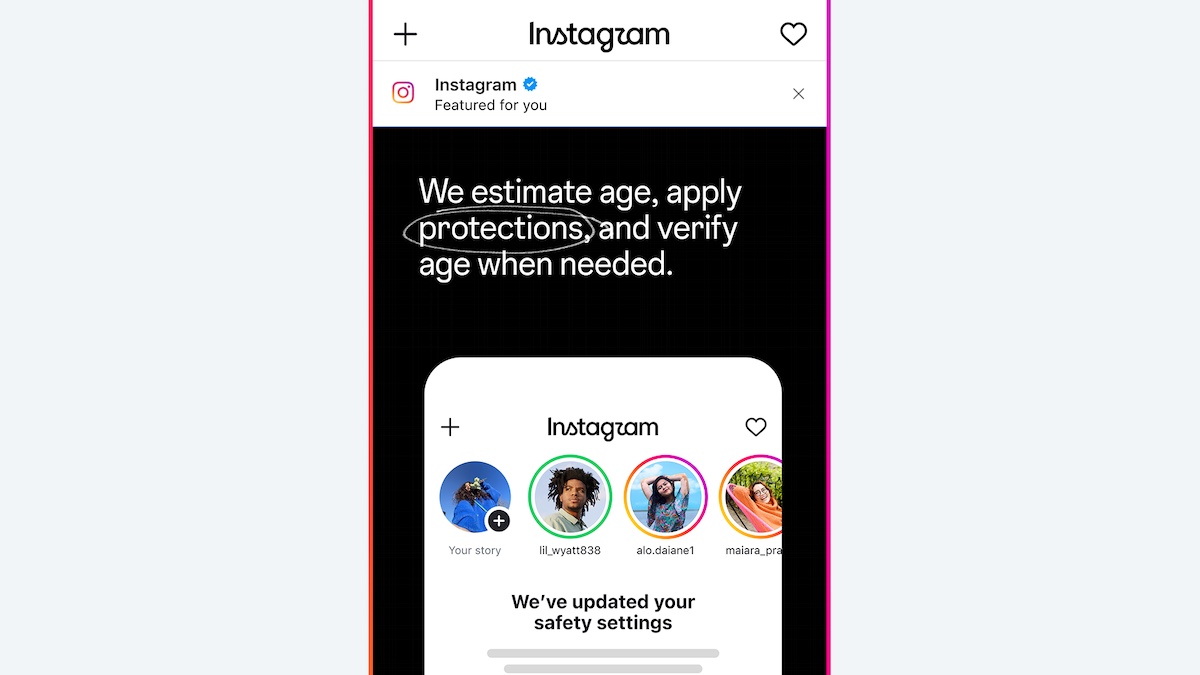
Meta announced on November 9 that it is deploying its artificial intelligence age-estimation technology across Instagram globally. The system searches for teenage users even if they registered with an adult date of birth, automatically shifting suspected minors into restricted Teen Accounts. The company expects the rollout to add millions of young users to the protective setup. [1][2]
The Teen Accounts framework defaults profiles to private, blocks direct messages from people the user does not follow, and filters harmful comments. To estimate age, the AI scans profile text, posts, bios, captions, and comments for indicators such as school grades or birthday wishes. It also evaluates visual signals like height and bone structure in photos and videos, though Meta emphasizes it does not run facial recognition or build biometric profiles. In Australia, the platform also incorporates Apple's opt-in parental age-range signals. However, Meta has not disclosed an accuracy figure or false-positive rate for the system. [1][2]
The worldwide deployment follows an August settlement worth up to $18 billion with 52 attorneys general representing nearly every U.S. state, territory, and Washington, D.C., resolving lawsuits over teen safety. Meta plans to continue introducing similar tools across Facebook and aims to launch them globally on Threads later in 2026. [1][2]