Wi-Fi & networking / Review roundup
TP-Link Archer 8 Ultra
Archer 8 Ultra
- 4.5 / 5TechRadar
A trailblazing draft Wi-Fi 8 router with blistering multi-gigabit hardware ahead of client adoption
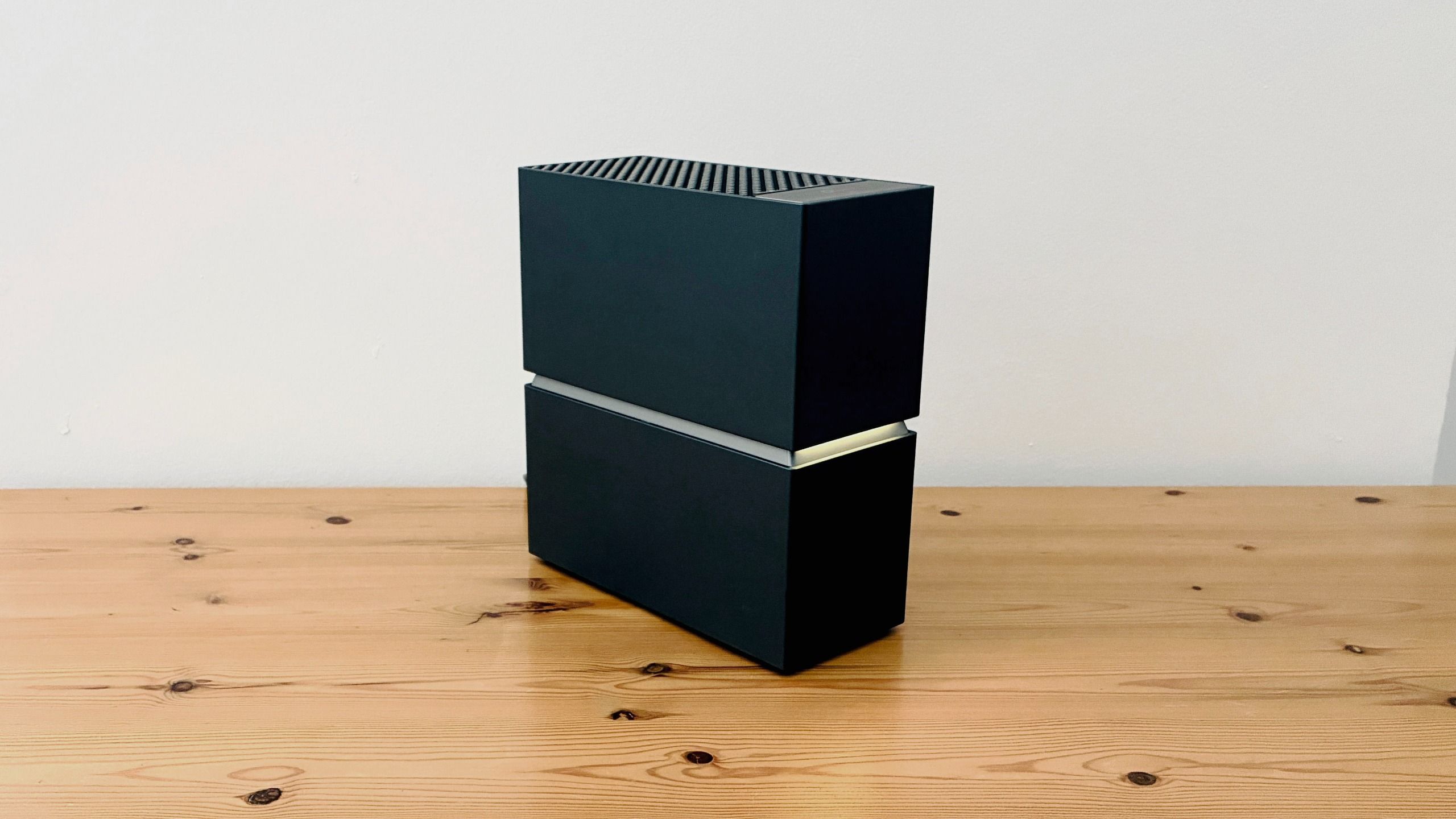
The TP-Link Archer 8 Ultra is tailored for deep-pocketed early adopters and network enthusiasts wanting tomorrow's wireless protocol immediately. Its primary strengths are massive bandwidth potential, dual 10 Gbps wired connectivity, and rock-solid signal retention through dense obstacles. The chief catch is that Wi-Fi 8 remains an unratified draft standard through 2028, and native client devices do not yet exist to tap its full feature set. Compared to rivals like the Asus ROG Rapture GT-BN98 Pro, the Archer 8 Ultra looks sleeker but faces delayed US availability and unproven multi-vendor mesh capabilities.
Buy it if
- Tech enthusiasts seeking early access to draft 802.11bn hardware
- Households needing multi-gigabit wired backhaul via dual 10 Gbps ports
- Challenging multi-floor layouts troubled by stubborn wireless dead zones
Skip it if
- Shoppers wanting strong performance-per-dollar right now
- US buyers unable to import hardware due to delayed domestic availability
- Anyone lacking Wi-Fi 7 or Wi-Fi 8 client hardware
Where to buy
We may earn a commission from purchases or qualifying sign-ups through our links. Affiliate links explained
What reviewers liked
- Exceptional multi-gigabit connectivity featuring two 10 Gbps and four 2.5 Gbps ports
- Draft Wi-Fi 8 StabilityEngine designed for superior interference handling
- Eighteen internal smart antennas deliver reliable long-range connection retention
- Straightforward setup assisted by NFC and the Tether mobile application
What they didn’t
- No consumer Wi-Fi 8 client devices currently exist to exploit key features
- Very high price tag compared to mature Wi-Fi 7 flagships
- Not formally released in the United States pending FCC regulatory clearances
- Advanced parental controls and security features require a HomeShield subscription
Key specs
- Launch price
- £899.99 / AU$1,499 (~$950-$1,200 USD equivalent; not sold in US)
- Reported price
- £669.99 (UK introductory pre-order) to £899.99 MSRP
- Wireless Standard
- Draft Wi-Fi 8 (IEEE 802.11bn) / Wi-Fi 7 (802.11be)
- Total Wireless Bandwidth
- Up to 19 Gbps across 2.4 GHz, 5 GHz, and 6 GHz bands
- Antennas
- 18 internal smart antennas
- Ethernet Ports
- 2x 10 Gbps (1x RJ45, 1x combo RJ45/SFP+), 4x 2.5 Gbps LAN, 1x 1 Gbps LAN
- Claimed Coverage
- Up to 3,600 sq ft (approx. 279 sq m in European specification)
- Device Capacity
- Up to 200 connected clients
- Processor
- Broadcom Wi-Fi 8 SoC
- Dimensions
- 245 x 98 x 226 mm
In depth
Speed and range in tests
Because commercial consumer devices with Wi-Fi 8 chips are not yet on the market, real-world benchmarks rely on existing Wi-Fi 7 hardware. In testing conducted by TechRadar using a Wi-Fi 7 laptop on a 150 Mbps connection, the Archer 8 Ultra fully saturated the 150 Mbps download and upload limit at close range (5 feet). Crucially, it maintained that exact 150 Mbps throughput at a distance of 30 feet (9 meters) through three partition walls across both 2.4/5 GHz and 6 GHz bands, successfully eliminating what had previously been a dead zone. While this confirms TP-Link's StabilityEngine helps sustain throughput through physical obstructions, reviewers note that testing has not yet pushed the router's theoretical 19 Gbps ceiling due to the lack of draft-compatible client devices and gigabit-speed testing caps.
Coverage for larger homes / mesh
The Archer 8 Ultra houses 18 internal smart antennas within its monolithic chassis, rated by TP-Link to cover structures up to 3,600 square feet (rated at 279 square meters in European documentation) and connect up to 200 simultaneous devices. Reviewers highlight TP-Link's Multi-Floor Mode, which dynamically tilts wireless beam patterns vertically or horizontally depending on where active devices reside across levels. For larger homes needing multi-node distribution, the unit supports EasyMesh, though full multi-access point coordination (MAPC) from the Wi-Fi 8 draft is slated to arrive via over-the-air firmware updates as the 802.11bn specification matures.
Wi-Fi standard and ports
The router implements draft IEEE 802.11bn (Wi-Fi 8), a standard that prioritizes connection reliability, lower latency, and heavy interference management rather than sheer increases in raw link rates over Wi-Fi 7. Key features at launch include Unequal Modulation (UEQM) and Non-Primary Channel Access (NPCA). Its physical connectivity is exceptionally broad: the rear panel provides two auto-sensing 10 Gbps WAN/LAN ports (one standard RJ45 and one RJ45/SFP+ optical combo port), four 2.5 Gbps Ethernet LAN ports, and one standard 1 Gbps LAN port. Reviewers note that only one connection on the combo port can be active at a time, but the array guarantees full compatibility with 10-gigabit fiber connections and multi-gigabit network-attached storage.
App, setup and security features
Setup is handled either via a standard web interface or the TP-Link Tether mobile app, aided by an integrated NFC tag on the router housing that allows quick smartphone pairing. Onboard network management includes TP-Link's Aireal AI Assistant for real-time channel optimization, adaptive QoS, and diagnostic self-healing. Advanced users gain access to comprehensive built-in VPN server and client options supporting WireGuard, OpenVPN, L2TP, and PPTP directly on the hardware. Wireless security covers WPA3-Personal and WPA3-Enterprise, alongside isolated guest networks across all three broadcast frequency bands.
Subscriptions
Basic network security scanning, IoT device detection, and fundamental parental controls are included out of the box via TP-Link HomeShield. However, unlocking deeper capabilities—including real-time malicious content filtering, detailed browsing reports, and advanced parental scheduling—requires an optional HomeShield Pro subscription. Reviewers point out that at an ultra-premium hardware price point, competitors like Asus provide equivalent comprehensive security and parental management tools indefinitely without ongoing subscription charges.
Price
The Archer 8 Ultra launched in November 2026 with international preorders at £669.99 in the UK, rising to a regular list price of £899.99. In Australia, it is priced at AU$1,499. The router is not officially available in the United States, where TP-Link has faced regulatory delays regarding FCC approvals. Based on foreign pricing, it effectively equates to a $900 to $1,200 tier. Reviewers across the board emphasize that this is a bleeding-edge early-adopter tax, offering negligible practical advantage over top-tier Wi-Fi 7 alternatives until compatible devices become mainstream.
Is it worth the money?
The router carries an extreme premium for early draft hardware; unless you require dual 10 Gbps ports today, mature Wi-Fi 7 hardware delivers comparable speed for hundreds less.
Also consider
- Asus ROG Rapture GT-BN98 Pro
A competing draft Wi-Fi 8 gaming router with US regulatory availability, rich gaming QoS, and free lifetime security features.
- TP-Link Archer BE800
A proven Wi-Fi 7 model featuring similar dual 10 Gbps ports and 19 Gbps combined speeds at a substantially lower cost.
- Asus RT-BE96U
A high-performance tri-band Wi-Fi 7 router with robust multi-gigabit backhaul and zero mandatory subscription fees.
Reviews we read
This roundup summarizes professional reviews and published specifications; Next Interrupt did not test the product. Roundup updated November 12, 2026. How we work