Phones & tablets / Review roundup
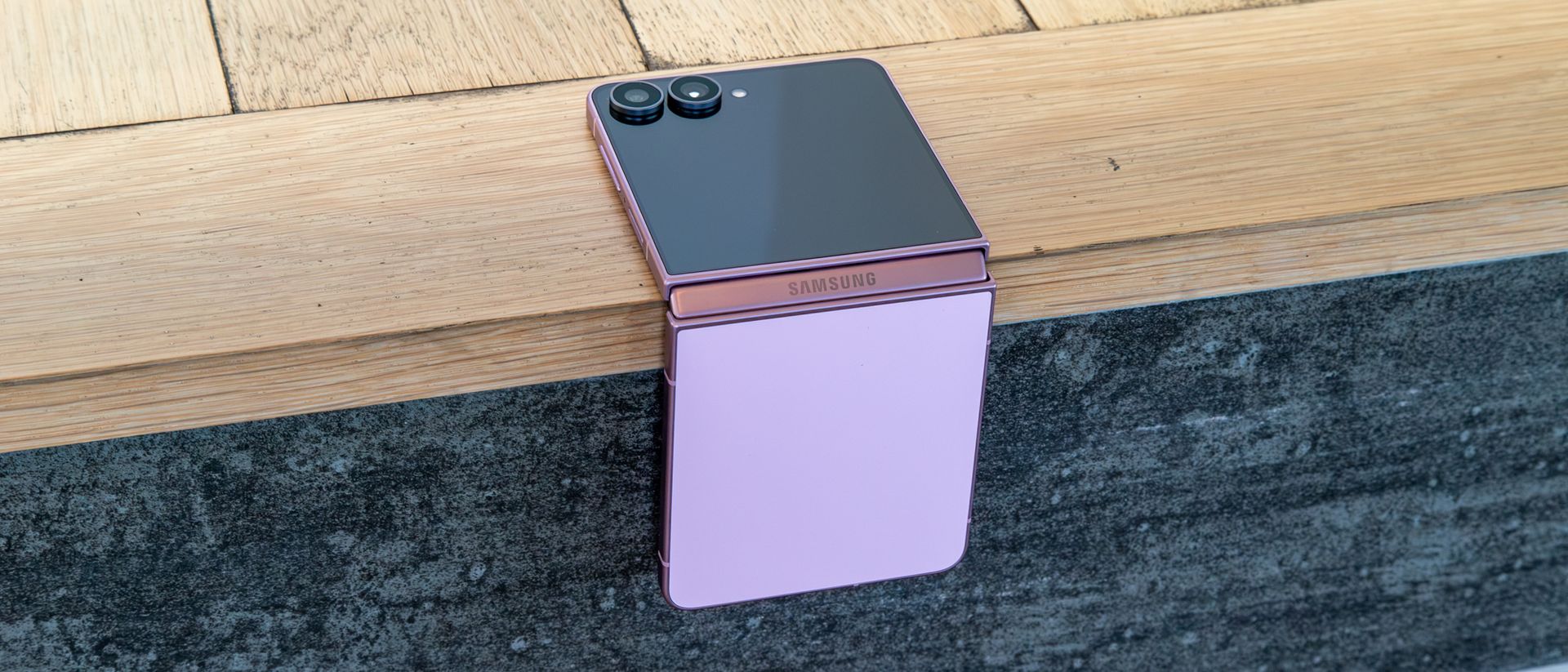
Samsung Galaxy Z Flip 8
Samsung Galaxy Z Flip 8
- 4.0 / 5PCMag
- 4.0 / 5Android Central
- 7.4 / 10PhoneArena
- 86 / 100Notebookcheck
A refined clamshell foldable with a smoother crease and better battery life let down by a higher price tag
The Samsung Galaxy Z Flip 8 is the ideal purchase for shoppers who want a compact, pocketable foldable with top-tier build quality, seven years of software support, and a virtually eliminated crease. Its biggest strength is its sleeker 6.1mm profile and efficient silicon-carbon battery, but the catch is a $100 price hike to $1,199 alongside the continued absence of a dedicated telephoto camera. If you want a more aggressively priced flip foldable with a wider external app ecosystem out of the box, the Motorola Razr Ultra remains the primary alternative.
Buy it if
- Shoppers wanting a compact, pocket-friendly foldable with high durability and long software support
- Vloggers and content creators who frequently take hands-free photos and 4K video in FlexMode
- Anyone upgrading from older clamshell foldables like the Galaxy Z Flip 5 or Flip 6
Skip it if
- You demand a true optical telephoto zoom lens on a phone costing over $1,000
- You already own a Galaxy Z Flip 7, which shares an identical camera module and similar cover screen dimensions
- You want rapid charging speeds exceeding 25W
Where to buy
We may earn a commission from purchases or qualifying sign-ups through our links. Affiliate links explained
What reviewers liked
- Noticeably thinner 6.1mm unfolded profile and reduced 180g weight
- Inner screen crease is significantly shallower and virtually invisible during normal use
- Both displays reach up to 3,000 nits peak brightness for clear outdoor viewing
- Tested battery life improved to 18 hours and 15 minutes in PCMag's rundown
- Industry-leading seven-year software and security update commitment
What they didn’t
- Base price increased by $100 to $1,199 without adding extra base storage
- Lacks a dedicated optical telephoto zoom camera
- Wired charging remains capped at 25W
- IP48 rating protects against water immersion but only blocks dust particles larger than 1mm
Key specs
- Launch price
- $1,199.99 (256GB) / $1,379.99 (512GB)
- Reported price
- $1,049.99 to $1,199.99 unlocked
- Starting Price
- $1,199.99 (256GB)
- Inner Display
- 6.9-inch Dynamic AMOLED 2X (2520 x 1080), 1-120Hz LTPO, 3,000 nits peak
- Cover Display
- 4.1-inch Super AMOLED (720 x 748), 120Hz, 3,000 nits peak
- Processor
- Qualcomm Snapdragon 8 Elite Gen 5 (US/China) / Exynos 2600 (Global)
- RAM & Storage
- 12GB RAM; 256GB / 512GB UFS 4.0 (non-expandable)
- Cameras
- 50MP f/1.8 main (OIS), 12MP f/2.2 ultrawide; 10MP f/2.2 inner selfie
- Battery & Charging
- 4,300mAh silicon-carbon; 25W wired, 15W wireless, 4.5W reverse wireless
- Dimensions & Weight
- 166.9 x 75.4 x 6.1 mm (open); 85.6 x 75.4 x 13.2 mm (closed); 180 grams
- Ingress Protection
- IP48 (water immersion up to 1.5m for 30 min; debris >1mm)
- Software Support
- Android 17 with One UI 9; 7 years of OS upgrades and security patches
In depth
Design and durability
The Galaxy Z Flip 8 focuses on ergonomic refinement rather than radical change. Samsung shaved the unfolded profile down to 6.1 mm and kept the overall weight at 180 grams, making it lighter and significantly easier to operate with one hand than bulkier clamshells. The frame uses Samsung's reinforced Armor Aluminum, while the outer shell features Gorilla Glass Victus 2 on the front and a textured glass-polymer finish on the back. A newly revised Armor Flex Hinge allows the device to close completely flat and makes opening the phone smoother. Reviewers at PhoneArena point out that while the IP48 rating provides submersion protection in fresh water up to 1.5 meters for 30 minutes, the solid-particle rating only guards against foreign objects larger than 1 mm, leaving the mechanical hinge vulnerable to fine sand and pocket grit.
Display and cover screen usability
The interior panel is a 6.9-inch Dynamic AMOLED 2X display with an adaptive 1 to 120Hz refresh rate and a peak brightness of 3,000 nits, which reviewers noted delivers great readability in direct sunlight. Crucially, reviewers at Android Headlines and PCMag observed that Samsung's revised hinge geometry has rendered the center display crease virtually imperceptible during normal forward-facing use and far less distracting under the finger. The external 4.1-inch FlexWindow also steps up to 3,000 nits of peak brightness and a fluid 120Hz refresh rate. PCMag and Android Central praised the software expansion on the cover panel, which now supports full Quick Settings toggles, interactive app folders, third-party widgets, and native AI interactions without forcing users to unfold the phone.
Cameras: daylight, low light, and zoom
Samsung carried over the rear camera hardware from the previous generation, combining a 50MP primary sensor with an f/1.8 lens and optical stabilization alongside a 12MP f/2.2 ultrawide shooter. Daylight stills from the primary sensor are punchy and sharp, with BGR noting good dynamic range and natural edge rendering boosted by Samsung's upgraded ProVisual image processing engine. In low-light environments, the main camera retains fine details with restrained noise suppression. The biggest drawback cited across reviews is the complete lack of a dedicated telephoto camera. PhoneArena found that while 2x in-sensor crops remain crisp, zoom shots degrade rapidly into soft, muddy frames past 5x or 6x magnification. Video recording remains a high point, supporting stabilized 4K at 60fps across the rear and inner cameras.
Performance and gaming
North American models carry Qualcomm's Snapdragon 8 Elite Gen 5 silicon paired with 12GB of RAM as standard, while international versions feature the Exynos 2600. In general multitasking, app switching, and One UI animation fluidity, reviewers found responsiveness on par with conventional non-folding flagships. PhoneArena's benchmark logs showed the processor achieving multi-core scores above 10,400 points. Sustained 3D gaming tells a more cautious story: due to the phone's slim split-chassis build, 3DMark stress tests revealed thermal throttling that cut peak graphical performance by roughly 40% over extended 20-minute sessions to keep outer surface temperatures in check.
Battery life and charging speed
Samsung shifted to a denser 4,300mAh silicon-carbon battery pack, enabling the slimmer 6.1mm design without shrinking the cell capacity. PCMag logged an impressive 18 hours and 15 minutes in its continuous video rundown battery benchmark, confirming that the more efficient chipset provides all-day endurance with ease. Real-world testers at Reddit and PhoneArena reported between 5 and 5.5 hours of active screen-on time per full charge under mixed cellular workloads. However, charging speeds remain a sore spot: wired charging is still capped at 25W, requiring approximately 75 to 80 minutes for a complete replenish from zero. Wireless charging is supported at up to 15W, alongside 4.5W reverse wireless sharing.
Software, AI, and update promise
The Galaxy Z Flip 8 arrives with Android 17 and Samsung's One UI 9. Samsung matches the best software policies in the industry by committing to seven full operating system updates and seven years of monthly security patches, keeping the phone supported until 2033. One UI 9 integrates deeper on-device Galaxy AI features, including 'Now Brief' for morning calendar and email recaps, 'Now Nudge' contextual suggestions, and Gemini Live support accessible directly through the external cover screen. Reviewers appreciated that these software additions genuinely reduce the need to unfold the device for simple administrative tasks throughout the day.
Price and storage options
The Samsung Galaxy Z Flip 8 starts at $1,199.99 for 256GB of UFS 4.0 storage, representing a $100 price increase over its predecessor. A larger 512GB tier is available for roughly $1,379.99. Both configurations come with 12GB of RAM, and there is no microSD card slot for expandable storage. Standard color options include Cream, Graphite, Pink, and an exclusive Mint green sold through Samsung's online store. Major retailers like Amazon and Best Buy have occasionally discounted unlocked units down to $1,049.99, while US wireless carriers regularly offer promotional bill credits that offset the upfront launch premium.
Is it worth the money?
The $100 price bump hurts the Flip 8's value rating, but carrier trade-in promotions and frequent $150 retail discounts bring it in line with its predecessor's price point.
Also consider
- Motorola Razr Ultra (2026)
Offers an edge-to-edge cover screen with wider native app compatibility, though it comes at a steeper list price.
- Samsung Galaxy Z Flip 7
Provides nearly identical camera hardware and a similar cover screen at a substantially lower refurbished or clearance price.
- Samsung Galaxy Z Fold 8
Costs significantly more but delivers a true tablet-sized workspace, S Pen support, and dedicated optical telephoto cameras.
Reviews we read
This roundup summarizes professional reviews and published specifications; Next Interrupt did not test the product. Roundup updated October 22, 2026. How we work
- PCMag — Samsung Galaxy Z Flip 8 Review: Svelte, Smart, and Genuinely Usable
- Android Central — Two weeks with the Samsung Galaxy Z Flip 8 almost made me forget about the Motorola Razr
- GSMArena — Samsung Galaxy Z Flip8 review: Our lab tests - display, battery life, charging speed, speakers
- TechRadar — Samsung Galaxy Z Flip 8 vs Samsung Galaxy Z Flip 7: which flip foldable is best?