Phones & tablets / Review roundup
Samsung Galaxy Z Flip 7
Samsung Galaxy Z Flip 7
- 4.5 / 5Tom's Guide
- 4 / 5TechRadar
- 4.0 / 5PCMag
- 82 / 100Engadget
A refined clamshell foldable with a stunning edge-to-edge cover screen let down by middling endurance
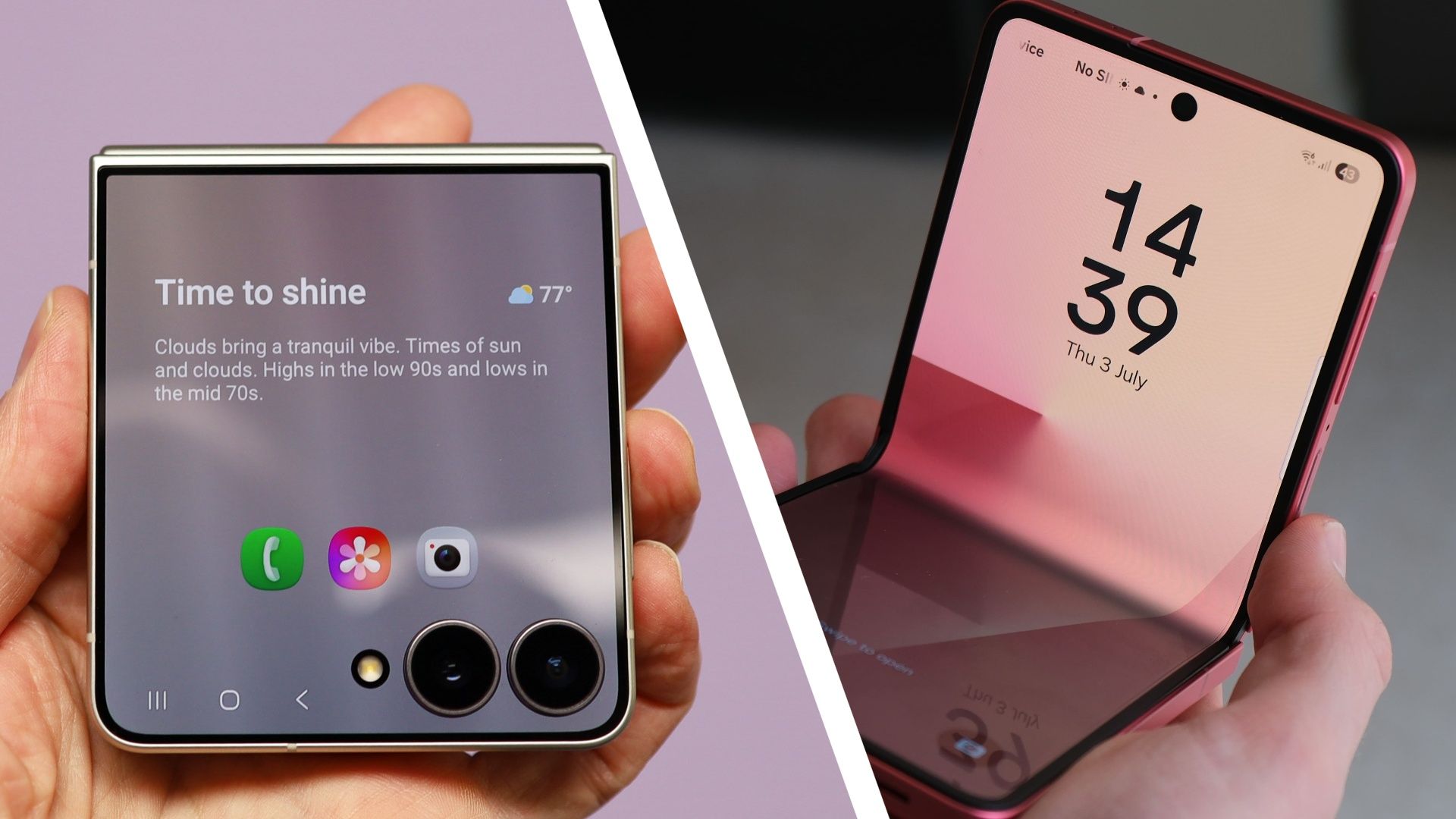
The Samsung Galaxy Z Flip 7 is an easy recommendation for anyone wanting a compact, pocket-friendly phone that does not compromise on build quality or display real estate. Its expanded 4.1-inch 120Hz FlexWindow exterior display and Samsung DeX support bring unmatched utility to the clamshell category. However, its in-house Exynos 2500 processor tends to run warm during heavy workloads, and the camera hardware remains unchanged from its predecessor. Compared to the Motorola Razr Ultra, the Flip 7 offers superior software support and desktop multitasking, but falls behind on sustained gaming efficiency and battery runtime.
Buy it if
- Vloggers and mobile creators who rely on hands-free FlexCam capture and a full-size outer preview window
- Buyers wanting the most compact folding phone that offers long-term software longevity and desktop DeX mode
Skip it if
- Competitive mobile gamers who need maximum sustained frame rates without thermal throttling
- Shoppers prioritizing multi-day battery endurance, ultra-fast charging, or dedicated telephoto optics
Where to buy
We may earn a commission from purchases or qualifying sign-ups through our links. Affiliate links explained
What reviewers liked
- Spacious 4.1-inch 120Hz cover screen with ultra-narrow bezels
- Sturdy hinge with a slender 6.5 mm profile unfolded
- First Flip model to feature desktop Samsung DeX mode
- Seven years of promised Android OS upgrades and security updates
- Versatile FlexCam angles using the 50MP primary sensor for selfies
What they didn’t
- Exynos 2500 processor runs warm under load and trails Snapdragon 8 Elite rivals
- Running unapproved apps on the cover display requires the Good Lock utility
- Camera hardware is recycled from the previous generation without telephoto zoom
- Charging speed remains capped at 25W wired
Key specs
- Launch price
- $1,099.99 (256GB), $1,219.99 (512GB)
- Reported price
- $500 to $939 depending on retailer promotions and carrier incentives
- Launch Price
- $1,099.99 (256GB), $1,219.99 (512GB)
- Main Display
- 6.9-inch Foldable Dynamic LTPO AMOLED 2X (2520 x 1080), 1-120Hz, 2,600 nits peak
- Cover Display
- 4.1-inch Super AMOLED FlexWindow (948 x 1048), 120Hz, 2,600 nits peak
- Processor
- Samsung Exynos 2500 (10-core, 3nm)
- RAM & Storage
- 12GB RAM; 256GB or 512GB UFS 4.0
- Rear Cameras
- 50MP wide (f/1.8, OIS) + 12MP ultra-wide (f/2.2, 123-degree FoV)
- Front Camera
- 10MP (f/2.2) inner display sensor
- Battery & Charging
- 4,300 mAh; 25W wired, 15W wireless, 4.5W reverse wireless
- Dimensions & Weight
- Folded: 85.5 x 75.2 x 13.7 mm; Unfolded: 166.7 x 75.2 x 6.5 mm; 188 g
- Durability Rating
- IP48 water and particle resistance, Armor Aluminum frame, Gorilla Glass Victus 2
In depth
Design and durability
The Galaxy Z Flip 7 refines Samsung's clamshell chassis into a slimmer package. Unfolded, it measures 6.5 mm thick, narrowing down from the 6.9 mm of its predecessor, and folds down to 13.7 mm while weighing 188 grams. Tom's Guide noted that the Armor Aluminum frame and re-engineered hinge feel exceptionally rigid, locking firmly into various angles for hands-free Flex Mode use. Engadget observed that closing the device yields a reassuringly solid sound, with hinge tension requiring deliberate effort to open. The device carries an IP48 certification. While this guarantees water resistance down to 1.5 meters for up to 30 minutes, reviewers caution that the '4' rating only keeps out solid debris larger than 1 mm, meaning it will not safeguard against fine sand or dust at the beach.
Display
The centerpiece of the upgrade is the enlarged 4.1-inch outer FlexWindow display. TechRadar highlighted that Samsung eradicated the folder-style cutout seen on earlier generations, stretching the AMOLED panel fully across the exterior with 1.25 mm bezels. Both the cover panel and the inner 6.9-inch Dynamic LTPO AMOLED 2X folding display support 120Hz refresh rates and reach a peak brightness of 2,600 nits. Reviewers found daylight visibility outdoors to be top-tier on both screens. Engadget noted that while the horizontal crease across the inner folding glass is still tactile under fingertip swipes, it is essentially unnoticeable during direct viewing. The primary gripe shared by Tom's Guide and Engadget centers on software gating: out of the box, the cover screen is restricted to widgets and notification cards, requiring Samsung's Good Lock MultiStar plugin to run full Android applications.
Cameras (daylight, low light, zoom, video)
Samsung left the rear optical array unchanged, carrying over the 50MP wide main camera and 12MP ultra-wide sensor alongside an inner 10MP selfie camera. In daylight shooting, Tom's Guide and PCMag observed that updated processing via Samsung's ProVisual Engine produces punchy contrast, balanced highlights, and crisp shadow detail compared to the previous model. In low-light environments, the main sensor retains clarity with controlled noise levels. However, because the phone lacks a dedicated telephoto sensor, any magnification beyond 2x relies entirely on in-sensor cropping; images taken at 5x and 10x turn noticeably soft. Where the Flip 7 shines is creator ergonomics: prop the phone in a 90-degree L-shape on a flat surface, and the expansive 4.1-inch outer screen serves as a large viewfinder for capturing stabilized 4K video or high-resolution selfies with the primary camera.
Performance and gaming
Breaking with recent traditions, Samsung equipped the Galaxy Z Flip 7 globally with its 3nm Exynos 2500 chipset instead of Qualcomm's Snapdragon silicon. Paired with 12GB of RAM, everyday system navigation, UI transitions, and split-screen multitasking remain fluid. Geekbench benchmarking recorded roughly 2,012 points in single-core and 7,563 points in multi-core testing. PCMag reported that the phone gets warm during sustained heavy tasks. In demanding 3D games, reviewers observed that the compact clamshell thermal dissipation leads to thermal throttling earlier than on competing phones running Qualcomm's Snapdragon 8 Elite, making it less suitable for sustained high-frame-rate gaming sessions.
Battery life and charging speed
Samsung increased the battery capacity to 4,300 mAh, a 300 mAh improvement over the Flip 6. In PhoneBuff's automated battery rundown test, the Flip 7 achieved 11 hours and 9 minutes of active screen-on time and 27 hours of total runtime, finishing only 41 minutes behind the Galaxy S25 Ultra. PhoneArena observed approximately a 20-minute increase in continuous web browsing and video streaming endurance. In TechRadar's laboratory tests, the Flip 7 lasted 12 hours and 30 minutes, which improved on its predecessor but trailed the Snapdragon-equipped Motorola Razr Ultra by nearly six and a half hours. Wired charging remains limited to 25W, alongside 15W wireless and 4.5W reverse wireless charging, meaning a full replenish takes well over an hour.
Software and update promise
The Galaxy Z Flip 7 launched with One UI 8 running atop Android 16. The standout software upgrade is the arrival of Samsung DeX, marking the first time a Flip model can connect to an external monitor to output a full desktop windowing environment. Samsung also integrated multimodal Google Gemini Live directly onto the cover screen, letting users query the AI with voice and camera feeds while the phone remains closed. Samsung guarantees seven years of major Android operating system upgrades and seven years of security patches, representing one of the strongest longevity commitments in the smartphone industry.
Price and storage options
The Galaxy Z Flip 7 launched at $1,099.99 for the 256GB storage configuration and $1,219.99 for the 512GB variant, both including 12GB of RAM. Over time, street prices at major retailers and carrier outlets have dropped significantly, frequently landing between $500 and $900 through unlocked promotions or carrier contract incentives. Color finishes include Jet Black, Blue Shadow, Coral Red, and an online-exclusive Mint.
Is it worth the money?
While full retail pricing matches standard flagship territory, frequent promotions and carrier trade-in credits make it substantially cheaper in practice than rival book-style foldables.
Also consider
- Motorola Razr Ultra (2025)
Provides a faster Snapdragon processor, native out-of-the-box cover screen app support, and faster charging, though with fewer years of software updates.
- Samsung Galaxy Z Flip 6
Shares identical camera hardware and everyday durability at a heavily reduced clearance or refurbished price, albeit with a smaller outer display.
- Samsung Galaxy Z Fold 7
Offers an expansive 8-inch tablet inner display and dedicated telephoto camera for users who prioritize serious multitasking over pocketability.
Reviews we read
This roundup summarizes professional reviews and published specifications; Next Interrupt did not test the product. Roundup updated October 27, 2026. How we work