Consoles & handhelds / Review roundup
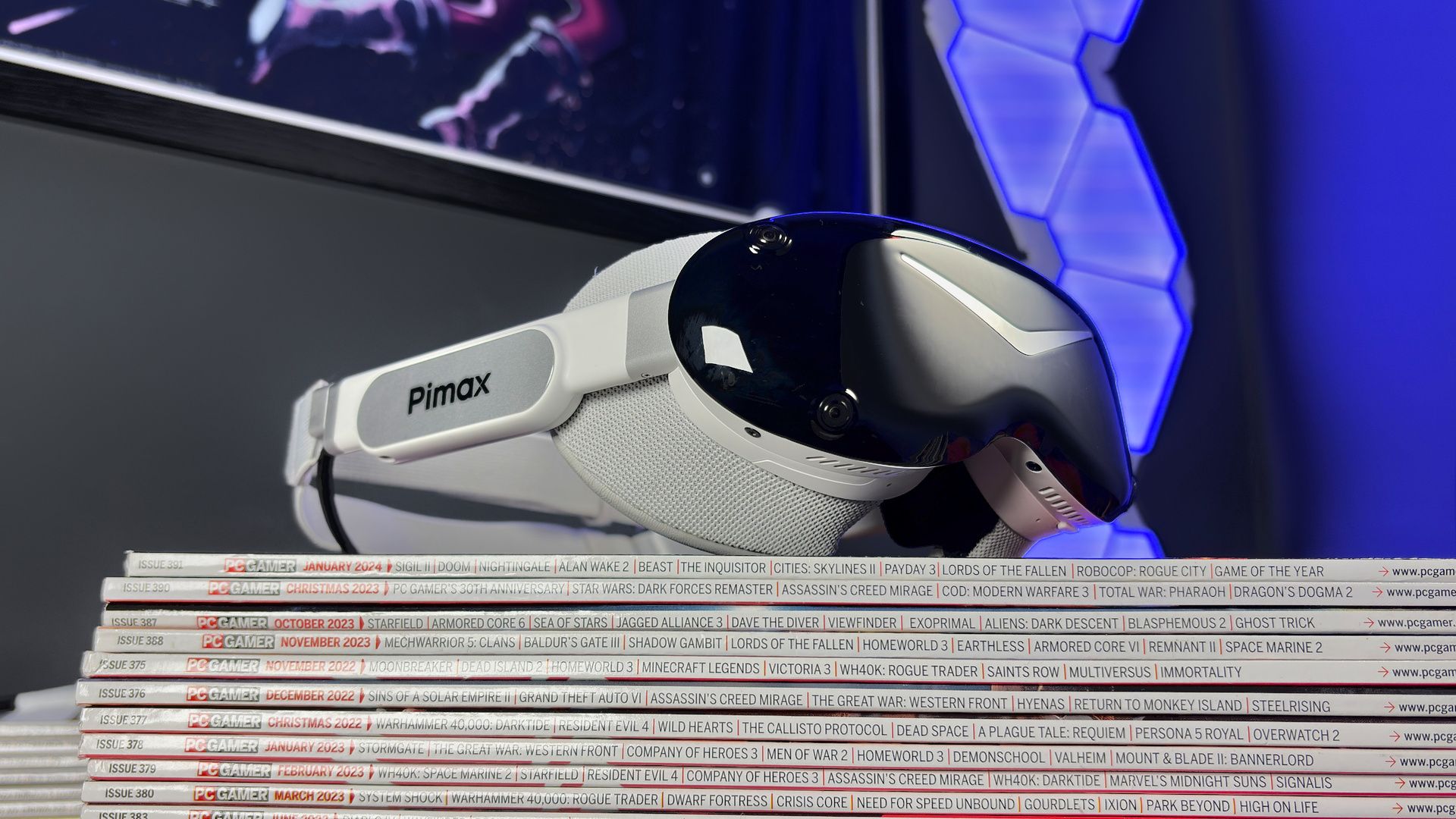
Pimax Dream Air
SLAM version
- 75/100PC Gamer
- RecommendedTom's Guide
A featherweight Micro-OLED headset with breathtaking clarity compromised by finicky inside-out tracking
The Pimax Dream Air SLAM edition is designed for well-heeled PC simulation and VR enthusiasts who want class-leading visual clarity without physical neck strain. Its dual 4K Sony Micro-OLED panels and sub-170-gram visor deliver unmatched contrast and long-haul comfort. However, the $2,299 package is hampered by inconsistent inside-out SLAM tracking and finicky companion software. Compared to custom-fit compact rivals like the Bigscreen Beyond, the Dream Air avoids external base stations and includes eye tracking, but commands a far steeper price.
Buy it if
- Sim racers and flight sim pilots who prioritize extreme pixel density and high contrast
- PCVR enthusiasts seeking an ultra-compact headset that eliminates neck fatigue during long sessions
- Users who want a high-resolution tethered setup without mounting external base stations around the room
Skip it if
- You rely on fast, precise motion controller tracking for competitive room-scale action games
- Your PC lacks a high-end graphics card capable of driving 27 million display pixels
- You prefer a wireless standalone headset on a standard consumer budget
Where to buy
We may earn a commission from purchases or qualifying sign-ups through our links. Affiliate links explained
What reviewers liked
- Stunning Sony Micro-OLED panels with deep contrast, vivid colors, and exceptional clarity
- Visor weighs under 170 grams, drastically reducing facial pressure and neck fatigue
- Integrated Tobii eye tracking supports Dynamic Foveated Rendering to conserve GPU power
- Dual split-tether cable balances weight neatly behind the player
What they didn’t
- Inside-out SLAM tracking suffers from occasional positional jitter and controller tracking hitches
- Steep $2,299 retail price makes it one of the most expensive PCVR packages available
- Pimax Play software can feel unpolished and requires fine-tuning
- Stock facial cushion and strap feel rigid and can cause light leakage around the nose
Key specs
- Launch price
- $2,299 (SLAM version with controllers)
- Reported price
- $1,868 - $2,299
- Display type
- Dual Sony Micro-OLED panels
- Resolution
- 3840 x 3552 pixels per eye (7680 x 3552 combined)
- Refresh rate
- 90Hz native (experimental 120Hz mode)
- Field of view
- 110 degrees diagonal claimed; approx. 90 degrees horizontal measured
- Visor weight
- <170 grams (<6 oz); approx. 300 grams fully assembled
- Tracking method
- Inside-out SLAM tracking with monochrome cameras
- Eye tracking
- Tobii eye tracking with Dynamic Foveated Rendering
- Controllers
- Two 6DoF ringless motion controllers included
- Connectivity
- DisplayPort 1.4a and USB-C tether
In depth
Display and controls
The centerpiece of the Dream Air is its visual pipeline. Dual Sony Micro-OLED displays produce 3840 x 3552 pixels per eye behind pancake optics. In testing, PC Gamer called the contrast, color reproduction, and edge clarity the finest seen on any VR headset, noting that dark corridors in Half-Life: Alyx exhibited true black levels without OLED smearing. While Pimax claims a 110-degree field of view, PC Gamer measured the default horizontal FOV at roughly 90 degrees with an 88-degree vertical FOV at a 64mm IPD. Pimax Play includes a wide FOV toggle that boosts horizontal coverage to 98 degrees, but at the cost of reducing binocular overlap from 86% down to 77%. Controllers and tracking represent the main weakness. The bundled 6DoF ringless controllers rely on front-mounted monochrome SLAM tracking cameras, which PC Gamer found lagged behind Meta and Valve systems, occasionally losing tracking lock or stuttering during broad swings.
Performance and game compatibility
Pushing roughly 27 million pixels at 90Hz places extraordinary demands on host computers. Long-term testers and Reddit hardware benchmarks note that an Nvidia GeForce RTX 4080 or RTX 4090 is practically required to run high-end VR simulations smoothly. Sim racing outlets like SimRacingCockpit found the display clarity transformed titles like iRacing and Assetto Corsa, allowing drivers to spot distant braking markers effortlessly. To mitigate rendering load, the Dream Air integrates Tobii eye tracking. PC Gamer reported that in titles supporting Dynamic Foveated Rendering and Quad Views—such as DCS World—eye tracking operated smoothly, sharply decreasing GPU overhead by only rendering the focal point at full native resolution.
Battery life
The Dream Air is a tethered PCVR device that draws power continuously over its PC DisplayPort and USB tether. There is no internal battery housed within the visor. PC Gamer noted that eliminating the battery is a genuine advantage for endurance sessions, removing both battery degradation and mid-race shutdowns. A split dual-cable design routes cabling down each side and joins behind the neck, preventing the one-sided tether pull typical of older wired headsets. The included SLAM wireless hand controllers run on internal rechargeable cells via USB-C, providing several hours of continuous use per charge.
Comfort and portability
Pimax focused heavily on reducing bulk, yielding a visor that weighs less than 170 grams, while the fully assembled unit sits around 300 grams. Tom's Guide logged over 100 hours of testing and praised the featherweight build, noting that the ski-goggle form factor entirely avoids the cheek and neck strain that plagues 600-gram headsets like the Apple Vision Pro or older Pimax models. However, the stock strap and facial interface drew criticism across outlets. PC Gamer and community testers noted the stock foam interface feels rigid and can exert pressure across the bridge of the nose, while causing light bleed for certain facial profiles. Multiple reviewers recommended upgrading to third-party pads from Studioform Creative to achieve a balanced seal.
Library, storage and software
Because the Dream Air operates strictly as a PCVR peripheral, it has no onboard storage. It relies on your PC hard drives and integrates with SteamVR and OpenXR libraries. The headset is managed through the Pimax Play software desktop client. Reviewers at Tom's Guide and PC Gamer noted that while Pimax Play has improved, it still exhibits software quirks, including occasional profile switching delays and manual setup requirements for OpenXR runtimes and foveated rendering toolsets. Early buyers also noted occasional calibration steps were necessary to ensure optical distortion profiles matched lens spacing.
Price and total cost
The SLAM version of the Pimax Dream Air carries an MSRP of $2,299, which includes the headset, SLAM tracking hardware, and two motion controllers. Pimax also sells a base-station-dependent Lighthouse edition for $1,999, but that configuration excludes controllers and SteamVR tracking stations. Street pricing across major retailers like Newegg and Amazon typically ranges from $1,868 to $2,299 depending on seller discounts and bundled promotions. Total cost of ownership is further inflated by the required host PC hardware, as achieving smooth 90fps output at 3840 x 3552 per eye demands an enthusiast-class graphics card.
Is it worth the money?
The Dream Air sits at an ultra-premium enthusiast price point. The micro-OLED image quality is unmatched in compact PCVR, but you pay a steep premium for inside-out SLAM tracking that remains rough around the edges.
Also consider
- Bigscreen Beyond
An even lighter, custom-tailored micro-OLED headset with precise Lighthouse tracking at a lower starting cost, though it lacks inside-out SLAM cameras.
- Pimax Dream Air SE
A $899 budget alternative that retains a lightweight micro-OLED design with 2560x2560 resolution per eye, placing less strain on your graphics card.
- Meta Quest 3
A much cheaper standalone and wireless PCVR headset with superior inside-out tracking, though it uses standard LCD panels instead of micro-OLED.
Reviews we read
This roundup summarizes professional reviews and published specifications; Next Interrupt did not test the product. Roundup updated November 14, 2026. How we work