Watches & wearables / Review roundup
Oura Ring 5
size 11
- 4.5 / 5Android Central
- 4.5 / 5Android Authority
- 4.5 / 5Trusted Reviews
A dramatically slimmer titanium build solidifies Oura as the premier sleep and recovery wearable
The Oura Ring 5 is the best choice for anyone wanting continuous sleep, recovery, and wellness monitoring without wearing a watch to bed. Its biggest strength is a 40 percent volume reduction that makes it wear like standard jewelry while preserving six to seven days of battery life. The catch is the mandatory $5.99 monthly subscription and poor fitness accuracy for intense workouts. Compared to subscription-free rivals like the Samsung Galaxy Ring, Oura offers significantly deeper sleep insights and polished software, provided you are willing to pay the recurring fee.
Buy it if
- Shoppers who dislike wearing a smartwatch to bed for sleep tracking
- People looking for unobtrusive, passive cardiovascular and recovery monitoring
- Users who want a smart ring that looks and feels like standard jewelry
Skip it if
- Athletes needing detailed workout pacing, cadence, or real-time sports metrics
- Buyers who object to paying an ongoing monthly membership to see their own stats
- Current Oura Ring 4 owners whose hardware is still running well
Where to buy
We may earn a commission from purchases or qualifying sign-ups through our links. Affiliate links explained
What reviewers liked
- Noticeably thinner and lighter profile at 2.28 mm thick and 6.09 mm wide
- Realistic battery life of 6 to 7.5 days between charges
- Top-tier sleep stage tracking, HRV calculation, and resting heart rate accuracy
- Clean, recessed interior sensors that eliminate uncomfortable pressure points
- Identical cross-platform app experience on iOS and Android
What they didn’t
- Requires a $5.99 monthly or $69.99 annual subscription to view core health trends
- Unreliable heart rate tracking during high-movement workouts or heavy gripping
- Portable battery charging case costs an additional $99 and is not included in the box
- Steep starting price of $399, jumping to $499 for premium finishes
Key specs
- Launch price
- $399 (Silver, Black); $499 (Gold, Stealth, Brushed Silver, Deep Rose)
- Reported price
- $399 to $499
- Width
- 6.09 mm
- Thickness
- 2.28 mm
- Weight (Size 11)
- 2.4 g
- Chassis Material
- Titanium exterior and interior
- Water Resistance
- 100 m (10 ATM)
- Battery Life
- Claimed 6–9 days (tested 6–7.5 days)
- Charging Time
- 20–80 minutes via USB-C dock
- Sensors
- Optical PPG (red, green, IR LEDs), skin temperature, accelerometer
- Platform Compatibility
- iOS and Android
In depth
Design and comfort
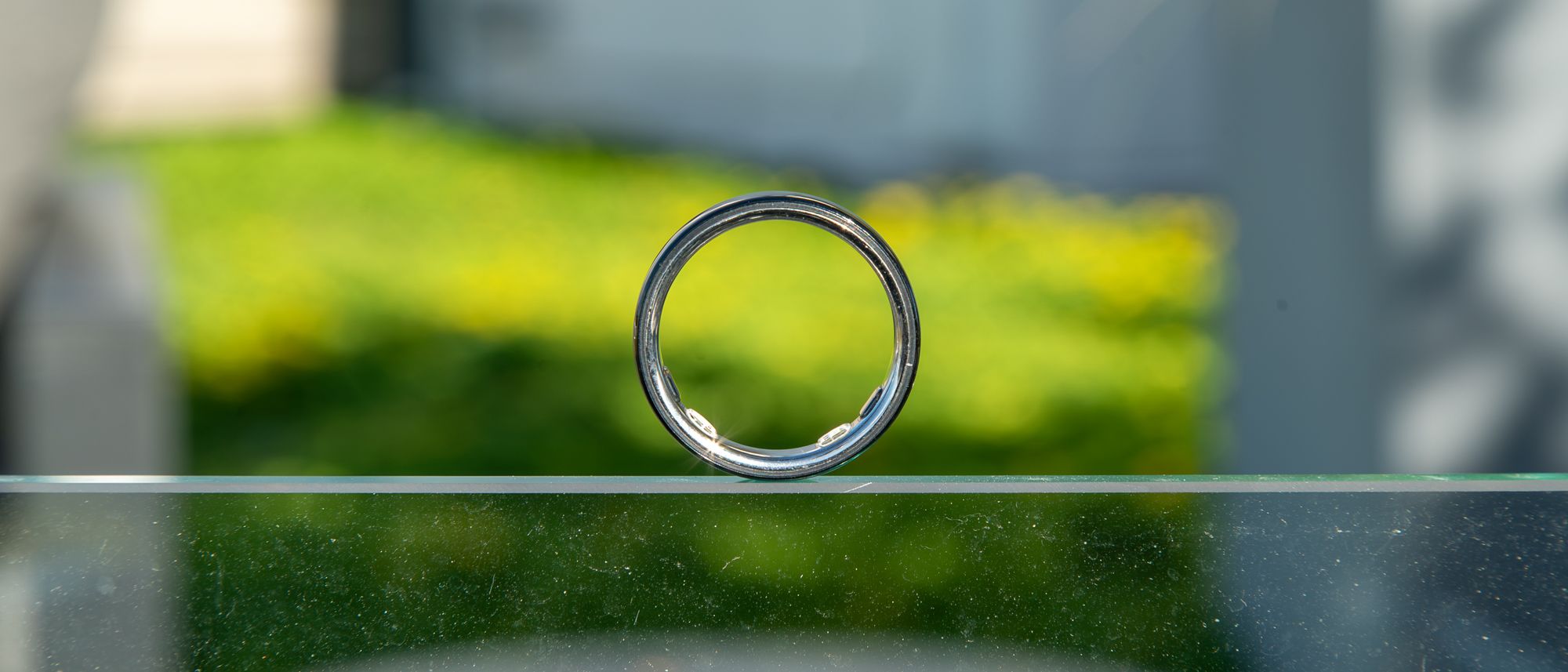
The primary evolution of the Oura Ring 5 is its hardware footprint. Oura reduced the physical volume by roughly 40 percent compared to the Ring 4, slimming the band down to 6.09 mm in width and 2.28 mm in thickness. At roughly 2.4 grams in size 11, reviewers at Engadget and Android Authority noted that it is the first generation to genuinely feel like standard jewelry rather than a bulky gadget. The sensor bumps from older models have been replaced by fully recessed resin windows sitting flush against the titanium inner core. Wearers reported that this eliminates pinching when gripping steering wheels or weights. The titanium outer shell retains 100-meter water resistance. While finish durability is solid, reviewers caution that matte and polished coatings can still pick up minor scuffs against hard metals over time.
Health and fitness tracking accuracy
Oura re-engineered the optical sensor stack down to 12 pathways but quadrupled the LED illumination strength, which improved baseline accuracy across varying skin tones. Testing by DC Rainmaker and Wareable found that overnight vitals—resting heart rate and heart rate variability (HRV)—tracked in near-perfect lockstep with dedicated medical monitors and chest straps. However, fitness tracking remains the hardware's Achilles heel. During running intervals and activities requiring tight grip, such as indoor rowing or trail cycling, DC Rainmaker and Android Authority observed significant heart rate dropouts, occasionally deviating by over 20 bpm from a chest monitor. While the ring automatically detects casual walks, yard work, and sleep seamlessly, reviewers unanimously advise athletes to use a dedicated GPS watch for training workouts.
Battery life
Oura rates the Ring 5 for 6 to 9 days of use on a single charge. In independent tests, real-world longevity landed comfortably near the lower end of that bracket. Lifehacker logged 7.5 days on a mid-sized model before needing the charger, while DC Rainmaker averaged 6 to 7 days per charge over four weeks of continuous wear and daily workout logging. Continuous blood oxygen monitoring remains the heaviest drain, and disabling it can extend runtime by roughly a day and a half. A full replenishment takes roughly 20 to 80 minutes on the included desktop puck. Oura also introduced an optional $99 pocket charging case that holds four full recharges, though reviewers criticized the fact that it is sold separately rather than included in the box.
Smart features and app ecosystem
The companion software remains the class benchmark for contextualizing health metrics. Scores for Sleep, Readiness, and Daytime Stress synthesize raw data into practical daily advice. With the Ring 5, Oura introduced the Health Radar suite, which includes Blood Pressure Signals. Reviewers emphasize that this does not measure millimetres of mercury like a blood pressure cuff; instead, it observes overnight pulse wave velocity trends to flag potential baseline shifts. Nighttime breathing monitoring and integration with ResMed track potential sleep apnea events, and daytime Live Activities let users view real-time workout heart rates directly on their phone screen.
Compatibility (iPhone/Android)
Unlike competitors tied to specific mobile operating systems, the Oura Ring 5 functions with parity across both iOS and Android. Pairing occurs over Bluetooth Low Energy, and all software features—including Health Radar, daytime stress tracking, and the Oura Advisor AI chat—are identical across both platforms. Data writes cleanly to Apple Health, Google Health Connect, and third-party apps like Strava and Natural Cycles, making it adaptable if you change phone ecosystems.
Price and subscriptions
The starting price climbed by $50 for this generation. The standard Silver and Black finishes launch at $399, while premium finishes—including Stealth, Brushed Silver, Gold, and Deep Rose—retail for $499. The most contentious point among reviewers remains the mandatory Oura Membership, priced at $5.99 per month or $69.99 annually after the included first month. Without the subscription, the ring only displays baseline sleep and battery percentages without historical charts or readiness scores. Reviewers point out that this brings the true cost of ownership to roughly $470 in year one alone.
Is it worth the money?
Full access requires an ongoing Oura Membership ($5.99 monthly or $69.99 annually). The ring is eligible for HSA and FSA reimbursement in the United States.
Also consider
- Samsung Galaxy Ring
Eliminates monthly subscription fees and adds pinch gesture controls, but locks its full feature set to Samsung and Android phones.
- Ultrahuman Ring Air
Offers no recurring subscription fees and detailed metabolic insights, though its physical shell is thicker and battery life is shorter.
- Apple Watch Series 10
Provides far superior real-time workout metrics, cellular connectivity, and a live display at the expense of daily charging.
Reviews we read
This roundup summarizes professional reviews and published specifications; Next Interrupt did not test the product. Roundup updated November 2, 2026. How we work
- Android Central — I tested the Oura Ring 5 for a month, and it's exactly what other smart rings should aspire to be
- Android Authority — The Oura Ring 5 is the first smart ring to truly fit my routine and feel like jewelry I’d buy
- Trusted Reviews — Oura Ring 5 Review
- Tom’s Guide — I tested the Hatch Sleep Clock — it won't replace my Oura Ring 5, but it's still my top pick for dark winter mornings