 Watch on YouTube ↗
GamersNexus ·
Consoles & handhelds / Review roundup
512GB standalone VR headset; not Quest 3S
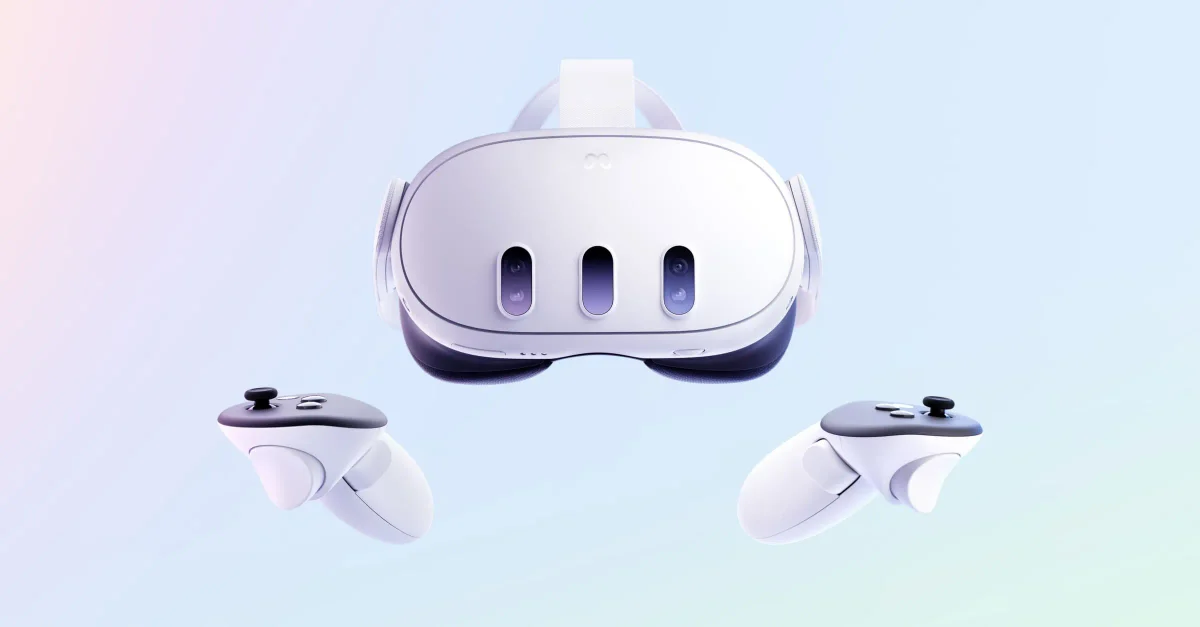
The Meta Quest 3 512GB is the premier all-in-one VR and mixed reality headset for enthusiasts who want an expansive standalone library without managing storage constraints. Its greatest strengths are the razor-sharp pancake lenses and snappy Snapdragon XR2 Gen 2 processor, which deliver edge-to-edge optical clarity and smooth native gaming. The primary compromise is an internal battery that lasts only about two hours under load, paired with a barebones cloth strap that demands an aftermarket upgrade. While dedicated PC headsets like the Valve Steam Frame deliver lower streaming latency and better privacy, the Quest 3 remains the best overall balance of price and standalone versatility.
We may earn a commission from purchases or qualifying sign-ups through our links. Affiliate links explained
Reviewers universally highlight the Quest 3 optics as a substantial leap forward. Outfitted with dual LCDs running at 2064 x 2208 pixels per eye, the display is backed by pancake lenses that eliminate the narrow sweet spot and peripheral blur characteristic of older Fresnel optics. Tom's Guide noted vibrant panel reproduction and an expanded field of view of roughly 110 degrees horizontal. A physical thumbwheel under the visor smoothly adjusts interpupillary distance between 58 mm and 70 mm. The dual full-color RGB passthrough cameras and depth sensor represent another major upgrade over the Quest 2 monochrome feed, allowing wearers to read phone screens and walk around spaces comfortably. The redesigned Touch Plus controllers discard bulky tracking rings, yet reviewers reported tracking remains snappy and reliable using hybrid optical and computer-vision algorithms.
Powered by Qualcomm Snapdragon XR2 Gen 2 alongside 8GB of RAM, the Quest 3 delivers double the graphical processing power of its predecessor. Outlets praise its ability to run demanding native titles such as Asgard's Wrath 2 and Batman: Arkham Shadow with improved textures, dynamic lighting, and stable frame rates at 90Hz and 120Hz. For PC VR tethering, the headset supports both wired USB-C Link and wireless streaming via Air Link, Virtual Desktop, and Steam Link. In comparison testing against Valve's dedicated Steam Frame, GamersNexus noted that while standard Wi-Fi routing introduces slight latency and compression overhead compared to dedicated direct-link wireless dongles, the Quest 3 handles wireless PCVR admirably for mainstream users.
Runtime is the headset's most commonly criticized attribute across professional tests. In real-world battery assessments, Tom's Guide and technical outlets recorded runtimes hovering between 1.5 and 2.2 hours on a full charge. Graphically complex standalone games and active mixed reality passthrough drain the pack fastest, occasionally exhausting the unit in under 90 minutes. Less demanding tasks, such as passive video streaming in Bigscreen or YouTube VR, extend longevity closer to 2.8 hours. Reviewers agree that anyone intending to play multiplayer titles or exercise in VR for extended stretches will need to tether via USB-C or invest in an aftermarket counterbalanced battery strap.
At 515 grams, the Quest 3 weighs nearly the same as the Quest 2 on paper, but pancake lenses allowed engineers to shrink the optical chassis depth by 40%. Tom's Guide found that drawing the physical mass closer to the user's face reduces front-heavy torque significantly. However, the out-of-the-box elastic Y-strap drew widespread criticism from reviewers for concentrating tension against the forehead and cheekbones. TechRadar noted that the default cloth strap is convenient for packing into compact travel bags, but a rigid halo strap or Meta's Elite Strap is virtually required to keep pressure off the face during longer sessions.
Software maturity is a major asset. Meta Horizon OS offers the most extensive native standalone ecosystem on the market, spanning high-budget action games, fitness trackers, social spaces, and productivity tools. The 512GB configuration proves especially valuable: with flagship standalone titles now consuming between 20GB and 40GB, reviewers pointed out that lower capacities quickly lead to frustrating install juggles. On the platform front, GamersNexus scrutinized Meta's privacy posture, pointing out the extensive privacy agreements, Meta Horizon account requirements, and telemetry collection compared to Valve's more privacy-conscious Steam ecosystem.
The 512GB Meta Quest 3 launched at $649.99, but Meta repositioned it down to $499.99 when discontinuing the 128GB baseline model. Reviewers emphasize that the nominal retail price rarely represents the complete investment. Because the stock cloth headband and internal battery offer limited endurance, prospective owners should budget an additional $50 to $120 for an ergonomic battery headstrap, protective carrying case, or prescription lens inserts to achieve a complete, comfortable experience.
Originally debuted at $649.99, Meta reduced the 512GB model permanently to $499.99 following the discontinuation of the original 128GB version.
Help choosing
Key differences, review evidence and who should buy each model.
Watch on YouTube ↗GamersNexus ·
Shares the same processor and Horizon OS software library at a cheaper entry price, but sacrifices display resolution and uses older Fresnel lenses.
Features deep-black OLED panels and eye tracking for PS5 and PC gaming, though it requires a tethered cable connection.
Designed for enthusiast PC VR streaming with lower transmission latency and native SteamOS integration, but priced at a significant premium.
This roundup summarizes professional reviews and published specifications; Next Interrupt did not test the product. Roundup updated October 15, 2026. How we work