Phones & tablets / Review roundup
iPhone Air
iPhone Air
- 4.0 / 5PCMag
- 4 / 5AppleInsider
- 4 / 5Tom's Guide
An impossibly slim 5.6mm titanium smartphone whose bold engineering comes with clear functional trade-offs
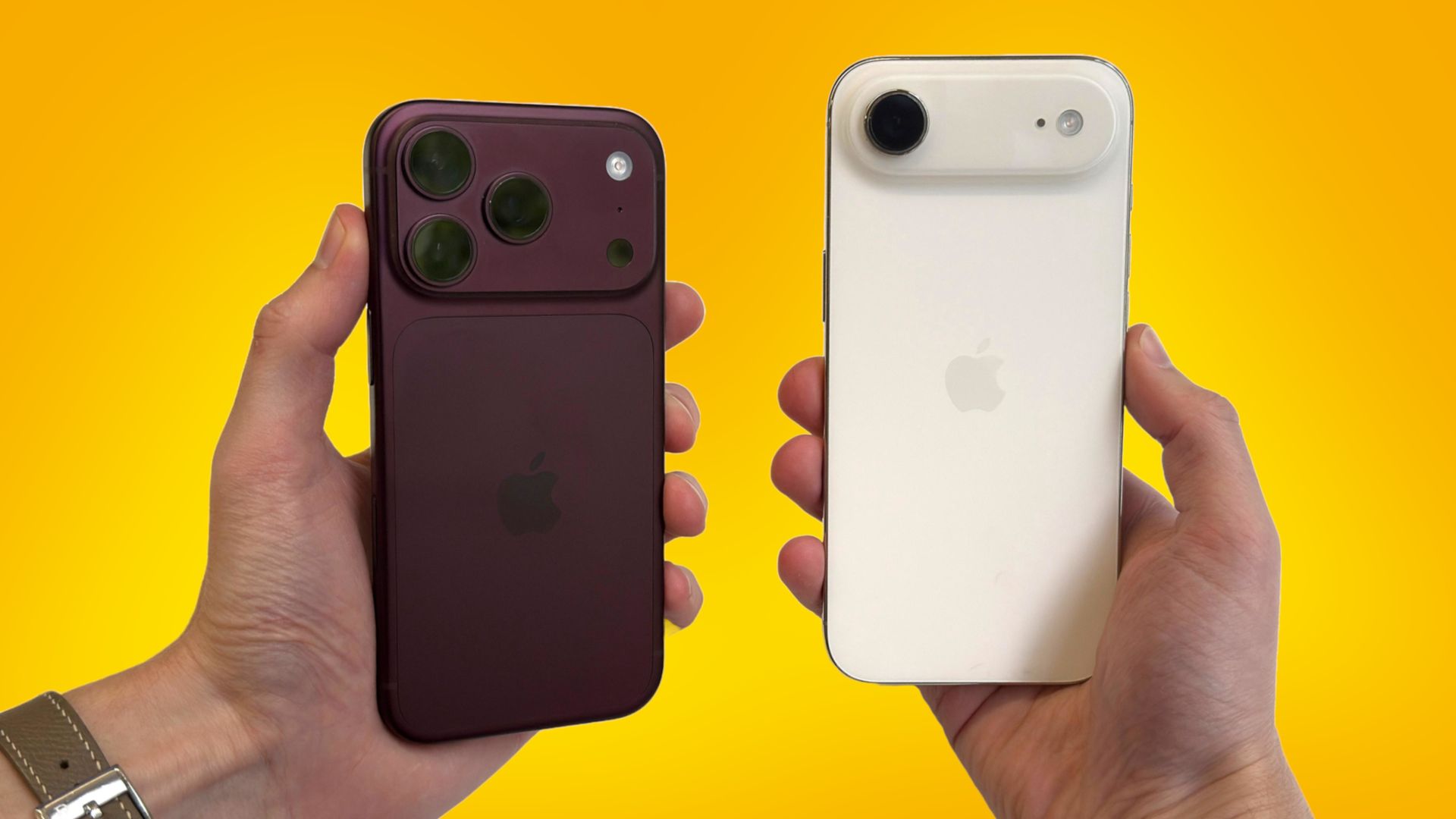
The iPhone Air is designed for minimalists who prioritize pocketability and industrial elegance above raw hardware excess. Its 5.6mm titanium chassis and 165g weight make it exceptionally comfortable to hold, while its 6.5-inch 120Hz ProMotion display and A19 Pro silicon ensure smooth everyday responsiveness. However, paying $1,099 requires accepting a solitary rear camera, mono speaker output, and battery longevity that trails standard Pro flagships. Compared to the Samsung Galaxy S25 Edge, the Air offers better structural rigidity and slightly longer battery life, but charges more for fewer camera lenses.
Buy it if
- Shoppers prioritizing a featherweight 165g, 5.6mm profile for effortless one-handed use
- Users who want a smooth 120Hz ProMotion display without stepping up to a heavy Pro Max
- Casual photographers focused primarily on crisp point-and-shoot wide images and video calls
Skip it if
- Mobile photographers who regularly depend on dedicated ultrawide, telephoto, or macro optics
- Power users demanding multi-day battery life without relying on an external MagSafe pack
- Audiophiles and media consumers who expect stereo loudspeaker audio
Where to buy
We may earn a commission from purchases or qualifying sign-ups through our links. Affiliate links explained
What reviewers liked
- Remarkably slender 5.6mm profile and lightweight 165g titanium construction
- Sharp 6.5-inch 120Hz ProMotion LTPO OLED reaching up to 3,000 nits peak brightness
- Responsive performance from the Apple A19 Pro chip and 12GB of RAM
- Upgraded 18MP Center Stage front camera with optical image stabilization
- Sturdy structural rigidity that resists flex and bend attempts
What they didn’t
- Single rear camera omits ultrawide, telephoto zoom, and macro shooting capabilities
- High $1,099 launch price places it in direct competition with fully featured flagships
- Single loudspeaker lacks the depth and immersion of stereo sound systems
- USB-C port is restricted to slow USB 2.0 data transfer speeds
- Chassis warms up noticeably near the camera module under sustained heavy gaming
Key specs
- Launch price
- $1,099 (256GB), $1,299 (512GB), $1,499 (1TB)
- Reported price
- $950 to $1,099
- Display
- 6.5-inch LTPO Super Retina XDR OLED (2736 x 1260, 120Hz, 3,000 nits peak)
- Processor
- Apple A19 Pro (6-core CPU, 5-core GPU)
- RAM & Storage
- 12GB RAM; 256GB, 512GB, 1TB storage
- Rear Camera
- 48MP Fusion (f/1.6, 26mm, sensor-shift OIS, 2x sensor crop)
- Front Camera
- 18MP Center Stage (f/1.9, 20mm, PDAF, OIS)
- Battery Capacity
- 3,149 mAh
- Charging
- 20W wired fast charging, 20W MagSafe / Qi2 wireless
- Dimensions & Weight
- 156.2 x 74.7 x 5.6 mm; 165 g
- Build Materials
- Grade 5 titanium frame, Ceramic Shield 2 front, Ceramic Shield rear, IP68
In depth
Design and durability
The defining attribute of the iPhone Air is its slender 5.6mm profile and 165g weight, making it significantly lighter and thinner than traditional flagship handsets. Apple achieved this thinness by engineering the internal logic boards directly beneath the camera plateau. Both CNET and Tom's Guide tested the handset against bending forces, reporting that the Grade 5 titanium frame and Ceramic Shield 2 glass resist flex without creaking. GSMArena noted that the phone feels more compact than the Samsung Galaxy S25 Edge due to its gently curved corners, though reviewers observed the frame's textured finish feels less metallic than polished rails on older Pros. The chassis also carries standard IP68 dust and water resistance rated for immersion up to 6 meters for 30 minutes.
Display
The iPhone Air features a 6.5-inch LTPO Super Retina XDR OLED screen with a resolution of 2736 x 1260 pixels at 460 ppi. Unlike previous non-Pro tiers, it supports ProMotion adaptive refresh rates scaling up to 120Hz alongside an always-on display. Reviewers at Tom's Guide and GSMArena highlighted its outdoor visibility, noting that peak HDR brightness climbs to 3,000 nits, with 1,600 nits in high brightness mode. An anti-reflective coating reduces glare in harsh lighting, while color rendition and viewing angles match Apple's top-tier panels.
Cameras
To accommodate the ultra-thin chassis, Apple stripped the rear camera system down to a single 48MP sensor (f/1.6, 26mm) with sensor-shift optical image stabilization. In daylight, CNET and AppleInsider found photos sharp with balanced dynamic range, and the 2x sensor crop produces usable 12MP zoom shots. However, reviewers universally pointed out the omission of an ultrawide camera, dedicated telephoto reach beyond 2x, and macro capture. On the front, an 18MP Center Stage camera with optical image stabilization and a wider 20mm field of view earned praise for video calls and group framing. Video capture remains clean at 4K resolution up to 60 fps, controlled via a dedicated capacitive Camera Control sensor on the side rail.
Performance and gaming
Under the hood sits an Apple A19 Pro chipset paired with 12GB of LPDDR5X RAM. GSMArena identified that the Air's chip uses a 5-core GPU rather than the 6-core version found in the Pro lineup, but its 6-core CPU still posted a 15 percent multi-core benchmark gain over the previous-generation A18 Pro. Everyday navigation, multitasking, and system animations run without hesitation. In sustained gaming tests, AppleInsider and Tom's Guide noted that the thin metal housing causes localized heat around the camera bump, leading to thermal throttling during demanding 3D games. Another hardware sacrifice is audio: the Air relies on a single loudspeaker, delivering clear dialogue but lacking the volume and stereo immersion of dual-speaker iPhones.
Battery life and charging speed
Because of its dimensions, the Air carries a modest 3,149 mAh battery. Despite concerns, endurance proved respectable in benchmark testing. In Tom's Guide's web-surfing test over 5G, the iPhone Air lasted 12 hours and 2 minutes, edging out the Samsung Galaxy S25 Edge (11 hours 48 minutes) but trailing the iPhone 17 Pro Max (17 hours 54 minutes). GSMArena clocked an Active Use Score of 12 hours and 44 minutes, logging over 20 hours of continuous video playback. Charging tops out at 20W wired over USB-C, refilling about 50 percent in 30 minutes, with wireless charging supported at 20W via MagSafe and Qi2 pads.
Software and update promise
The iPhone Air launched on iOS 26, which introduces Apple's Liquid Glass interface design alongside expanded lockscreen customization and updated system applications. Apple Intelligence features run locally thanks to the 12GB of RAM and neural engine. Buyers can rely on Apple's standard track record of long-term software support, which routinely delivers operating system updates and security patches for at least five to seven years.
Price and storage options
The iPhone Air starts at $1,099 for the 256GB base capacity, stepping up to $1,299 for 512GB and $1,499 for 1TB. While carriers frequently discount the base model down to $999 with contracts, reviewers at PCMag and Tom's Guide observed that the $1,099 entry point commands a steep premium for a handset lacking secondary cameras, stereo audio, and USB 3.0 transfer speeds.
Is it worth the money?
The $1,099 launch price buys cutting-edge engineering and lightweight ergonomics, but costs more than standard models that include multiple cameras and longer battery runtime.
Also consider
- Samsung Galaxy S25 Edge
An equally sleek ultra-thin Android phone that adds an ultrawide camera and costs less, though battery life is slightly shorter.
- Apple iPhone 17
Offers dual rear cameras and larger battery capacity for roughly $150 to $300 less, though in a thicker, heavier chassis.
- Apple iPhone 17 Pro
Provides a 5x telephoto camera, faster USB 3.2 data transfer, stereo audio, and longer battery life for a similar outlay.
Reviews we read
This roundup summarizes professional reviews and published specifications; Next Interrupt did not test the product. Roundup updated November 8, 2026. How we work