Phones & tablets / Review roundup
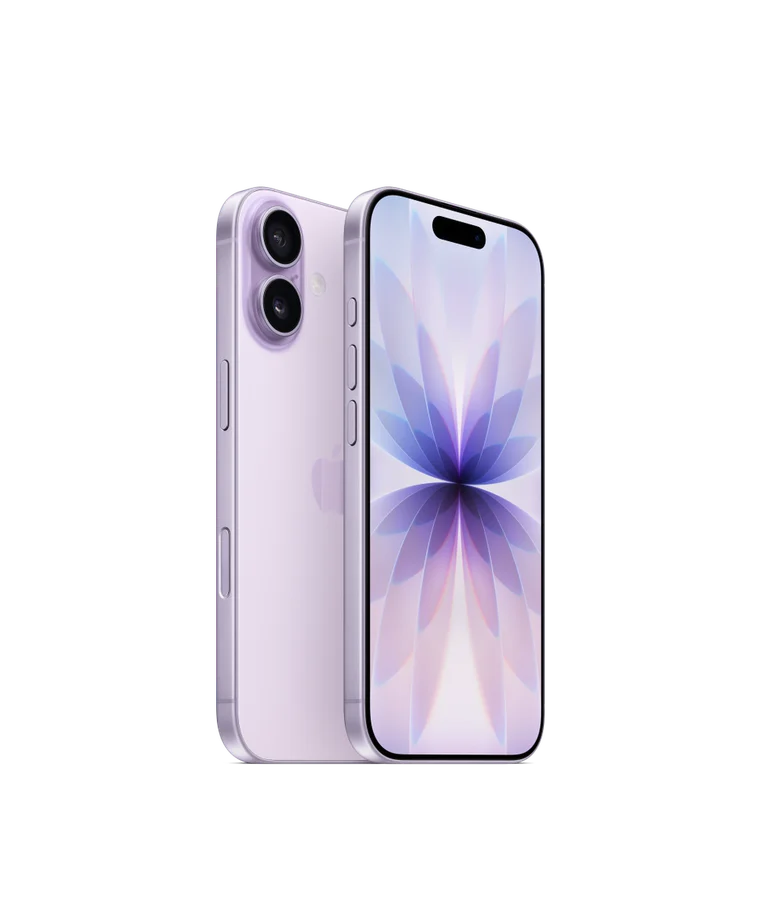
Apple iPhone 17
Standard 2025 model, 256GB; not Pro
- 4.5 / 5Tom's Guide
- 4.5 / 5TechRadar
A 120Hz ProMotion display and doubled base storage make Apple's standard phone its best value in years
The iPhone 17 is the right choice for anyone seeking a modern Apple flagship without paying four figures for a Pro model. Its biggest strength is the addition of a smooth 120Hz ProMotion display alongside 256GB of entry storage for the unchanged $799 starting price. The main catch is the lack of a dedicated telephoto camera, limiting zoom past 2x compared to Android peers. Against rivals like the Samsung Galaxy S25, the iPhone 17 provides faster single-core processing and polished video capture, though Samsung includes a third camera lens.
Buy it if
- Shoppers upgrading from an iPhone 14 or older wanting smooth 120Hz scrolling
- Users who need 256GB of storage without paying a premium tier surcharge
- Casual photographers and mobile vloggers needing dependable 4K video capture
Skip it if
- You frequently shoot distant subjects and require a dedicated 3x or 5x optical telephoto lens
- You need 10Gbps or faster wired USB transfer speeds for heavy offloading
Where to buy
We may earn a commission from purchases or qualifying sign-ups through our links. Affiliate links explained
What reviewers liked
- Adaptive 120Hz ProMotion OLED screen with Always-On support
- Base storage doubled to 256GB at the unchanged $799 entry price
- Upgraded 48MP ultrawide and 18MP Center Stage selfie cameras
- Fast A19 processor delivering strong gaming and app response
- Durable build featuring Ceramic Shield 2 and IP68 water resistance
What they didn’t
- No dedicated telephoto lens limits zoom clarity past 2x
- USB-C port remains capped at slower USB 2.0 data transfer speeds
- Battery gains over the prior generation are modest at 34 minutes in standardized tests
Key specs
- Launch price
- $799 (256GB), $999 (512GB)
- Reported price
- $799 (retail unlocked); $599 to $729 through common carrier discounts
- Starting Price
- $799 (256GB)
- Display
- 6.3-inch Super Retina XDR OLED (2622 x 1206), 1-120Hz ProMotion
- Processor
- Apple A19 (6-core CPU, 5-core GPU, 16-core Neural Engine)
- RAM & Storage
- 8GB RAM; 256GB or 512GB storage
- Rear Cameras
- 48MP main (f/1.6, OIS, 2x crop) + 48MP ultrawide (f/2.2, macro)
- Front Camera
- 18MP Center Stage (f/1.9)
- Battery Capacity
- 3,692 mAh
- Charging
- Up to 40W wired USB-C, 25W MagSafe wireless, 4.5W reverse wired
- Dimensions & Weight
- 149.6 x 71.5 x 7.95 mm, 177 grams
- Durability
- Ceramic Shield 2 front glass, IP68 water/dust resistance (6m up to 30 min)
In depth
Design and durability
The iPhone 17 retains Apple's familiar aluminum enclosure with flat edges and color-infused back glass. Dimensions come in at 149.6 x 71.5 x 7.95 mm, and it weighs 177 grams, making it seven grams heavier than the outgoing model. Reviewers at TechRadar noted that while it skips the dramatic camera plateau seen on the Pro tier, the build remains refined and comfortable to hold. Durability gets a boost from Ceramic Shield 2 on the front display, which Apple claims offers three times better scratch resistance as well as reduced glare. The phone carries an IP68 rating for submersion in up to 6 meters of water for 30 minutes. Both the Action button and the dedicated Camera Control button are present, and finishes include Black, White, Mist Blue, Sage, and Lavender.
Display quality and ProMotion
The display is the centerpiece upgrade. Apple expanded the screen to 6.3 inches (2622 x 1206 pixels at 460 ppi) and finally equipped the standard model with a 1Hz to 120Hz ProMotion panel and Always-On functionality. In lab testing by Tom's Guide, the panel registered 1,505 nits of peak brightness, 111.3% coverage of the sRGB color gamut, and an accurate 0.20 Delta-E score. Apple rates outdoor peak brightness up to 3,000 nits. Reviewers at both TechRadar and Tom's Guide agreed that the addition of 120Hz adaptive refresh rates eliminates the primary hardware compromise that previously pushed mainstream shoppers toward the Pro line.
Cameras and video performance
Imaging centers on a dual-camera setup with a 48MP main sensor (f/1.6, 26mm) and an upgraded 48MP ultrawide sensor (f/2.2, 13mm) that replaces the prior 12MP unit. The front sensor moves up to an 18MP Center Stage camera (f/1.9). Reviewers found daylight photos sharp and richly detailed with balanced dynamic range. Low-light shooting handled high-contrast street lamps without blowing out highlights. Zoom relies on a 2x sensor crop from the main 48MP sensor; Tom's Guide and TechRadar found 2x images sharp, but digital zoom past that point softens compared to rivals with optical telephoto lenses. Video captures up to 4K Dolby Vision at 60 fps, complemented by a new Dual Capture feature that records front and rear feeds simultaneously at 4K 30 fps.
Performance and gaming
Under the hood is Apple's A19 chip, built on a 3-nanometer architecture with a 6-core CPU, 5-core GPU, and 8GB of RAM. In Tom's Guide benchmark tests, the iPhone 17 produced a Geekbench 6 single-core score of 3,701 and a multi-core score of 9,460. Graphics performance saw a substantial leap, hitting 130.97 fps in the 3DMark Wild Life Original Unlimited test compared to 98.23 fps on the iPhone 16. In real-world gaming, titles such as Diablo Immortal maintained smooth frame rates with ray-traced lighting active. Video editing tasks were equally swift, with an Adobe Premiere Rush 4K transcode completing in 22 seconds.
Battery life and charging speed
Equipped with a 3,692 mAh cell, the iPhone 17 delivered 12 hours and 47 minutes in Tom's Guide continuous 5G web surfing test at 150 nits of brightness. While that is a modest 34-minute gain over the iPhone 16 (12 hours and 13 minutes), everyday testing across outlets confirmed dependable all-day endurance, typically leaving 15% to 20% in reserve at bedtime. Charging speeds improve over prior base models: wired charging now handles up to 40W over USB-C, refilling roughly half the battery in under 30 minutes, while MagSafe wireless charging reaches up to 25W.
Price, storage, and software support
Apple kept the base price at $799 while doubling starting internal storage from 128GB to 256GB. The 512GB tier costs $999. The device launched with iOS 26, which introduces refined customization and system-wide Apple Intelligence features. Reviewers appreciated that all AI features run locally on the A19 and 8GB RAM configuration without hiccups. Apple routinely provides five to seven years of major operating system updates, giving the phone strong projected longevity.
Is it worth the money?
Doubling base storage to 256GB while retaining the $799 price point makes this standard model significantly more economical than previous generations, which started at 128GB.
Benchmarks
PERFORMANCE
Benchmarks
Web browsing battery endurance
Higher is better · minutesTom’s Guide · full test results ↗Published Separate 2025 reviews · checked 2026-10-03
Tom’s Guide continuous web-browsing battery test. Pixel 9a: 13h 08m. Standard iPhone 17: 12h 47m. This is measured endurance, not the manufacturer’s video-playback estimate.
Cross-review results, not simultaneous testing. Cellular signal, software, refresh settings and battery age affect real-world endurance; the 21-minute difference does not establish a reliable everyday winner.
Test data and methodology
| Product | Result | Test scope |
|---|---|---|
| Apple iPhone 17 | 767 | Reviewed model only |
Bars start at zero. Results apply to the tested configuration and settings. Missing products are never assigned zero.
Also consider
- Apple iPhone 17 Pro
Offers a dedicated telephoto camera, vapor chamber cooling, and 10Gbps USB-C data transfer for buyers who need pro-level tools.
- Samsung Galaxy S25
A direct Android competitor that features a dedicated 3x optical zoom camera and 12GB of base RAM at a similar price.
- Apple iPhone 16
Available at discounted clearance pricing for budget buyers who can live with a 60Hz display and 128GB of baseline storage.
Reviews we read
This roundup summarizes professional reviews and published specifications; Next Interrupt did not test the product. Roundup updated October 19, 2026. How we work