Watches & wearables / Review roundup
Hatch Sleep Clock
Hatch Sleep Clock
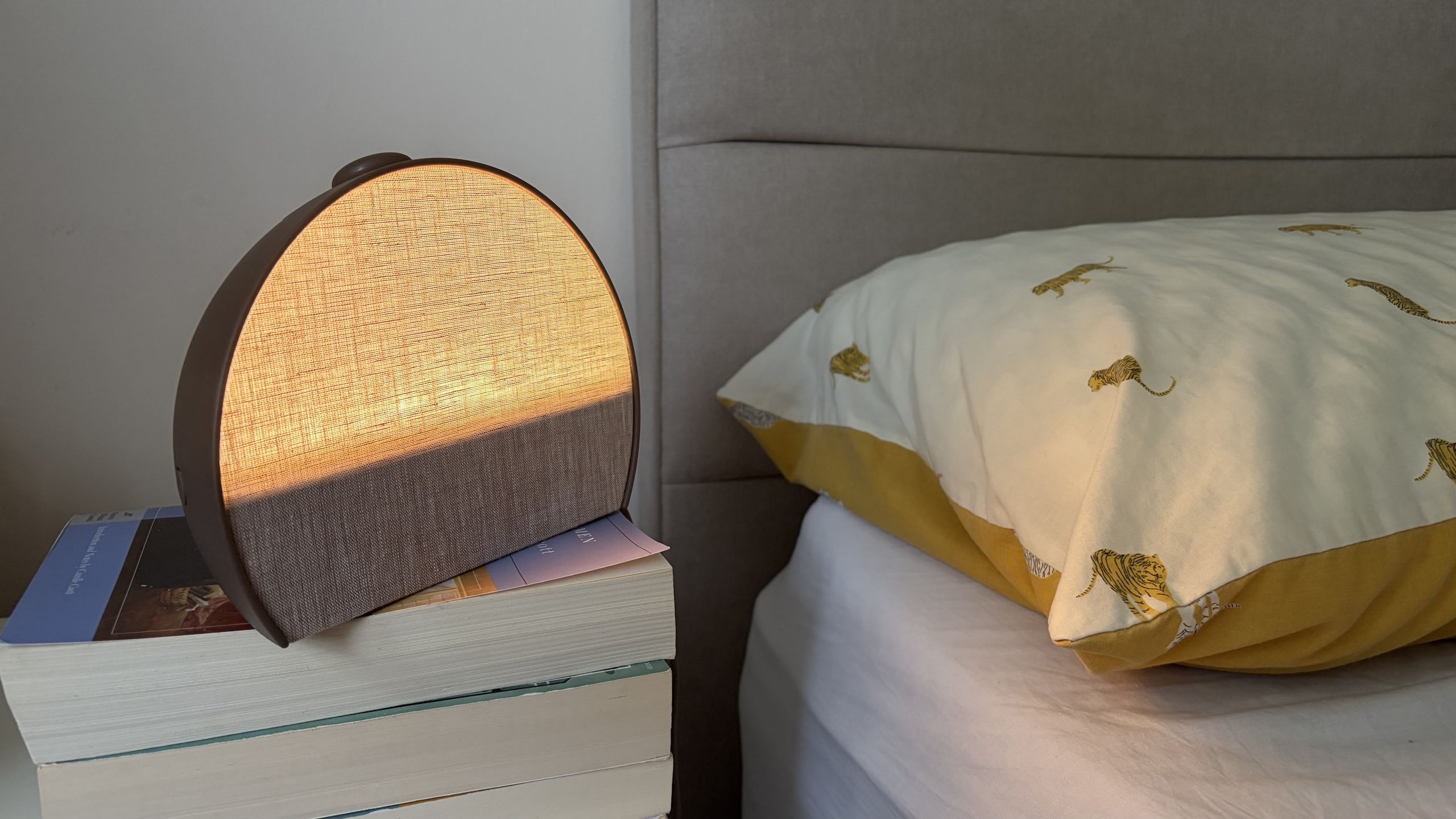
A contactless sleep tracker and sunrise alarm that frees your wrist, but requires an AC plug and subscription
The Hatch Sleep Clock is best suited for anyone who wants gentle wake-ups and sleep monitoring without wearing uncomfortable rings, straps, or smartwatches to bed. Its greatest strength is pairing a soothing, gradual sunrise lamp with radar-based sleep stage tracking that Tom's Guide found closely mirrored dedicated finger sensors. The major catch is that it cannot monitor vitals like heart rate, HRV, or skin temperature, and it only tracks a single sleeper. Compared to the $169.99 Hatch Restore 3, shoppers are essentially paying an $80 premium solely to add passive radar tracking.
Buy it if
- Sleepers who dislike wearing wristwatches, bands, or smart rings to bed
- Anyone struggling with harsh phone alarms during dark winter mornings
- Shoppers seeking habit and sleep consistency tracking without judgmental sleep scores
Skip it if
- You need deep biometric data like heart rate, HRV, skin temperature, or SpO2
- You want to monitor two partners in the same bed using a single bedside device
- You want full access to 2,500+ bedtime audio tracks without an ongoing monthly subscription
Where to buy
We may earn a commission from purchases or qualifying sign-ups through our links. Affiliate links explained
What reviewers liked
- Passive radar sensors track sleep stages from 2 to 4 feet away with nothing to wear or recharge
- Gentle sunrise illumination and sunset wind-down routines ease wakefulness and sleep onset
- Physical volume dial and light switch allow bedroom adjustments without touching a smartphone
- Clean, dimmable fabric-wrapped aesthetic blends easily into bedroom decor
What they didn’t
- Does not measure physiological vitals such as heart rate, HRV, or blood oxygen
- Tracks only one sleeper and requires precise nightstand positioning at mattress height
- Full audio library of bedtime meditations and sleep stories is locked behind a paid membership
- Operates strictly on wall power with no battery backup for travel or power interruptions
Key specs
- Launch price
- $249.99
- Reported price
- $249.99, occasionally discounted to $199.99 during seasonal sales
- Sensor type
- Low-power radar micro-motion sensor (no camera, no microphone)
- Tracking placement
- 2 to 4 feet away at mattress level, aimed at sleeper's chest
- Sleep metrics tracked
- Sleep duration, sleep stages (Core, Deep, REM), time awake, schedule regularity
- Omitted metrics
- No heart rate, HRV, skin temperature, or blood oxygen
- Power source
- AC wall power adapter (no internal battery)
- Connectivity
- Wi-Fi (2.4 GHz) and Bluetooth
- Physical controls
- Top-mounted volume knob, dedicated light toggle, routine/alarm button
- Colorways
- Putty, Greige, Cocoa
- Optional subscription
- Hatch+ ($4.99 to $5.99/mo or $49.99 to $59.99/yr)
In depth
Design and comfort
The Hatch Sleep Clock uses an arched, fabric-wrapped dome silhouette that looks like a high-end designer lamp rather than a clinical medical gadget. It comes in neutral Putty, Greige, and Cocoa tones designed to integrate into modern nightstands. The digital LED clock face shines through the front fabric and can be adjusted in brightness or turned off entirely for light-sensitive sleepers, reappearing temporarily when tapped. In terms of comfort, reviewers highlight that the non-wearable form factor is its biggest practical benefit: there are no sticky sensor pads, no tight silicone straps, and no metal rings to pinch swelling fingers during the night. Reviewers also welcomed the addition of physical controls, including a top-mounted volume dial and a dedicated light toggle, which allow users to adjust audio or turn the reading light on and off without glancing at a smartphone screen.
Health and fitness tracking accuracy
Rather than relying on photoplethysmography (PPG) sensors touching your skin, the device uses a low-power radar sensor to monitor subtle chest movements and respiration from 2 to 4 feet away. In side-by-side evaluations, Tom's Guide noted that the Sleep Clock's recorded sleep stages—core/light sleep, deep sleep, and REM—along with total sleep duration, lined up closely with data from the Oura Ring. However, Forbes Vetted and Tom's Guide emphasize that it is not intended for serious biometric tracking: it cannot record heart rate, heart rate variability (HRV), body temperature, or blood oxygen. Hatch also intentionally excludes a gamified numerical sleep score out of 100, focusing instead on habit consistency, bedtime regularity, and high-level trends. Furthermore, the radar beam only monitors a single sleeper on that side of the bed, meaning co-sleeping couples need to angle the unit carefully to avoid skewed readings.
Battery life
Unlike wrist trackers and smart rings that demand frequent charging every couple of days, the Hatch Sleep Clock is a permanent bedside fixture powered continuously by an AC wall adapter. Reviewers appreciate that it completely eliminates battery degradation and nightly charging routines; you will never miss a night of sleep data because you forgot to drop your wearable on a magnetic dock. The clear downside is a complete lack of an internal rechargeable backup. If your home loses power overnight, or if you unplug the clock to move rooms, tracking ceases and the alarm will not fire until power is restored.
Smart features and app ecosystem
The Sleep Clock acts as a three-in-one wellness hub: sunrise alarm, smart light, and sound machine. Reviewers consistently praise Hatch's sunrise simulation, which gradually increases warm yellow and orange illumination over 15 to 60 minutes to wake users naturally before acoustic chimes sound. The evening sunset routines offer the reverse, providing soft amber and red hues alongside soothing soundscapes to help calm the nervous system. The Hatch Sleep app structures routines intuitively by time of night, letting you create custom stacks for reading, falling asleep, and waking up. However, reviewers note that modifying schedules or updating device settings requires an active Wi-Fi connection, meaning it functions poorly as an offline travel alarm.
Compatibility (iPhone/Android)
The Hatch Sleep Clock connects using Bluetooth for initial setup and 2.4 GHz Wi-Fi for routine synchronization and firmware updates. The Hatch Sleep companion app is available on both iOS and Android, offering feature parity across operating systems. Reviewers encountered quick Bluetooth handshakes and smooth pairing on both platforms. Keep in mind that the device operates inside its own ecosystem; while basic sleep intervals can sync to services like Apple Health, it does not integrate with platforms like Apple HomeKit or Google Home for complex cross-brand smart home automations.
Price and subscriptions
The Hatch Sleep Clock lists at an MSRP of $249.99, which is $80 higher than the mechanically similar Hatch Restore 3 ($169.99). During major promotional sales such as Amazon Prime Day and Black Friday, retailers typically discount the device down to $199.99. Sleep tracking, standard sunrise light profiles, and a core set of white noise sounds are free for the life of the device. However, full access to Hatch's broader sound library—including over 2,500 guided meditations, sleep stories, breathing exercises, and specialized sound baths—requires an optional Hatch+ membership. Hatch+ costs $4.99 to $5.99 monthly or $49.99 to $59.99 annually after an included 30-day trial.
Is it worth the money?
Basic sleep tracking and sunrise alarm routines are included without ongoing fees, but unlocking the full 2,500+ sound and meditation library requires a Hatch+ subscription ($4.99 to $5.99/mo).
Also consider
- Hatch Restore 3
Provides identical sunrise alarm lighting, sound routines, and physical top controls for $169.99, omitting only the radar sleep tracker.
- Withings Sleep Analyzer
A $199.95 under-mattress mat that tracks sleep stages, heart rate, and snoring passively without occupying nightstand space.
- Oura Ring Gen 4
A $349 to $399 wearable ring providing detailed heart rate variability, skin temperature, and daytime activity tracking.
Reviews we read
This roundup summarizes professional reviews and published specifications; Next Interrupt did not test the product. Roundup updated November 14, 2026. How we work