 Watch on YouTube ↗
Hardware Unboxed ·
Graphics cards / Review roundup
Desktop GPU; partner-board cooling and pricing vary
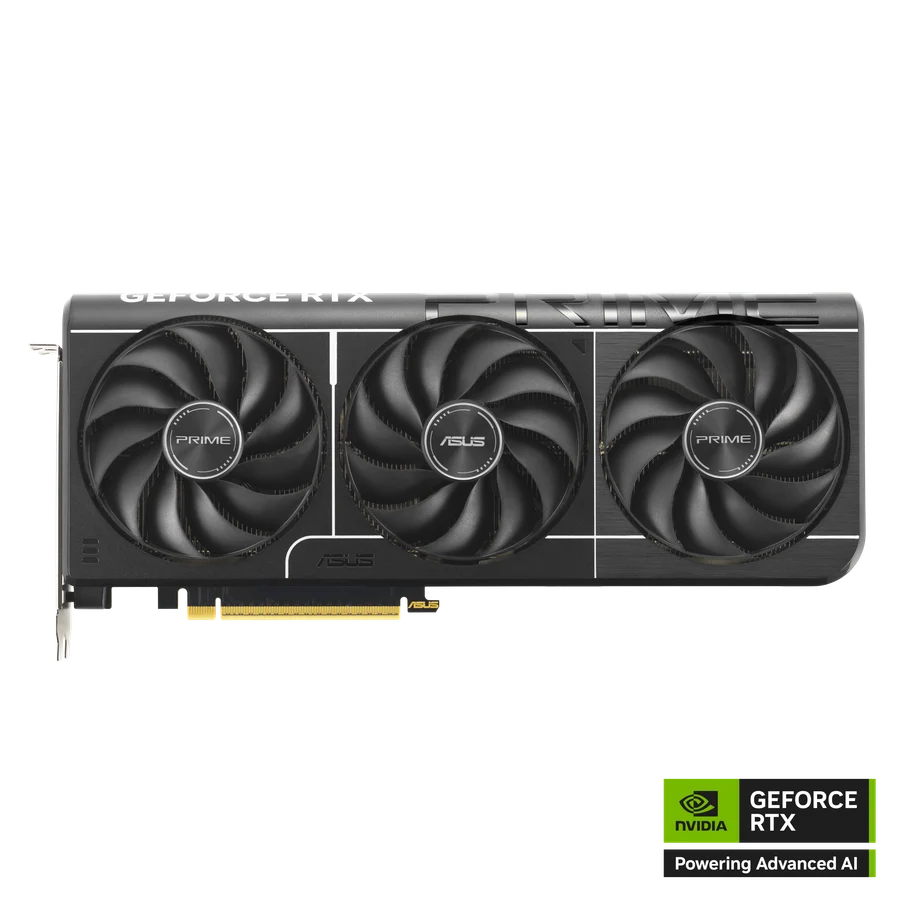
The Nvidia GeForce RTX 5070 Ti is an outstanding graphics card for enthusiasts seeking uncompromising 1440p ultra settings and viable 60 fps 4K gaming without stepping up to four-figure halo models. Its greatest asset is an exceptionally well-rounded feature package, pairing capable raster performance with class-leading ray tracing, DLSS 4 upscaling, and 16GB of fast GDDR7 memory. The main drawback is market volatility, as board partner markups frequently drive real-world prices far above Nvidia's official $749 starting price. Compared to AMD's rival Radeon RX 9070 XT, it matches native rasterization while easily outpacing the Radeon card once path tracing or AI frame generation is toggled on.
We may earn a commission from purchases or qualifying sign-ups through our links. Affiliate links explained
Across independent lab tests, the GeForce RTX 5070 Ti firmly establishes itself as a 1440p high-refresh workhorse that can handle native 4K gaming. In Tom's Hardware benchmarking across its standard suite, the card averaged 100.3 fps at 1440p Ultra settings with 75 fps 1% lows, and 61.2 fps at 4K Ultra. Compared to previous hardware, Tom's Hardware logged a 25% raster lead over the original RTX 4070 Ti and a more modest 14% advantage over the RTX 4070 Ti Super at 4K. TechSpot's massive 52-game benchmark suite placed the RTX 5070 Ti and AMD's Radeon RX 9070 XT in an effective dead heat, with Nvidia leading by 1.4% at 1440p and 4% at 4K. In Hogwarts Legacy, TechSpot reported the 5070 Ti ran 12% faster than the 4070 Ti Super at 1440p and matched the RTX 4080 at 4K. In Borderlands 4, the RX 9070 XT took a 10% lead at 1440p Badass preset, while in Gears of War: E-Day, the 5070 Ti pulled ahead by 11% at maximum settings. At 1080p, testing indicates the card is frequently held back by system CPU limits, yielding narrower 11% to 13% margins over last-generation options.
Nvidia's architectural edge expands sharply when ray tracing and AI reconstruction enter the pipeline. Tom's Hardware measured an average of 88.5 fps with 66 fps 1% lows at 1440p Ultra with ray tracing enabled. At native 4K with ray tracing, performance dropped to 48.9 fps average, demonstrating that demanding ray-traced workloads at 3840x2160 still require upscaling assistance. TechSpot found that in Doom: The Dark Ages, while AMD held a 10% to 12% lead in pure rasterization, enabling full path tracing caused AMD hardware to collapse, allowing the RTX 5070 Ti to nearly double its frame rate. PC Gamer and Tom's Hardware noted that DLSS 4's Transformer-based model delivers noticeably sharper image reconstruction and motion stability than competing solutions. Blackwell's Multi Frame Generation (MFG) also allows the card to output fluid visual rates on 240Hz or 360Hz monitors, though reviewers caution that generated frames do not lower underlying control latency.
Nvidia rates the RTX 5070 Ti at 300 watts total board power. Testing across retail boards shows that partner cooling systems easily handle this thermal load. In PC Gamer testing, the Asus TUF Gaming OC was exceptionally cool at 63°C peak under gaming load, while the MSI Gaming Trio reached 65°C, the MSI Ventus 3X hit 69°C, and the PNY OC peaked at 71°C. TechPowerUp found the Asus TUF model ran whisper-quiet in Quiet BIOS mode while maintaining low operating temperatures. PC Gamer and Eurogamer both discovered substantial manual overclocking headroom on GB203 silicon, pushing core clocks past 3.0 GHz to 3.2 GHz in MSI Afterburner with negligible impact on acoustics, bringing performance within touching distance of the stock RTX 5080.
Memory capacity was a key complaint on earlier 70-tier releases, but the RTX 5070 Ti resolves this by providing 16GB of GDDR7 memory across a full 256-bit bus. Running at 28 Gbps, the memory sub-system delivers 896 GB/s of bandwidth. TechPowerUp and Tom's Hardware noted this represents a 77% increase in bandwidth compared to the 12GB RTX 4070 Ti and a 33% bandwidth jump over the RTX 4070 Ti Super. In modern memory-heavy titles like Cyberpunk 2077 and Alan Wake 2, 16GB avoids the micro-stuttering and asset-streaming pop-in that plagued earlier 12GB cards when running high-resolution texture packs alongside ray tracing.
Because Nvidia did not produce an official Founders Edition for the RTX 5070 Ti, dimensions depend on the third-party board partner. While compact two-slot designs like Gigabyte's Eagle OC Ice SFF exist, most mainstream triple-fan partner cards are substantial 2.5-slot to 3-slot packages measuring between 300 mm and 330 mm and weighing well over 1,200 grams. Most manufacturers include an anti-sag support bracket in the box to prevent motherboard strain. Power delivery is handled by a single 16-pin 12V-2x6 connector, which requires care when bending inside narrower chassis. Nvidia and card manufacturers recommend a quality 750-watt power supply for systems pairing the 5070 Ti with modern enthusiast desktop processors.
Nvidia targeted a $749 MSRP at launch, but retail execution drew widespread criticism from reviewers. Due to GDDR7 production costs and board partner markups, PC Gamer, Tom's Hardware, and TechSpot documented retail prices that routinely floated between $850 and $1,000+ during the launch window. At $749, Tom's Hardware rated the card as a strong enthusiast sweet spot, but inflated price tags hurt its value against AMD's Radeon RX 9070 XT. The AMD competitor debuted at $599 and settled around $650 to $750, delivering virtually identical native raster performance in 52 games for roughly $150 to $200 less. The 5070 Ti justifies its premium only for gamers who value superior DLSS upscaling, full ray tracing capability, and lower power consumption.
At its base $749 MSRP, the 5070 Ti offers the strongest price-to-performance ratio in the Blackwell lineup. When retail prices approach $950 or more, it loses ground to AMD's cheaper RX 9070 XT.
PERFORMANCE
Radeon RX 9070 XT scores 2% lower average frame rate than GeForce RTX 5070 Ti in this test.
Tom’s Hardware · full test results ↗ · Original chart ↗Published March 5, 2025 · checked 2026-10-06
March 2025 launch review; Ryzen 7 9800X3D, 32GB DDR5-6000. PowerColor Reaper RX 9070 XT and RX 9070, Asus Prime RTX 5070 Ti, RTX 5070 Founders Edition. Launch-era drivers apply; see the review’s test setup. Native rendering, no upscaling or generated frames; geometric mean.
Historical review snapshot. Tests use this publication’s common system and suite; game patches and drivers can differ between the included cards. Results are kept separate from other review suites.
| Product | Result | Against first measured model |
|---|---|---|
| GeForce RTX 5070 Ti | 61.2 | 0% |
| Radeon RX 9070 XT | 60 | -2% |
| GeForce RTX 5070 | 46.7 | -23.7% |
| Radeon RX 9070 | 52.2 | -14.7% |
Bars start at zero. Results apply to the tested configuration and settings. Percentage differences use the first measured model as the baseline; they are not a combined rating. A suite average is not the frame rate of every game. 1% lows describe the slowest portion of frames and help expose uneven delivery. Missing products are never assigned zero.
Help choosing
Key differences, review evidence and who should buy each model.
Watch on YouTube ↗Hardware Unboxed ·
Matches the 5070 Ti in native rasterization gaming while costing significantly less, though it trails in path tracing and lacks DLSS.
Provides roughly 15% to 20% higher performance at 4K resolution, but carries a higher base price starting at $999.
Offers an identical 16GB VRAM capacity and trails by only 11% to 14% on average, making it a bargain if found discounted on clearance.
This roundup summarizes professional reviews and published specifications; Next Interrupt did not test the product. Roundup updated October 16, 2026. How we work