Phones & tablets / Review roundup
Galaxy Z Fold 8
Galaxy Z Fold 8
- 5 / 5What Hi-Fi?
- 8 / 10WIRED
- 4.5 / 5PCMag
- 4.5 / 5Android Central
A passport-style redesign delivers exceptional pocketability and video viewing, though dropping zoom hurts
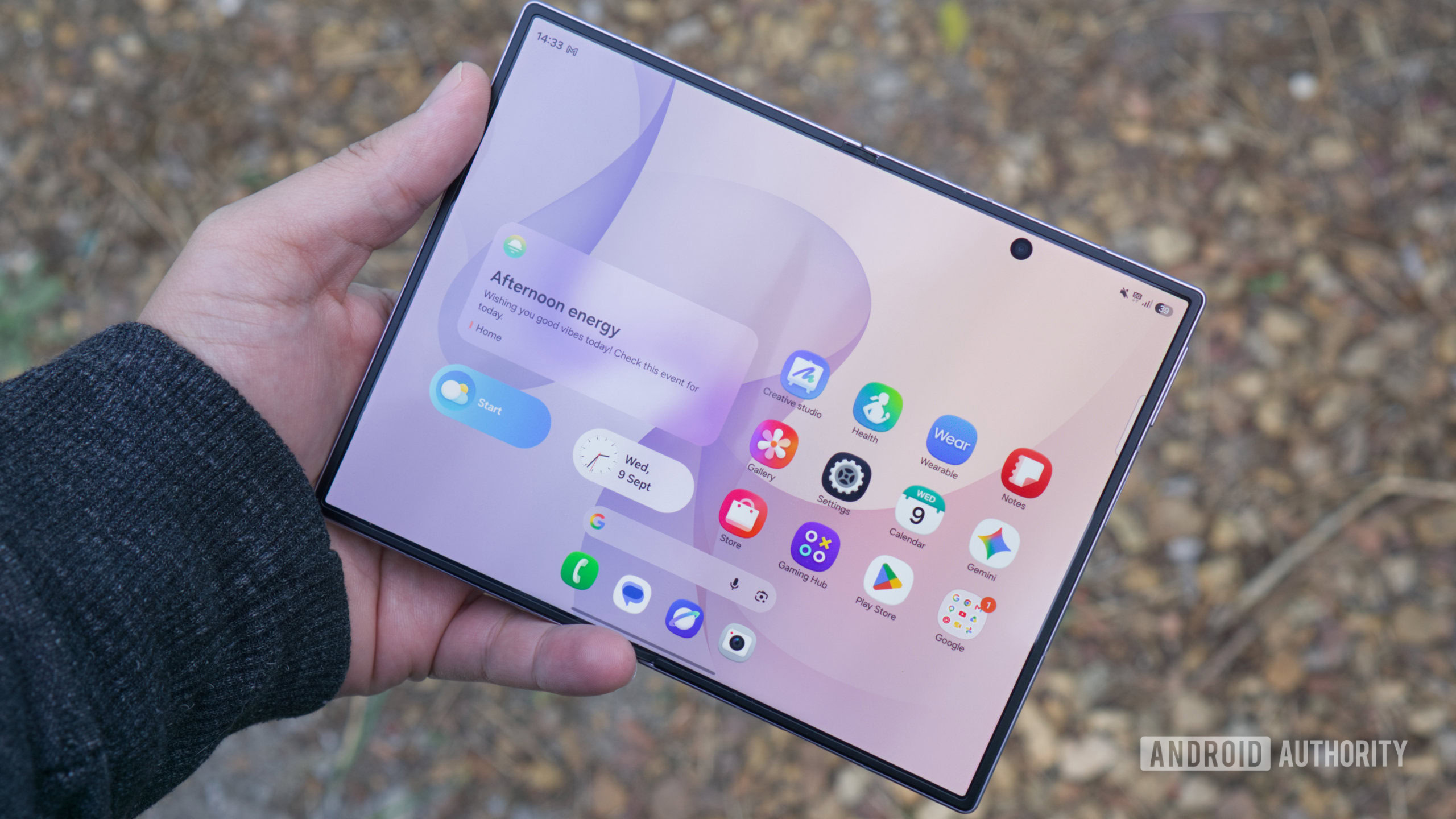
The Samsung Galaxy Z Fold 8 is best suited for shoppers wanting foldable tablet utility in a chassis that feels natural to hold and carry every day. Its wider 5.5-inch cover screen and 7.6-inch 4:3 inner display fix the awkward aspect ratios of prior generations, complemented by a lightweight 201g frame and dependable all-day battery life. The primary catch is the loss of a dedicated optical telephoto lens, which limits zoom performance to digital crops on the 50MP sensor. Against the heavier Apple iPhone Duo and the taller Z Fold 8 Ultra, the standard Fold 8 strikes the most comfortable balance for media and mobile ergonomics.
Buy it if
- Readers and video streamers who want a practical 4:3 inner screen without massive black bars
- Shoppers tired of narrow, tall foldables who want a compact 5.5-inch phone when closed
- Power users seeking 7 years of Android platform support and mature split-screen multitasking
Skip it if
- You rely heavily on dedicated 3x to 5x optical telephoto cameras for portraits and distance shots
- You frequently use Flex Mode to prop the phone open at arbitrary angles past 90 degrees
- You need built-in stylus support or dust resistance beyond an IP48 certification
Where to buy
We may earn a commission from purchases or qualifying sign-ups through our links. Affiliate links explained
What reviewers liked
- Weighs only 201g and measures 4.5mm unfolded, making it exceptionally portable
- New 4:3 inner aspect ratio significantly reduces letterboxing on video playback
- Silicon-carbon battery delivers up to 16.5 hours in lab rundown tests
- Cover screen is wide enough for comfortable typing without unfolding the phone
- Samsung commits to 7 years of major OS and security updates
What they didn’t
- No dedicated telephoto camera, leaving zoom past 2x noticeably soft
- Hinge does not reliably hold free-stop angles past 90 degrees
- High $1,899.99 launch price with no charging brick included in the box
Key specs
- Launch price
- $1,899.99 (256GB); $2,099.99 (512GB)
- Reported price
- $1,599.99 to $1,899.99
- Inner Display
- 7.6-inch Dynamic AMOLED 2X, 4:3 aspect ratio, 120Hz, 3,000 nits peak
- Cover Display
- 5.5-inch Dynamic AMOLED 2X, 10:16 aspect ratio, 120Hz
- Processor
- Qualcomm Snapdragon 8 Elite Gen 5 for Galaxy
- RAM & Storage
- 12GB RAM; 256GB or 512GB storage
- Rear Cameras
- 50MP f/1.8 main (OIS) + 50MP f/1.9 ultrawide
- Front Cameras
- 10MP cover screen selfie, 10MP inner display camera
- Battery & Charging
- 4,800mAh silicon-carbon; 45W wired, 20W wireless
- Weight & Thickness
- 201g; 4.5mm unfolded, 9.0mm folded
- Durability
- IP48 water resistance, Flex Titanium internal plate, Gorilla Glass Ceramic 3
In depth
Design and durability
The Galaxy Z Fold 8 departs from the tall, narrow profile of its predecessors in favor of a shorter, wider passport shape. Reviewers praise how compact and natural it feels in hand, noting that folded dimensions resemble a compact handset rather than an unwieldy remote control. At 201 grams and 4.5mm thick unfolded, it is the lightest big-screen foldable Samsung has built. Durability testing shows meaningful structural upgrades: Samsung incorporates a titanium alloy layer behind the folding OLED, and PCMag noted that the internal crease is reduced to a subtle seam. JerryRigEverything observed that the Gorilla Glass Ceramic 3 cover display resists scratches up to level 6 on the Mohs scale, though the internal foldable screen still scratches at level 2 under fingernails. Water resistance is rated at IP48, which preserves submersion protection up to 1.5 meters for 30 minutes but lacks true dust sealing. A key mechanical compromise noted by Android Central is that the redesigned hinge cannot hold free-stop angles past 90 degrees as sturdily as prior Galaxy Folds, eliminating the classic Flex Mode kickstand workflow.
Display
The display configuration is the centerpiece of the redesign. Outside, the 5.5-inch 120Hz cover screen adopts a 10:16 aspect ratio that allows for normal two-thumb typing and comfortable single-handed navigation. Inside, the 7.6-inch Dynamic AMOLED 2X panel unfolds into a 4:3 aspect ratio with up to 3,000 nits peak brightness and an effective anti-reflective coating. Outlets including What Hi-Fi? and PCMag singled out the 4:3 ratio for praise, reporting that widescreen video letterboxing is drastically smaller than on older square foldables, letting 16:9 and 21:9 movies fill the display more efficiently. What Hi-Fi? highlighted exceptional contrast, punchy colors, and crisp upscaling, though it cautioned that skin tones can occasionally appear slightly warm or oversaturated.
Cameras (daylight, low light, zoom, video)
To trim thickness and weight, Samsung reduced the rear camera array to a dual-lens system consisting of a 50MP main sensor and a 50MP ultrawide lens, omitting the dedicated telephoto module found on the Fold 8 Ultra. In daylight, reviewers at Mashable and 9to5Google found the primary 50MP shooter captures crisp, vibrant photos with dependable dynamic range. Low-light results remain strong due to Nightography software tuning. However, the absence of an optical telephoto lens is universally cited as the phone's greatest functional omission. While 2x in-sensor crops deliver usable detail, reviewers at Benks and 9to5Google noted that digital magnification deteriorates quickly past 3x, yielding softer textures and artifacts in distance and portrait shots. For video, the Fold 8 captures up to 8K at 30fps and 4K at 60fps with stable, reliable optical and digital stabilization.
Performance and gaming
Powered by Qualcomm's Snapdragon 8 Elite Gen 5 for Galaxy and 12GB of RAM, the Fold 8 offers flagship-tier responsiveness. PCMag described system speeds as immediate across complex workflows. Gaming performance is strong; Android Authority highlighted that the 4:3 internal screen and top-tier GPU make the Fold 8 particularly capable for dual-screen Nintendo DS and 3DS emulation, as well as demanding 3D titles. Because the chassis is only 4.5mm thin when unfolded, reviewers noticed mild thermal warmth spreading across the frame during extended benchmarking sessions, but severe thermal throttling remains minimal in routine gaming.
Battery life and charging speed
The switch to a 4,800mAh silicon-carbon battery yields measurable endurance gains despite the thinner enclosure. In standardized testing, PCMag recorded 16 hours and 30 minutes of continuous runtime, while GSMArena measured an Active Use Score of nearly 14 hours. Tom's Guide noted the silicon-carbon cell comfortably powers users through a demanding workday without top-up anxiety. Charging speeds receive an upgrade to 45W wired charging alongside 20W wireless charging. Android Central noted that a compatible 45W USB PD PPS adapter takes the device from 0% to approximately 63% in 30 minutes, though shoppers must purchase the 45W charger separately.
Software and update promise
The phone ships running Android 17 underneath One UI 9. Multitasking remains a standout capability, supporting three-app split screens and floating windows across the wide workspace. Samsung includes its latest Galaxy AI features, such as Now Nudge for smart context-aware suggestions and Gemini-backed writing tools. Samsung also guarantees 7 years of major Android operating system upgrades and 7 years of security patches, matching the industry's longest support commitments.
Price and storage options
The Galaxy Z Fold 8 launched at $1,899.99 for the 256GB base configuration, with a 512GB tier priced around $2,099.99. Unlike the Ultra model, there is no 1TB storage variant available. In the months following release, promotional retail discounts on Amazon and through carriers have seen typical street prices dip between $1,599.99 and $1,749.99, supplemented by carrier trade-in programs.
Is it worth the money?
While starting at a lofty $1,899.99 retail price, frequent promotional discounts and carrier trade-in incentives regularly bring it closer to $1,600.
Also consider
- Samsung Galaxy Z Fold 8 Ultra
Offers a larger 8.0-inch canvas, a 200MP main camera, a 3x optical zoom telephoto lens, and full Flex Mode angle support at a higher price.
- Apple iPhone Duo
Competes in the passport form factor with tighter Apple ecosystem integration and higher inner resolution, but at a heavier carry weight.
- Motorola Razr Fold
Provides a traditional tall book-style foldable format with comprehensive cameras and different software multitasking.
Reviews we read
This roundup summarizes professional reviews and published specifications; Next Interrupt did not test the product. Roundup updated November 8, 2026. How we work
- What Hi-Fi? — Samsung Galaxy Z Fold 8 review
- PCMag — Samsung Galaxy Z Fold 8 Review: I Didn't Expect to Become a Foldable Convert
- Android Central — The Samsung Galaxy Z Fold 8 changed my mind, and after testing it for two weeks, I'm convinced it's the foldable phone most people should buy
- Android Authority — The Galaxy Z Fold 8 is exactly what I’ve wanted in a foldable, but I’m more excited for the Z Fold 9
- Trusted Reviews — Samsung Galaxy Z Fold 8 Review