Watches & wearables / Review roundup
Fitbit Inspire 3
Fitbit Inspire 3
- 4.5 / 5Tom's Guide
- 4.0 / 5PCMag
- 4.0 / 5TechRadar
- 4 / 5Expert Reviews
A lightweight, long-lasting entry-level tracker whose slim color screen trades GPS for week-plus stamina
The Fitbit Inspire 3 is best suited for beginners and casual exercisers who want an unobtrusive health tracker that monitors steps, sleep, and heart rate for over a week without recharging. Its biggest strength is its featherweight 17.7-gram chassis combined with genuine 10-day battery life and comprehensive sleep staging. The primary catch is the absence of built-in GPS and contactless payments, requiring a tethered smartphone for outdoor route mapping. Compared to the pricier Fitbit Charge 6, it sacrifices NFC and standalone location tracking, but it costs around $60 less and lasts several days longer between charges.
Buy it if
- Budget-minded shoppers wanting reliable step counting, resting heart rate, and sleep staging
- Wearers who want an unobtrusive 17.7-gram wristband they only need to charge a couple of times per month
- Casual exercisers looking for a simple wellness band compatible with both iOS and Android
Skip it if
- Outdoor runners and cyclists who want untethered GPS route mapping and pace tracking
- Anyone who prefers a large screen for reading notifications or needs contactless mobile payments
- Users unwilling to sign in with a mandatory Google account
Where to buy
We may earn a commission from purchases or qualifying sign-ups through our links. Affiliate links explained
What reviewers liked
- Up to 10 days of battery life when using gesture wake
- Featherweight 17.7-gram design that remains comfortable during sleep
- Bright color AMOLED display replacing the monochrome panel of prior generations
- Comprehensive sleep staging and overnight health metrics including SpO2 and skin temperature
What they didn’t
- No onboard GPS, requiring a tethered smartphone for route and outdoor distance tracking
- Small 0.76-inch display with thick bezels makes reading notifications difficult
- No contactless payments (NFC) or onboard music controls
- Daily Readiness Scores and deep historical trends require a recurring Fitbit Premium subscription
Key specs
- Launch price
- $99.95
- Reported price
- $69.95 to $88.00
- Display
- 0.76-inch color AMOLED touchscreen
- Weight
- 17.7 g (0.62 oz) without band
- Water resistance
- 50 meters (5 ATM)
- Battery life
- Up to 10 days (2 to 3 days with always-on display)
- Sensors
- Optical heart rate, red/infrared SpO2, 3-axis accelerometer, skin temperature sensor
- GPS
- Connected GPS (uses smartphone GPS)
- Connectivity
- Bluetooth Low Energy
- Compatibility
- Android 10 or later, iOS 15 or later
- Account requirement
- Google account
In depth
Design and comfort
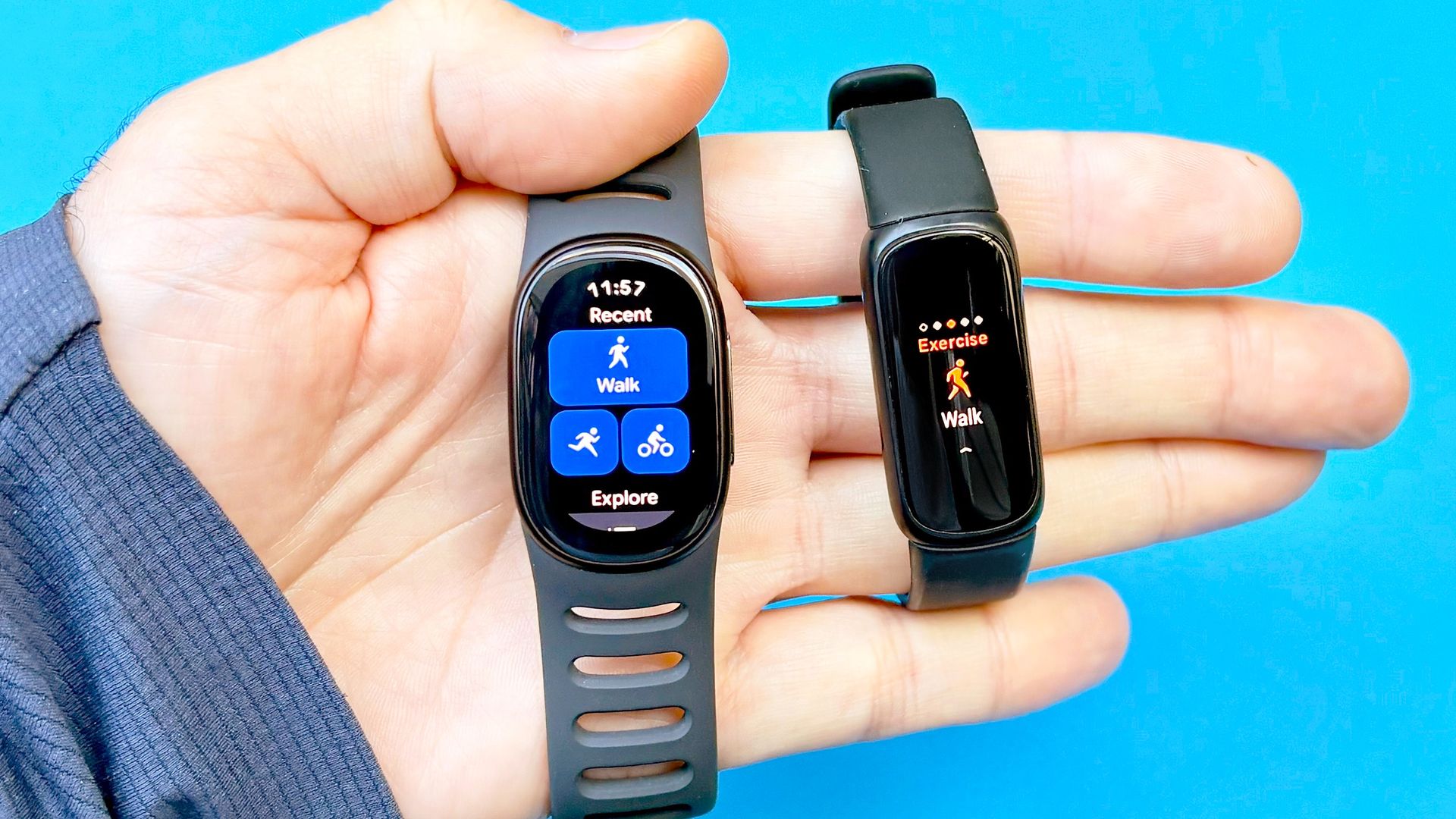
Reviewers praise the Inspire 3 for its lightweight, low-profile footprint. Weighing 17.7 grams (0.62 ounces) without the band, the silicone strap and rounded casing sit flat on the wrist, with PCMag and Tom's Guide noting it is comfortable enough to wear to bed continuously without wrist fatigue. The primary visual upgrade over the Inspire 2 is the color AMOLED touchscreen. However, outlets including TechRadar and PCMag emphasize that the active screen area is small at 0.76 inches and flanked by chunky bezels. While bright enough to view in direct sunlight, long text messages require extensive vertical scrolling, and text size cannot be enlarged. Navigation combines tap and swipe gestures with side-mounted capacitive squeeze points to return to the home screen, which DC Rainmaker found reliable in everyday use, though slightly sluggish during rapid menu navigation.
Health and fitness tracking accuracy
The Inspire 3 handles basic fitness metrics cleanly, tracking daily steps, active minutes, calories, and resting heart rate. In a controlled 7,000-step walking evaluation, Tom's Guide recorded 6,959 steps on the Inspire 3, demonstrating close accuracy against a manual counter. Heart rate monitoring remained dependable during walks and steady-state treadmill sessions, though PCMag observed that the optical sensor lagged slightly behind chest straps during sudden high-intensity interval spikes. Sleep tracking earned consistent praise from PCMag and Tom's Guide for its granular breakdowns of light, deep, and REM cycles, paired with overnight metrics like blood oxygen saturation (SpO2), breathing rates, and skin temperature variations. The most prominent functional compromise is the lack of onboard GPS; outdoor runners and cyclists must keep a paired phone with them to capture route maps and pace.
Battery life
Battery endurance is a key selling point. Google rates the Inspire 3 for up to 10 days of use, and reviewer testing verified that figure with standard gesture-wake settings enabled. DC Rainmaker hit the full 10-day benchmark in raise-to-wake mode. In PCMag's endurance tests with always-on display disabled, the tracker still had 50% capacity remaining after four days of normal-to-heavy use and 43% after five days. However, enabling the always-on display significantly accelerates battery drain: DC Rainmaker recorded endurance dropping to roughly 2 to 3 days per charge in that mode. Recharging takes roughly two hours from empty, though reviewers noted that the bundled magnetic charging cable is exceptionally short.
Smart features and app ecosystem
Smart features are kept to a minimum. The Inspire 3 mirrors smartphone notifications for incoming phone calls, calendar alerts, and text messages, and includes basic utilities such as silent vibrating alarms, a countdown timer, a stopwatch, and a Find Phone tool. It lacks a speaker or microphone for wrist calls, does not support NFC for Google Wallet contactless payments, and omits music playback controls. Data syncs to the Fitbit app, which presents daily metrics in clean dashboard tiles. TechRadar found the app intuitive and easy to digest for beginners, though the interface requires scrolling past promotional prompts for advanced coaching features.
Compatibility (iPhone/Android)
The Inspire 3 connects with both Android and iOS devices over Bluetooth. Pairing and sync reliability were stable across platforms in testing. Android users receive one specific convenience: the ability to send preset quick replies to incoming text messages directly from the band, an option unavailable on iOS due to Apple platform restrictions. Outlets point out that setting up the Inspire 3 now requires an active Google account rather than legacy Fitbit credentials, meaning existing users must migrate their account during initial setup.
Price and subscriptions
The Inspire 3 carries a list price of $99.95, but it routinely sells on discount for $69.95 to $88.00 at major retailers. Each purchase includes a six-month trial of Fitbit Premium, which costs $9.99 per month or $79.99 per year after expiration. Expert Reviews and TechRadar noted frustration that Google trimmed this trial down from the 12-month period included with the Inspire 2. While daily step counting, heart rate, and basic sleep scores remain free forever, deeper long-term analytics—such as the Daily Readiness Score, monthly sleep profile animals, and detailed sleep score breakdowns—are locked behind the ongoing subscription.
Is it worth the money?
Widely regarded as strong value at its frequent sale prices around $70 to $80, though buyers should consider that advanced metrics like the Daily Readiness Score require an ongoing $9.99/month Fitbit Premium plan after the six-month trial ends.
Also consider
- Fitbit Charge 6
Adds built-in GPS, Google Wallet contactless payments, and heart rate streaming to gym gear, but costs around $60 more and has shorter 7-day battery life.
- Garmin Vivosmart 5
Provides deep Garmin Connect training metrics without any subscription paywall, but costs more at $150 and uses a monochrome screen.
- Amazfit Band 7
Delivers a larger display and comparable 10-day battery life at roughly half the cost, though its health tracking software lacks Fitbit's polish.
Reviews we read
This roundup summarizes professional reviews and published specifications; Next Interrupt did not test the product. Roundup updated October 21, 2026. How we work