Laptops & desktops / Review roundup
16-inch MacBook Pro with M5 Max
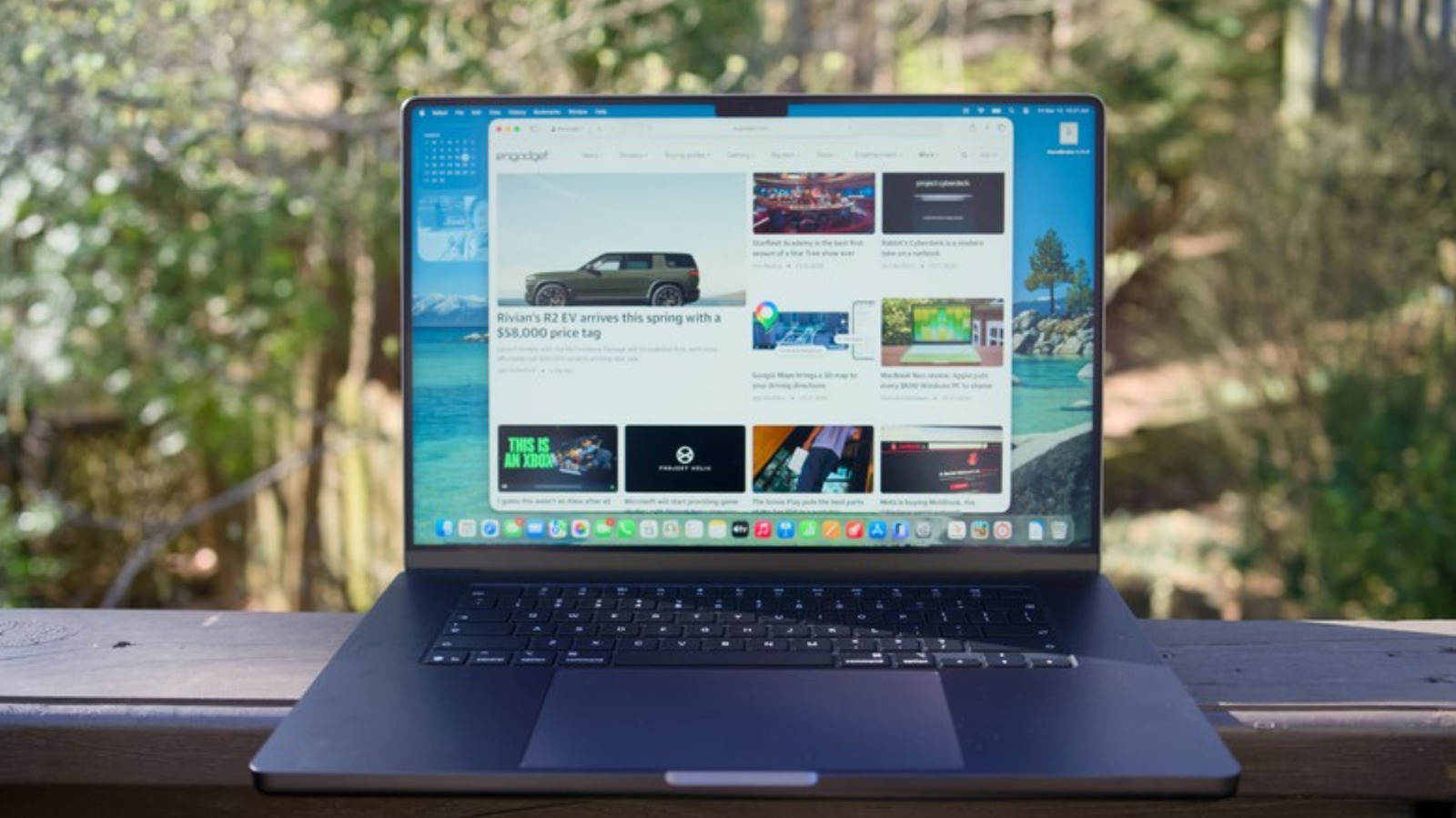
16-inch MacBook Pro with M5 Max
- 90 / 100Engadget
- 4.5 / 5PCMag
- 88 / 100Notebookcheck
Class-leading battery life and desktop-level performance wrapped in Apple's familiar aluminum chassis
The 16-inch MacBook Pro with M5 Max is built for video editors, 3D artists, and developers tackling massive local workloads away from a wall socket. Its chief advantage is unmatched energy efficiency, pairing workstation computing speeds with runtime that exceeds 27 hours in media tests. The primary catch is thermal and power headroom: the 140W power brick cannot prevent minor battery discharge under combined peak CPU and GPU load, and post-purchase component upgrades remain impossible. Compared to Windows alternatives like the Asus ProArt P16 or Dell XPS 16, it delivers substantially longer unplugged endurance and higher sustained memory bandwidth, though Windows workstations offer broader AAA gaming compatibility and lower initial hardware costs.
Buy it if
- Video editors, colorists, and 3D animators working with multi-stream 8K footage on the go
- Developers compiling large codebases or deploying memory-heavy local machine learning models
- Creative professionals requiring full processing performance while running on battery power
Skip it if
- You prioritize PC gaming, as macOS title support remains limited despite strong GPU hardware
- You travel lightly and prefer a chassis that weighs under 4 pounds
- Your routine workload consists primarily of standard office documents and web browsing
Where to buy
We may earn a commission from purchases or qualifying sign-ups through our links. Affiliate links explained
What reviewers liked
- Unrivaled battery endurance, running beyond 27 hours in video playback testing
- Superb 16.2-inch Liquid Retina XDR screen with sustained 1,000-nit SDR brightness
- Blistering internal SSD speeds exceeding 12,000 MB/s in sequential read and write benchmarks
- Three Thunderbolt 5 ports providing up to 120 Gbps data bandwidth
- Category-leading six-speaker array and clear 12MP Center Stage webcam
What they didn’t
- Included 140W charger allows minor battery drain under simultaneous peak CPU and GPU stress
- At 4.7 pounds, the chassis and bulky power brick make for a heavy bag carry
- No internal user upgradeability for memory or solid-state storage
- High base price that scales steeply when configuring additional RAM and SSD tiers
Key specs
- Launch price
- $3,499
- Reported price
- $3,199 - $3,499
- Starting Price
- $3,499
- Processor
- Apple M5 Max (18-core CPU: 6 super cores, 12 performance cores)
- Graphics
- 32-core or 40-core integrated GPU
- Display
- 16.2-inch Liquid Retina XDR Mini-LED (3456 x 2234, 120Hz ProMotion, up to 1,600 nits peak HDR)
- Memory
- 36GB, 48GB, 64GB, or 128GB unified memory (up to 614 GB/s bandwidth)
- Storage
- 2TB, 4TB, or 8TB SSD
- Battery Capacity
- 99.6 Wh
- Weight
- 4.7 lbs (2.13 kg)
- Dimensions
- 14.01 x 9.77 x 0.66 inches (35.57 x 24.81 x 1.68 cm)
- Ports
- 3x Thunderbolt 5, HDMI 2.1, SDXC card slot, MagSafe 3, 3.5mm headphone jack
In depth
Design, build and portability
The 16-inch MacBook Pro retains Apple's familiar aluminum unibody aesthetic in Silver and Space Black. Notebookcheck and RTINGS both praised the chassis rigidity and refined tolerances, noting that the lid opens cleanly with a single finger while staying planted on a desk. Portability, however, is where trade-offs emerge. The laptop measures 0.66 inches thick and weighs 4.7 pounds (2.13 kg). When bundled with the standard 140W power adapter and braided cable, travelers carry well over 5.5 pounds of gear. Reviewers agree that while it is manageable between home and office, it is noticeably heftier than 14-inch notebooks or thin-and-light alternatives.
Display
The 16.2-inch Liquid Retina XDR panel features a 3456 x 2234 resolution at 254 pixels per inch, supported by 120Hz ProMotion variable refresh rates. Apple rates the panel for 1,000 nits sustained full-screen brightness in outdoor SDR and HDR environments, reaching 1,600 nits peak for HDR video. RTINGS recorded wide color coverage across DCI-P3 and deep contrast courtesy of Mini-LED local dimming, though reviewers observed minor blooming around isolated bright elements against completely black backdrops. Notebookcheck noted that while pixel response times are inherently slower than OLED panels, ghosting remains unobtrusive during standard productivity and media editing. Apple also offers a $150 nano-texture matte glass option, which reviewers found highly effective at diffusing harsh overhead reflections without softening image sharpness.
Performance in everyday and demanding work
Apple builds the M5 Max on an 18-core CPU layout featuring 6 high-performance 'super cores' alongside 12 standard performance cores, paired with up to a 40-core GPU. PCMag and AppleInsider reported massive gains in compute benchmarks and timeline rendering, with PCMag observing that the 16-inch model handily outpaced the M4 Pro in 3DMark and PugetBench workloads. PetaPixel tested a 4TB configuration and recorded sequential read and write speeds exceeding 12,000 MB/s—literally doubling the transfer rates of prior generations. Notebookcheck confirmed that the 16-inch chassis allows the M5 Max to sustain higher performance profiles than the compact 14-inch version. However, Notebookcheck also discovered a physical limitation: under combined full CPU and GPU loads, the internal cooling system stabilizes near 70W, and total system draw outpaces the 140W power adapter, causing the battery to deplete by roughly 12% per hour while plugged in.
Battery life
Equipped with a 99.6-watt-hour battery—just under the 100-watt-hour FAA air travel threshold—the 16-inch M5 Max delivers some of the longest runtimes ever measured in a desktop-replacement laptop. In Engadget's video rundown test, the 16-inch M5 Max survived for 30 hours and 46 minutes. PCMag similarly recorded 27 hours of runtime in its standardized battery test. For active productivity, RTINGS measured over 16 hours of continuous web browsing and nearly 16 hours of local video playback. Under extreme sustained creative rendering, runtimes decrease to roughly 7 to 8 hours, but reviewers emphasize that no comparable Windows mobile workstation matches this endurance without an outlet.
Keyboard, trackpad, speakers and webcam
Input hardware remains top tier. The backlit Magic Keyboard incorporates full-height function keys and a responsive Touch ID sensor. RTINGS noted that keystrokes feel tactile and stable, though the shallow travel depth may feel firm during marathon typing sessions. The spacious Force Touch trackpad earned universal acclaim for palm rejection and uniform haptic feedback. Video calls receive a welcome upgrade via a 12MP Center Stage webcam supporting Desk View and 1080p recording, which reviewers found noticeably clearer than earlier 1080p FaceTime cameras. Engadget singled out the six-speaker audio array with force-canceling woofers as the gold standard for laptop sound, delivering rich mid-range fidelity and audible low-end punch without chassis distortion.
Ports and upgradeability
Connectivity sees an important generational leap with the inclusion of three Thunderbolt 5 ports running on independent controllers, delivering bidirectional speeds up to 120 Gbps for high-speed drives and external docks. The chassis also retains a dedicated MagSafe 3 charging port, an HDMI 2.1 port, a full-sized SDXC card slot, and a 3.5mm headphone jack supporting high-impedance headphones. Display support is extensive: the M5 Max drives up to four external monitors (including three 6K displays at 60Hz plus one 4K screen at 144Hz). Upgradeability, however, is entirely absent. Memory and solid-state storage are soldered directly to the package, meaning shoppers must configure their required specifications at the point of sale.
Price and configurations
The 16-inch MacBook Pro with M5 Max launched at an entry price of $3,499 with an 18-core CPU, 32-core GPU, 36GB of unified memory, and a 2TB SSD. Stepping up to the top-tier 40-core GPU with 48GB or 64GB of memory starts around $3,999 to $4,399, while fully maxing out the laptop with 128GB of RAM and an 8TB SSD drives the total past $7,000. The nano-texture display adds $150 to any configuration. Authorized retailers including Amazon and Micro Center have occasionally discounted high-tier M5 Max units by $300 to $600. While expensive, reviewers emphasize that the base 2TB storage pool softens the blow of Apple's premium pricing compared to previous generations.
Is it worth the money?
The starting price includes a generous 2TB SSD, but memory and storage upgrades remain exceptionally expensive, making it critical to buy only the capacity your workflow demands.
Also consider
- 14-inch MacBook Pro with M5 Max
Offers identical chip options in a lighter, 3.6-pound chassis, though thermal limits throttle sustained multi-core performance sooner.
- 16-inch MacBook Pro with M5 Pro
Saves $800 or more while providing the same premium display, chassis, and battery life for users who do not need heavy 40-core GPU rendering.
- Asus ProArt P16
A potent Windows 16-inch rival featuring Nvidia RTX graphics, a touch OLED display, and broader software and gaming compatibility at a lower cost.
Reviews we read
This roundup summarizes professional reviews and published specifications; Next Interrupt did not test the product. Roundup updated November 2, 2026. How we work