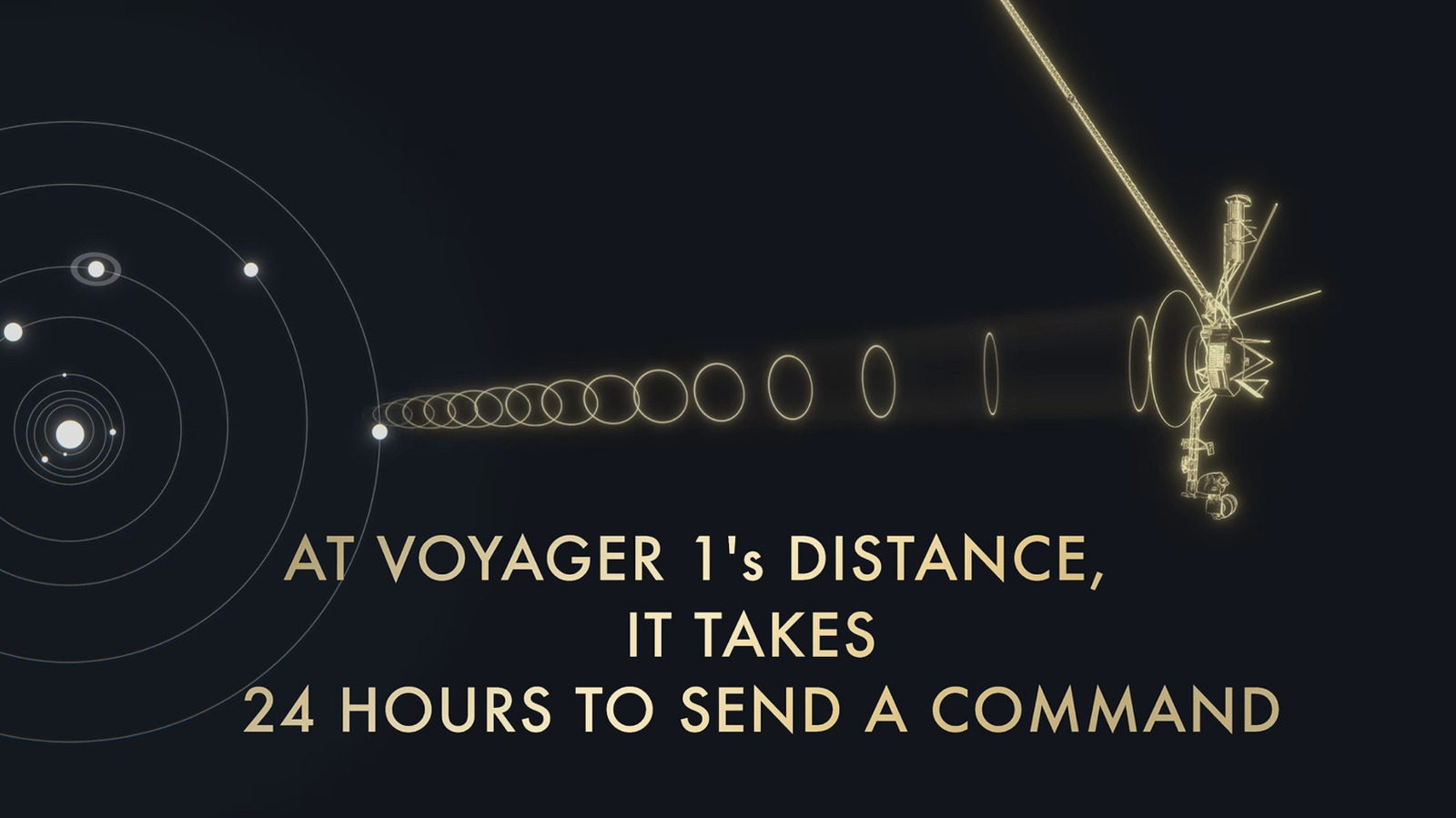
NASA's Voyager 1 space probe is now one light-day away from Earth
It now takes 24 hours to send a message to Voyager 1, as it reaches a distance that's one light-day away from our planet.
via EngadgetReported by 6 outlets
The story so far
AI summary of the reporting below · Updated · How we work
NASA's Voyager 1 has become the first human-made object to venture one light-day from Earth, crossing the threshold on Wednesday, November 18. The veteran probe reached the milestone shortly after 5 a.m. Eastern time while traveling at roughly 38,000 mph. The craft is now situated more than 16 billion miles away, a distance so immense that radio communications take a full 24 hours to travel one way between the spacecraft and mission control. [3][4][5][6]
Because radio waves travel at the speed of light, two-way communication with the spacecraft now requires two full days. Launched in September 1977, Voyager 1 continues to operate with only two functioning science tools: its magnetometer and plasma wave subsystem. Engineers have turned off other equipment, including its cameras in 1990, to ration fading electrical power from its radioisotope thermoelectric generators. [3][5][6]
Voyager mission manager Kareem Badaruddin described the milestone as an unprecedented event that may never occur again. While its scientific instruments will eventually fall silent as plutonium depletes, the spacecraft will continue voyaging toward the star Gliese 445 in the constellation Ursa Minor, where it is expected to arrive in about 40,000 years carrying Earth's Golden Record. [4][5][6]
It now takes 24 hours to send a message to Voyager 1, as it reaches a distance that's one light-day away from our planet.
via Engadget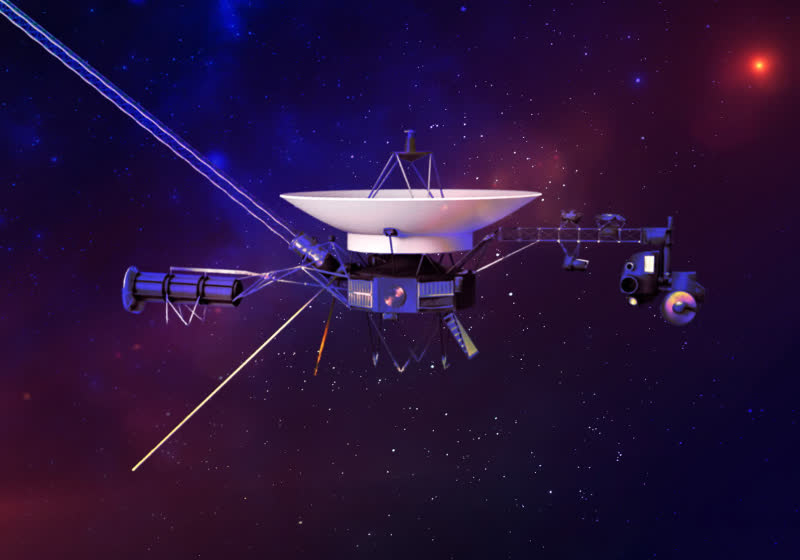
One "day" might not sound like a lot of time or distance, and in the vast emptiness of space, where everything is so far apart, it really isn't. Rather than using familiar measurements such as miles or kilometers, distances in space are often described in terms of how light travels.
via TechSpot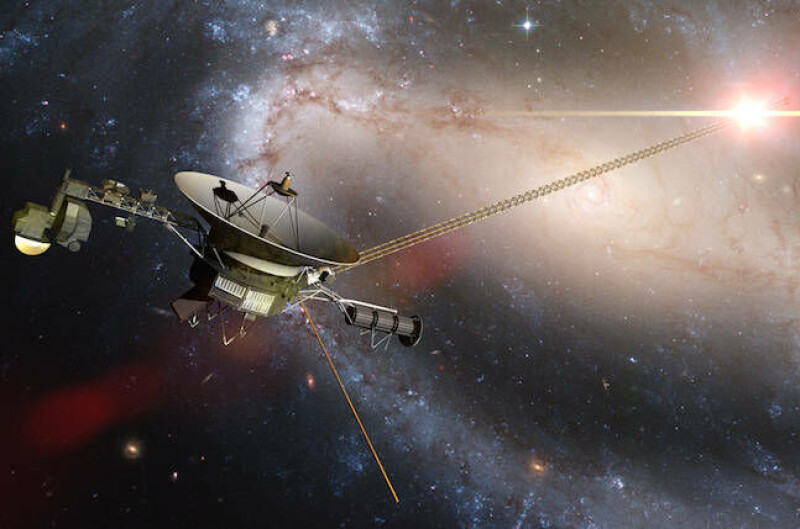
Carrier signal still reaches Earth, but science and engineering data have gone AWOL
via The Register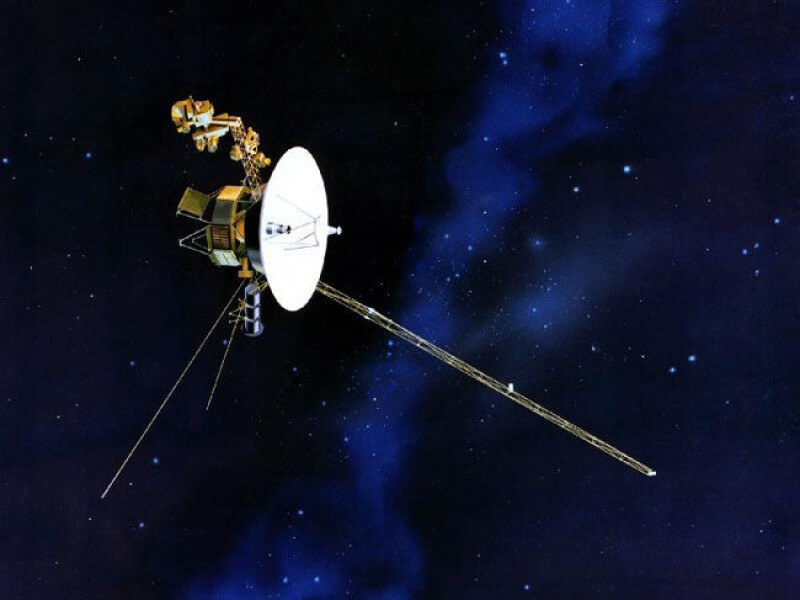
As the world is hit by IT snafu after IT snafu, Voyager sails on, almost half a century after launch
via The Register
After traveling through the void of space for 49 years, Voyager 1 has hit a momentous milestone: The spacecraft is now officially 1 light-day away from Earth, which is, as NASA put it, "very, very far." The probe crossed the milepost on Wednesday at 5:16AM ET and is now 16.094 billion miles away from our…
via The Verge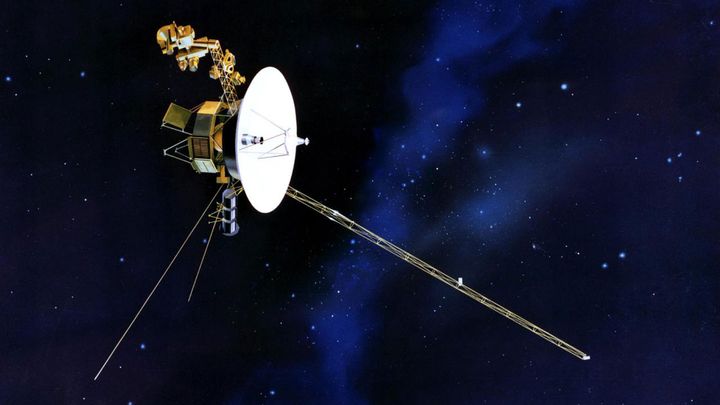
NASA anticipates that Voyager 1 will be the first human-made object to reach space beyond one light-day away from Earth on Wednesday.
via Tom’s Hardware
The spacecraft stores data on an eight-track tape, but it’s managed to stay in contact with scientists for decades. Now, it’s the first human-made object to travel a light-day away from Earth.
via WIRED