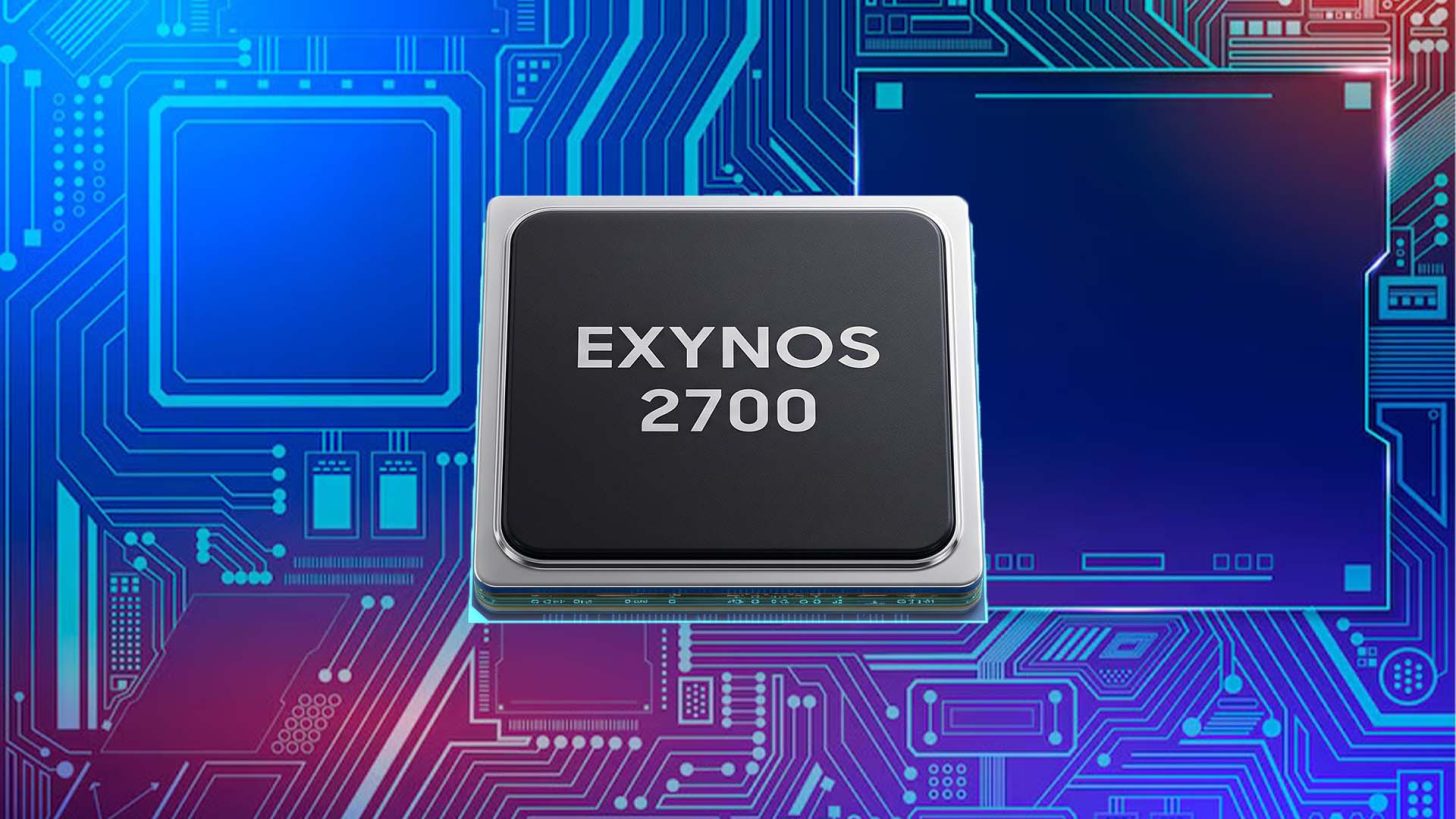
Internal testing shows Samsung's upcoming Exynos 2700 processor outpacing Qualcomm's top-tier Snapdragon 8 Elite Extreme Gen 6 by roughly 20% across key CPU and GPU workloads. According to reporting from Yonhap News Agency and ChosunBiz cited by Notebookcheck, the Exynos chip scored approximately 13,000 points in Geekbench 6.5 multicore testing, while Qualcomm's flagship inside a Xiaomi 18 Pro Max managed around 11,000 points. Samsung's processor also maintained a 15% advantage in Geekbench 7 and showed an even wider 44% lead over the standard Snapdragon 8 Elite Gen 6. [1][2]
Under the hood, the Exynos 2700 is reportedly manufactured on Samsung's second-generation 2nm SF2P node with an initial production run roughly 10% larger than its predecessor. It features a revised 1+4+1+4 layout with an Arm C2-Ultra core reaching 4.24 GHz, a C1-Ultra core at 3.36 GHz, and eight additional C1-Pro and C2-Pro cores, alongside an Xclipse 970 GPU, 24 MB of system-level cache, and LPDDR6 memory support. Graphics tests showed peak performance advantages up to 20%, though that margin fell to about 5% in tests covering basic 3D gaming tasks. [2]
The results have not been independently verified, and key details such as power consumption, thermal efficiency, and sustained real-world performance remain undisclosed. Industry commentators also warn that internal leaks may be intended to hype Samsung's silicon against Qualcomm's switch to TSMC's 2nm node and Offset PoP packaging. The Exynos 2700 is anticipated to appear in select Galaxy S27 smartphone models next year, though its role in the top-tier Galaxy S27 Ultra is still uncertain. [1][2]