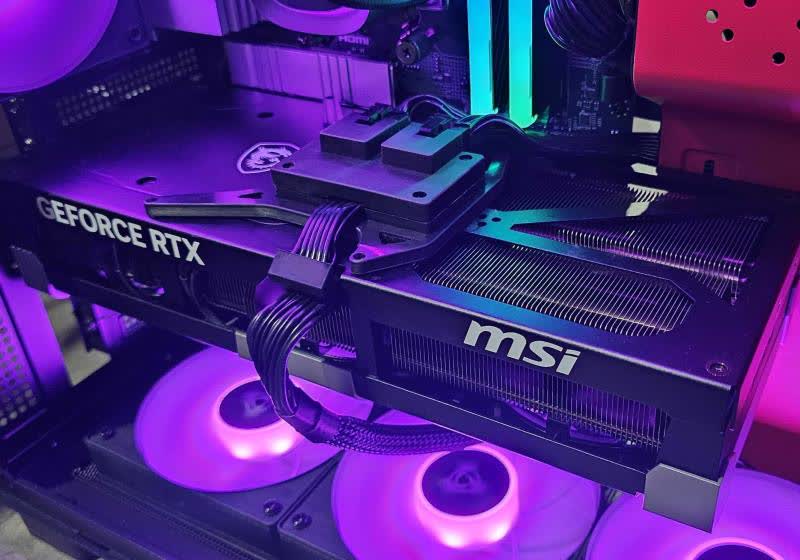
Microsoft has secured a patent for a system designed to harness the idle computing power of consumer graphics cards to train artificial intelligence models. Under the proposal, titled Opportunistic Micro-training on Edge Devices Using Spare GPU Utilization, consenting users would allow Microsoft to assign small workloads to their hardware during periods of low activity. Participants would receive compensation, which could take the form of direct payments, store credit, or early access to AI tools. [2][3]
The framework breaks large AI training assignments into independent micro-tasks distributed across participating personal computers based on each machine's available capacity. Completed subtasks are subsequently verified for errors or manipulation before being recombined. Microsoft notes the concept primarily targets gaming rigs that pack powerful graphics processors, though it could technically function on any capable edge device while attempting to manage heat and memory limits. [3]
Distributed computing projects like Folding@home and SETI@home have long relied on volunteered consumer hardware, but Microsoft's commercial approach faces skepticism over electricity costs, hardware wear and tear, and system monitoring. While the patent signals that the company is exploring alternatives to expensive data center compute, the technology remains a concept that Microsoft has not yet announced as an active consumer product. [2][3]