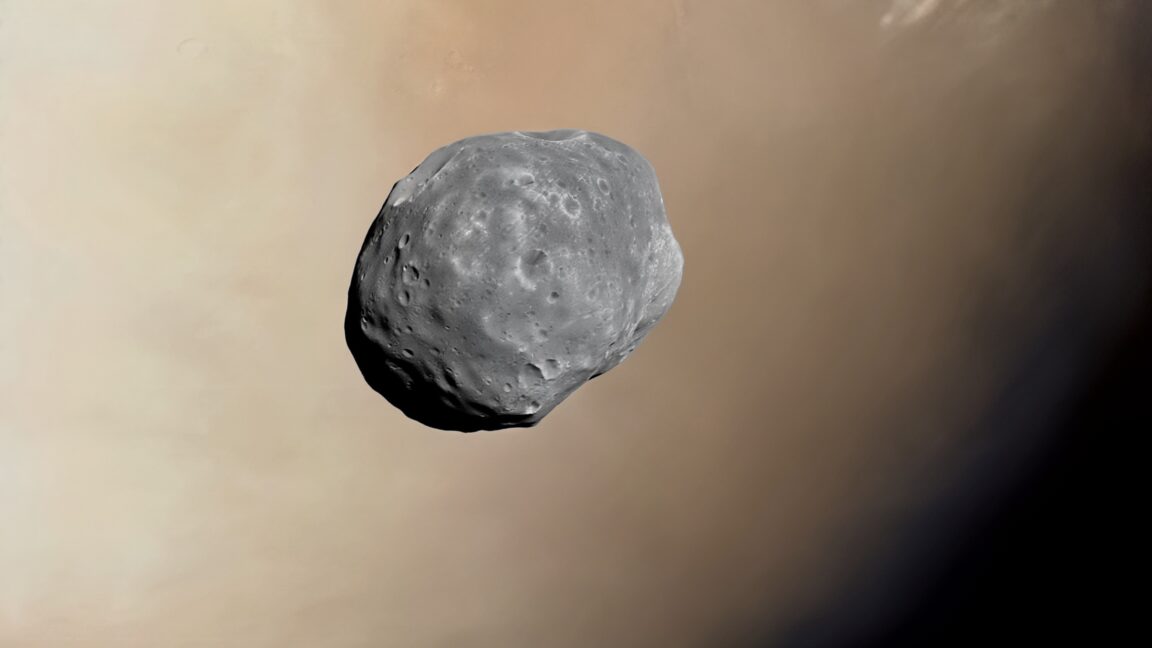
Japan launches mission to bring home a piece of the Martian moon Phobos
The climax for MMX will come in 2029, when the spacecraft will attempt up to two landings on Phobos.
via Ars TechnicaReported by 2 outlets
The story so far
AI summary of the reporting below · Updated · How we work
Japan has sent a robotic probe on a five-year voyage to retrieve physical samples from Phobos, the largest moon orbiting Mars. The $578 million Martian Moons eXploration spacecraft, known as MMX, launched from the Tanegashima Space Center in southern Japan at 3:41 p.m. EDT on Monday (4:41 a.m. Japan Standard Time Tuesday). [1][2]
The MMX spacecraft began its interplanetary trip aboard a 207-foot-tall H3 rocket, Japan's flagship launch vehicle. To carry the country's heaviest deep-space payload yet, the rocket debuted an upgraded configuration fitted with four strap-on solid rocket boosters, an extended payload shroud, and full-throttle main engines. [1]
Led by the Japan Aerospace Exploration Agency, the international effort seeks to touch down on Phobos and return Martian moon material directly to Earth. Scientists anticipate that analyzing these pristine extraterrestrial samples could unlock crucial clues regarding the early formation and history of the solar system. [1][2]
The climax for MMX will come in 2029, when the spacecraft will attempt up to two landings on Phobos.
via Ars Technica
JAXA is leading an international mission to reach Mars’ Phobos moon and bring soil back to Earth. If successful, it could unlock new clues about the history of the solar system.
via WIRED