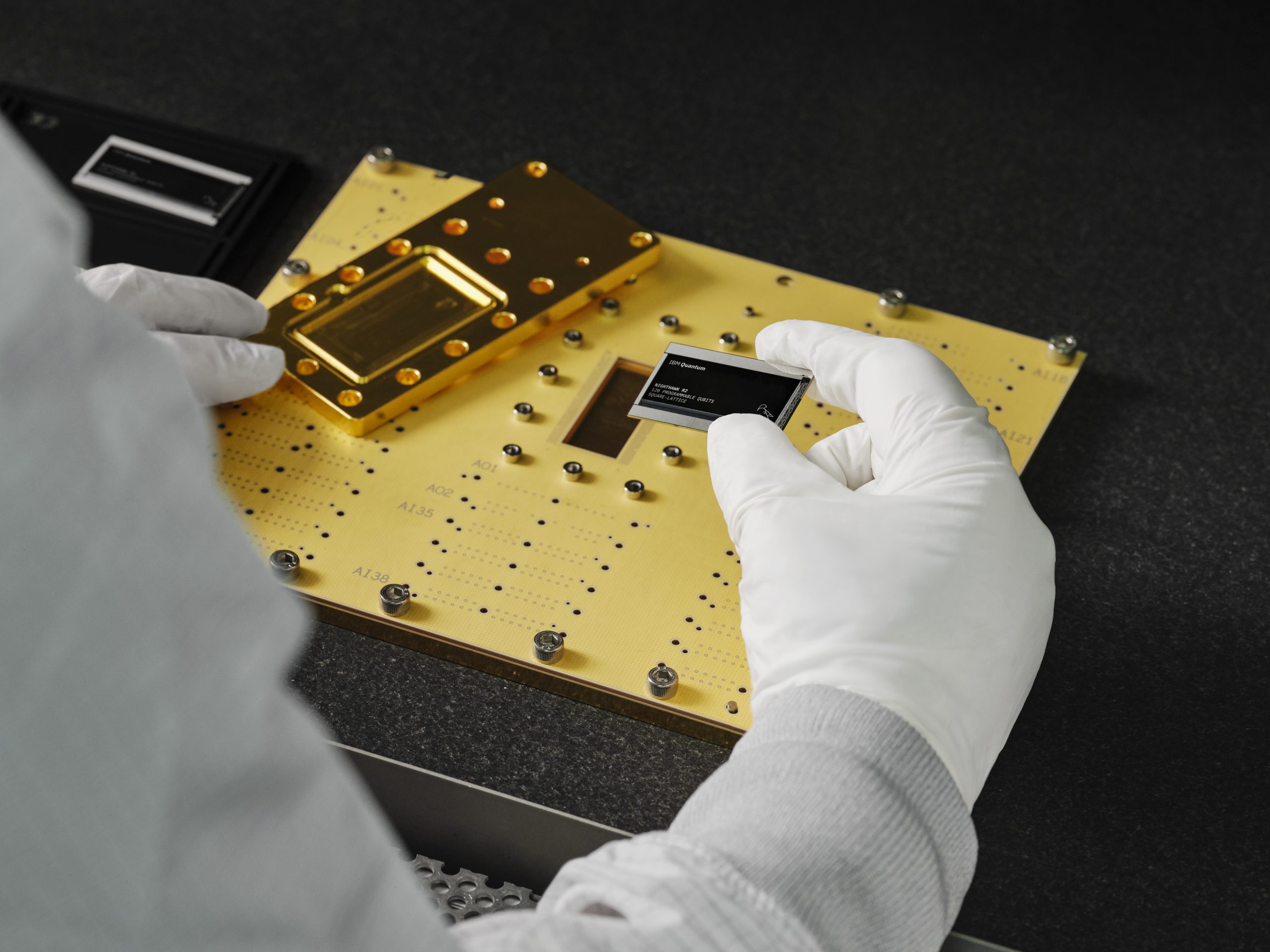
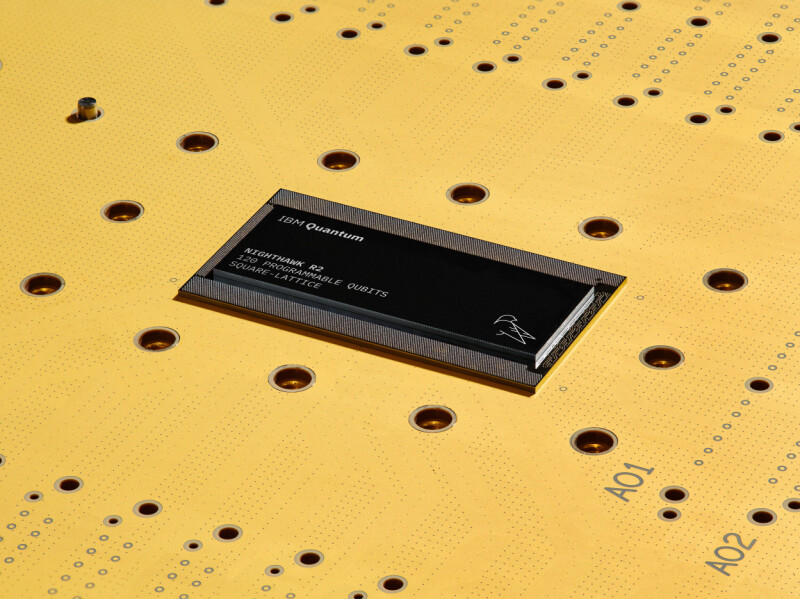
IBM has introduced the Nighthawk r3, a next-generation quantum processor carrying 520 qubits that is scheduled to debut in 2027. The company claims the chip will execute 10,000 quantum operations while maintaining speed and accuracy, quadrupling the qubit count of the 120-qubit Nighthawk r2 released in September. By coupling two r3 chips together, IBM plans to field a single computing system exceeding 1,000 qubits. [1][2]
To achieve that scale, the processor will incorporate 10 chip-to-chip interconnects known as l-couplers to assemble a unified 1,040-qubit architecture, a link mechanism previously evaluated on Nighthawk r1 hardware. IBM noted that complex computational workloads increasingly depend on circuits that execute thousands of operations across roughly 100 qubits or more, making higher throughput critical for gathering millions or billions of samples within practical timeframes. [1]
The intermediate processor marks a stepping stone toward IBM's broader ambition of delivering a fault-tolerant system codenamed Starling in 2029, designed to run 100 million operations on 200 logical qubits. Alongside chip design, IBM is exploring error correction by pairing its quantum hardware with conventional supercomputers, including an Oak Ridge National Laboratory system backed by AMD processors and an integration with Japan's Fugaku supercomputer. [1]