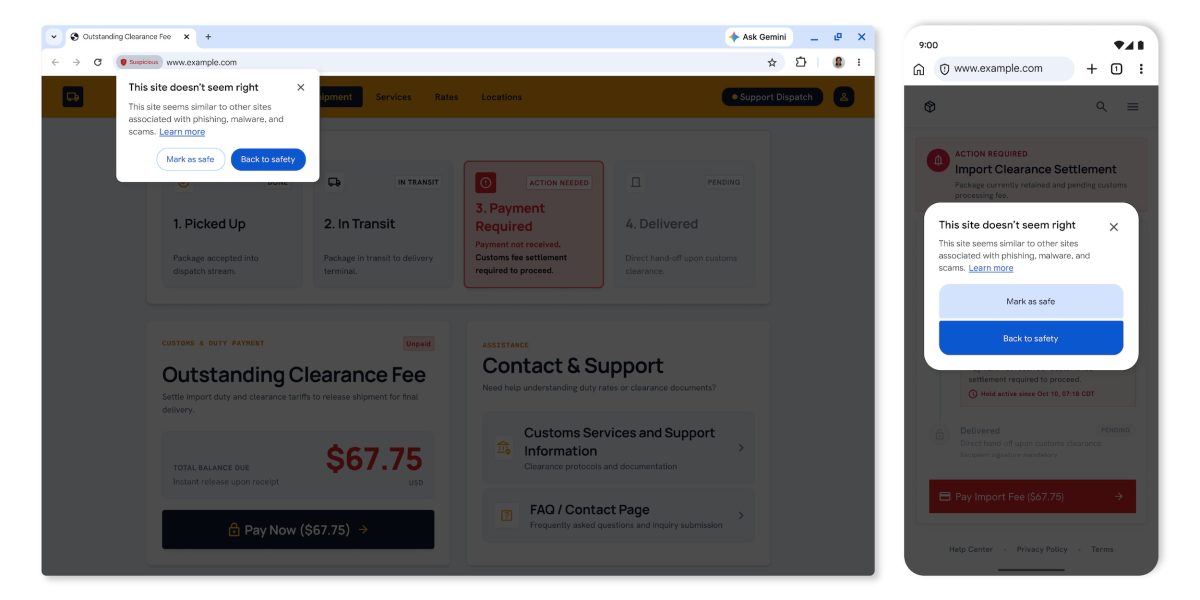
Google is introducing new security safeguards to Chrome to protect users from fraudulent websites and malicious copy-paste traps. The protections are available to users who turn on Safe Browsing's Enhanced Protection mode in the browser's privacy and security settings. Google claims the tier provides ten times better security against phishing and scams than Chrome's standard safeguards. [1][2]
Under the updated system, Chrome introduces tiered warnings. For suspicious sites, the browser overlays a dialog box stating that the page does not seem right, allowing people to leave or mark the site as safe. High-risk pages continue to trigger a full red warning screen. Chrome is also deploying Gemini models in the cloud alongside domain reputation data to calculate scam likelihood scores and detect deceptive software updates. To counter ClickFix social-engineering attacks—where malicious pages lure victims into pasting commands into system terminals—Chrome will scrub clipboard content, assess the code, and clear it while issuing an alert if a danger is detected. [1][2]
The enhanced defenses require users to share additional browsing activity with Google, though the company states that cloud evaluations of page content are processed ephemerally and not retained or used to train AI models. First launched in 2020, Google reported that Enhanced Protection reached one billion users in 2025. [1][2]