Dev squeezes an AI language model onto a floppy for 486DX and Pentium PC stalwarts
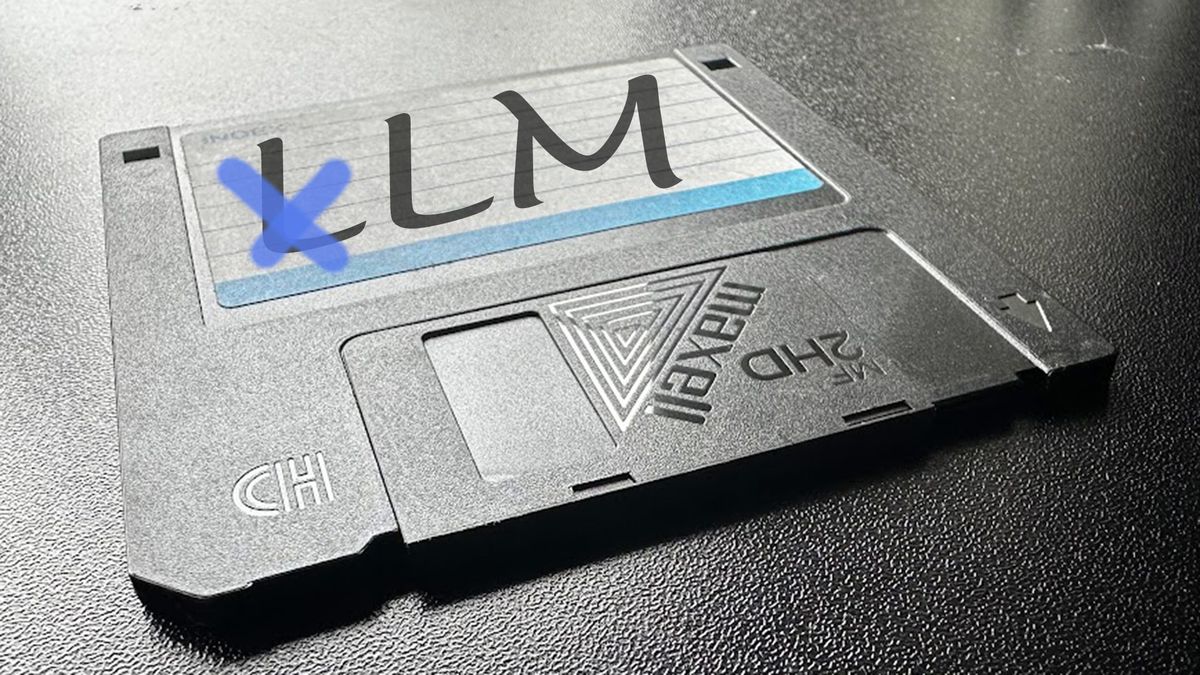
An inspired developer has shoehorned a language model onto a floppy disk created especially for 486DX and Pentium PC users running DOS.
via Tom’s HardwareReported by 2 outlets
The story so far
AI summary of the reporting below · Updated · How we work
Developer WollyMonjac has built Tiny 2.1, a 367,000-parameter question-answering transformer designed for MS-DOS systems powered by Intel 486DX and Pentium processors. [1][2]
Written in Turbo C 2.0 with help from Claude Fable 5.2 and trained by Opus 5.5, the miniature model features 4 layers, an architecture 96 wide, and 380 KB of 8-bit weights. Tiny 2.1 reads and writes letter by letter, trained on roughly 3,500 facts. Running it requires about 540KB of free conventional memory, and the DOS interface includes conversation history, a neural monitor, F-key shortcuts, and audio responses delivered through the PC speaker. [1][2]
WollyMonjac acknowledges that outside its training data, the model tends to make things up confidently. To counter gaps, the MIT-licensed release includes a training folder so users can retrain the transformer for specific topics. [2]
An inspired developer has shoehorned a language model onto a floppy disk created especially for 486DX and Pentium PC users running DOS.
via Tom’s Hardware
A new AI feat that transcends beyond being able to run a 270M model on a laser printer involves vintage hardware from the 1990s; a single floppy disk. A developer has successfully managed to bring Tiny 2.1, a miniature question-answering transformer with 367,000 parameters, onto a 1.44MB floppy disk that’s specifically built for MS-DOS systems powered by Intel 486DX and Pentium processors.
via Wccftech