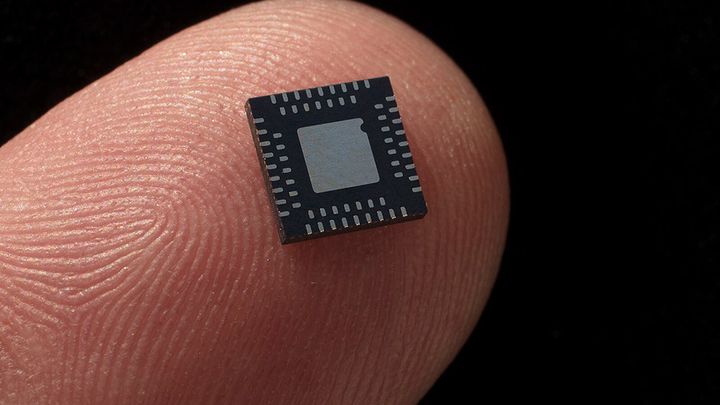
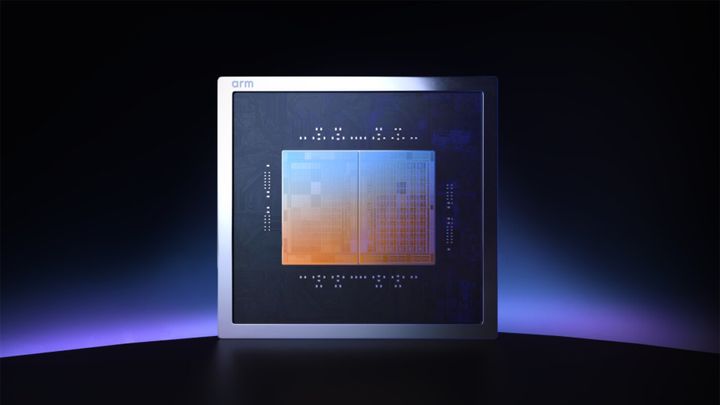
Arm announced that its upcoming AGI CPU delivers nearly double the modeled rack-level performance of AMD's 128-core EPYC 9755 across seven artificial intelligence workloads. Developed with support from Fujitsu, Meta, and OpenAI, Arm's benchmark evaluates how well processors handle the secondary tools, state maintenance, and databases that autonomous AI agents require. In testing verified by analysis firm Signal65, the processor averaged a 1.99x performance advantage over the AMD chip, with individual test margins ranging from 1.43x to 3.19x. [1][2]
The performance gap stems significantly from density within power limits. Arm calculates that its individual servers require between 950 and 1,050 watts compared to 1,700 watts for dual-socket AMD configurations, allowing a 24 kW rack to house up to 23 Arm systems against 13 for AMD. In separate Sandbench testing against AMD's EPYC 9965, the Arm processor achieved 45% faster cold starts when creating isolated sandboxes. However, Signal65 evaluated logs and calculations rather than rerunning physical hardware, and could not independently verify BIOS and memory configurations for the Arm and EPYC 9755 test systems. [1][2]
Arm is pushing this framework as a standardized measurement for agent workloads, but rivals evaluate data center performance differently. AMD measures raw agent count per watt and rack, while Nvidia stresses memory bandwidth and single-thread capacity for its Vera processors. Because the results rely on modeled power metrics and exclude general enterprise workloads, final production hardware and real-world software compatibility will determine whether Arm can pull market share from dominant x86 servers. [1][2]