Headphones & audio / Review roundup
TDM. Neo
TDM. Neo
- 3.5 / 5Tom's Guide
- 3 / 5TechRadar
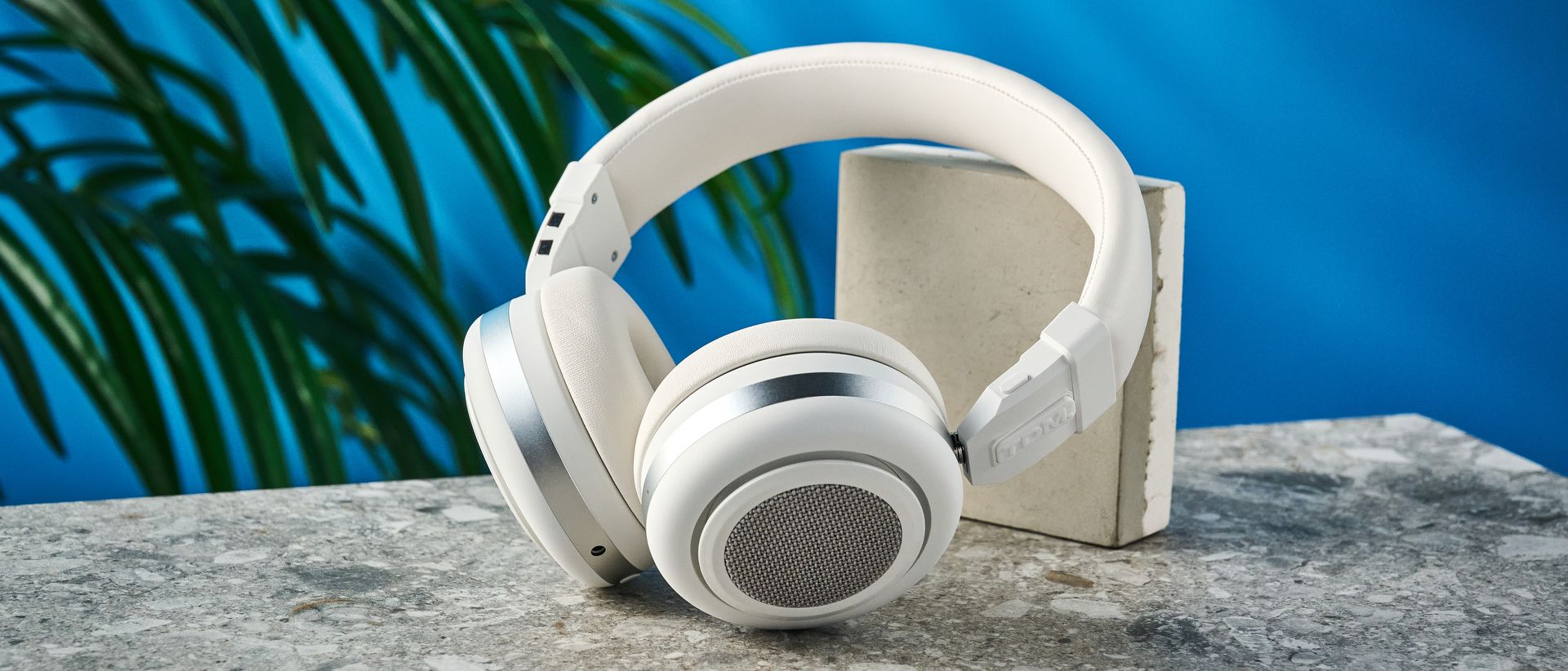
TDM. Neo roundup: Novel twist-to-speaker design with massive battery life, but compromised audio
The TDM. Neo is aimed at travelers, students, and minimalists who want a single gadget that handles both private listening and quick room sharing without carrying a second device. Its clear strengths are an innovative twisting hinge mechanism and battery life rated at over 200 hours in headphone mode. However, the catch is compromised audio fidelity in both configurations, an absence of active noise cancellation, and a steep $249 price tag. Shoppers who value audio quality and travel isolation will get better results by pairing proven ANC headphones like the Sony WH-1000XM4 with a standalone compact travel speaker.
Buy it if
- Travelers and students wanting to pack one device for both personal listening and dorm or room playback.
- Listeners prioritizing extreme endurance, with claims reaching up to 200 hours of continuous headphone use.
Skip it if
- Frequent flyers and commuters who rely on active noise cancellation to silence engine rumble.
- Listeners expecting balanced, refined sound fidelity commensurate with a $250 audio investment.
Where to buy
We may earn a commission from purchases or qualifying sign-ups through our links. Affiliate links explained
What reviewers liked
- Clever twisting hinge easily transforms headphones into an outward-facing Bluetooth speaker.
- Exceptional battery endurance rated at up to 200 hours in headphone mode and 16 hours in speaker mode.
- Rapid USB-C charging restores roughly 8 hours of headphone playback in 5 minutes.
- Companion app provides separate EQ profiles for headphone and speaker modes.
- User-replaceable battery assembly and ear pads boost long-term repairability.
What they didn’t
- Sound quality falls short of standalone rivals, sounding muddy in headphone mode and thin as a speaker.
- No active noise cancellation included at a $249 price point.
- Speaker form factor does not sit completely flat and leaves the USB-C port facing upward to catch dust.
- Companion app requires account registration before unlocking key features like EQ customization.
Key specs
- Launch price
- $249
- Reported price
- $249
- Weight
- 340 g (12 oz)
- Acoustic Drivers
- 4 x 40mm drivers (2 inward headphone, 2 outward 5W speaker)
- Amplification
- Dual dedicated internal amplifiers
- Bluetooth Version
- Bluetooth 6.0
- Codecs
- SBC, AAC
- Multipoint
- Yes (up to 2 devices)
- Battery Life
- Up to 200+ hours (headphone mode), up to 16 hours (speaker mode)
- Charging
- USB-C; 5-minute fast charge for 8 hours headphone playback
- Active Noise Cancellation
- No (passive isolation only)
- Wired Connectivity
- 3.5mm aux input
In depth
Sound quality
The Neo uses four separate 40mm drivers: two inward-facing drivers dedicated to personal headphone listening and two outward-facing drivers pushing 5 watts each in speaker mode. While this dual-driver setup ensures that drivers are tuned for their specific orientation, professional reviewers were generally disappointed by the acoustic performance. TechRadar found the audio disappointing across the board, noting that the headphones produced a muddy, indistinct low end, while speaker mode sounded thin and lacked low-frequency presence. WIRED similarly described the speaker mode as thin and underwhelming compared to any dedicated Bluetooth speaker. Tom's Guide was somewhat more forgiving, observing that you can achieve decent clarity and punch in headphone mode, but only after spending significant time balancing the sound with the companion app's equalizer, and noted that speaker mode volume remains somewhat constrained.
Noise cancellation
The TDM. Neo lacks active noise cancellation entirely. For isolation, users must depend purely on the passive seal provided by the memory foam ear cups. Tom's Guide noted that getting adequate passive attenuation requires precise positioning over the ears. WIRED pointed out that omitting ANC on a $249 pair of travel-oriented headphones is a major disadvantage, as background chatter, airplane cabin drone, and transit rumble easily cut through. While the headset includes environmental noise cancellation (ENC) algorithms, these function strictly to filter background sounds during voice calls rather than blocking ambient noise for the listener.
Comfort and fit
At 340 grams (12 ounces), the Neo is slightly heavier than typical plastic wireless over-ears, largely because of the internal twisting mechanism, four drivers, and dual amplification boards. Despite this mass, reviewers reported solid headphone ergonomics. Tom's Guide rated comfort 4 out of 5, noting that the vegan leather headband and thick memory foam ear cushions distribute weight effectively across the crown and temples. TechRadar and Gadget Flow agreed that it feels natural and secure on the head. In speaker mode, however, build usability falters. TechRadar pointed out that when the earcups twist and magnetically snap together into a cylinder, the unit does not sit flat or stable on smooth desks and leaves an exposed, upward-facing USB-C port that can readily collect dust and debris.
Battery life
Battery performance is the Neo's primary highlight. TDM rates the headset for up to 200 hours of continuous playback in headphone mode and up to 16 hours in speaker mode. Reviewers across the board confirmed that headphone stamina is exceptional, allowing weeks of regular use without plugging in. A USB-C fast-charging routine provides roughly 8 hours of headphone playtime from a 5-minute charge, while a full recharge takes approximately three hours. In addition, teardown coverage and reviewers noted that the battery module is secured by screws and easily replaceable down the road, which helps preserve the device's lifespan.
Call quality and microphones
The headset incorporates built-in microphones with environmental noise cancellation to suppress background noise on voice calls while in headphone orientation. Outlets found speech clarity sufficient for routine phone calls and virtual work meetings in indoor settings. However, callers in louder outdoor environments will notice that the microphones lack the aggressive spatial isolation and multi-mic beamforming found on modern office headsets from Sony or Jabra.
Features: app, EQ, multipoint, codecs
On the connectivity front, the Neo supports Bluetooth 6.0 and multipoint pairing, allowing seamless switching between a smartphone and a laptop. Audio transmission is handled via standard SBC and AAC codecs; high-resolution options like LDAC or aptX Adaptive are not supported. The companion app lets users customize the twist response, giving the option to automatically swap audio between drivers, pause upon folding, or toggle power. The app also houses independent EQ profiles for headphone and speaker modes, alongside local ping tracking. A major annoyance highlighted by TechRadar, however, is that users must register for an account and provide personal data before the app unlocks access to the equalizer.
Is it worth the money?
Selling at $249, the Neo struggles on value against standard audio gear. As both TechRadar and Tom's Guide noted, shoppers can often purchase a discounted pair of proven ANC headphones alongside a standalone mini Bluetooth speaker for roughly the same investment, securing better audio quality from both.
Also consider
- Sony WH-1000XM4
Frequently discounted near $250, offering benchmark active noise cancellation, superior sound, and LDAC codec support.
- JBL Clip 5
An $80 ultra-portable speaker that offers better volume, outdoor ruggedness, and IP67 water resistance than the Neo's speaker mode.
- Bose QuietComfort Headphones
Provides plush long-haul comfort and top-tier active noise cancellation for commuters needing real isolation.
Reviews we read
This roundup summarizes professional reviews and published specifications; Next Interrupt did not test the product. Roundup updated November 3, 2026. How we work