Headphones & audio / Review roundup
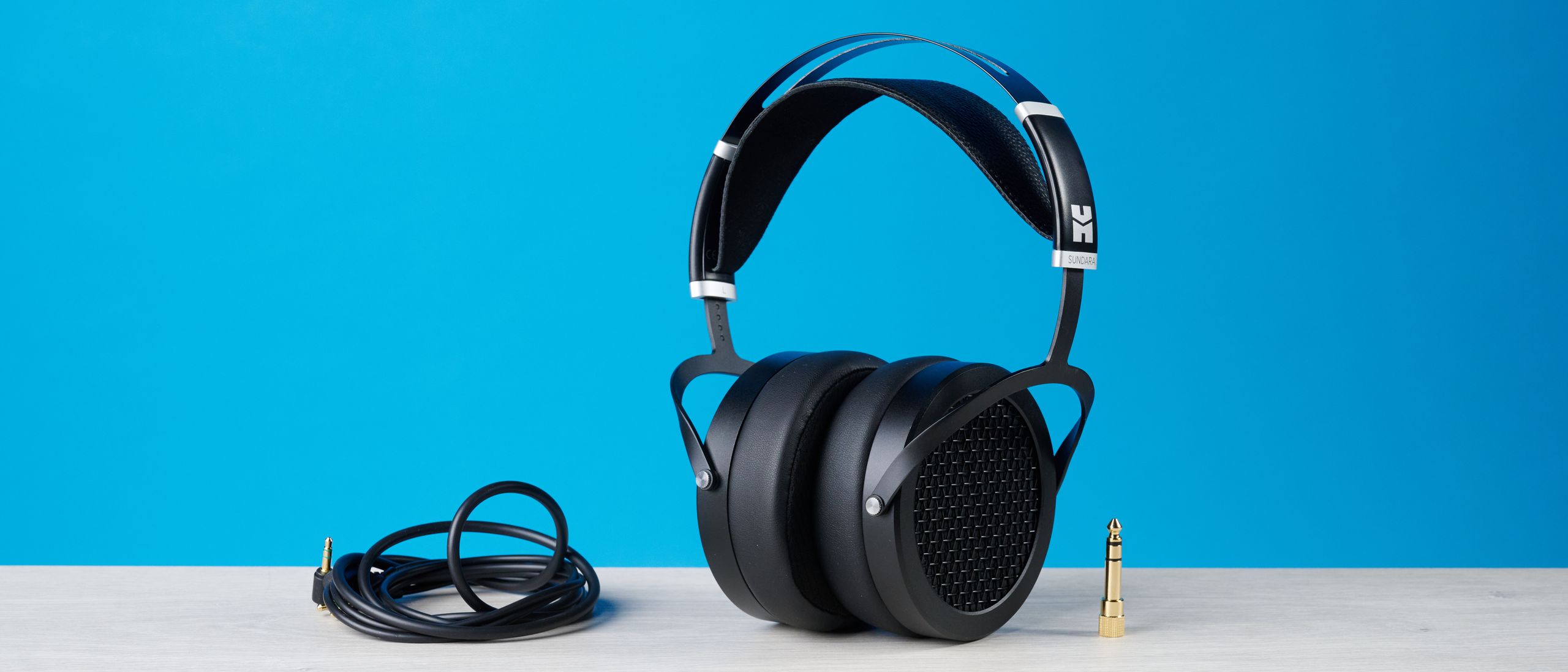
HIFIMAN Sundara
HIFIMAN Sundara
- 4 / 5Tom's Guide
- 4.0 / 5PCMag
- 7.1 / 10SoundGuys
A benchmark for budget audiophile headphones delivering reference-grade clarity with minimal extras
The HIFIMAN Sundara remains a top recommendation for music enthusiasts seeking true planar magnetic resolution without spending high-end money. Its biggest strength is an exceptionally balanced, airy sound profile with crisp midrange clarity and pinpoint instrument separation. The biggest drawback is the entirely passive open-back design, which leaks audio heavily and demands a decent headphone amplifier to perform at its best. Compared to the classic dynamic Sennheiser HD 600 series, the Sundara delivers superior sub-bass extension and a more spacious soundstage, making it the stronger all-rounder for critical home listening.
Buy it if
- At-home music lovers looking for neutral, highly detailed planar sound under $300
- Audio mixing and mastering in quiet environments where acoustic leakage is not an issue
- Listeners who already own or plan to purchase a dedicated headphone DAC and amplifier
Skip it if
- You need portable headphones for travel, public commuting, or noisy shared offices
- You rely on Bluetooth wireless convenience, built-in microphones, or active noise cancellation
- You want heavy, skull-shaking sub-bass impact without using an equalizer
Where to buy
We may earn a commission from purchases or qualifying sign-ups through our links. Affiliate links explained
What reviewers liked
- Exceptionally neutral and clear frequency response with fast planar transient speeds
- Comfortable hybrid ear pads and wide suspension headband disperse weight effectively
- Expansive soundstage and accurate spatial imaging for critical listening
- Detachable dual 3.5mm cabling allows for easy aftermarket replacement
- Superb price-to-performance ratio that regularly dips under $200
What they didn’t
- Open-back enclosures provide zero isolation and leak audio to anyone nearby
- Requires a dedicated amplifier or powerful dongle DAC to reach full dynamic potential
- Earcups do not pivot horizontally, which limits fit adaptability for some head shapes
- Stock 1.5-meter audio cable is stiff and prone to tangling
Key specs
- Launch price
- $499.00
- Reported price
- $179.00 to $299.00
- Driver type
- Planar magnetic (NEO supernano diaphragm)
- Acoustic design
- Over-ear, open-back
- Frequency response
- 6 Hz – 75,000 Hz
- Impedance
- 32 ohms
- Sensitivity
- 94 dB @ 1 kHz / 1 mW
- Weight
- 372 grams (13.1 oz)
- Cable
- 1.5m detachable dual 3.5mm to 3.5mm with 6.35mm adapter
In depth
Sound quality
Across testing outlets, the Sundara earns high praise for its reference-level acoustic fidelity. Tom's Guide awarded it 5 out of 5 for sound quality, highlighting its airy, expansive soundscape and exceptionally melodic vocal textures. In frequency response benchmarks by RTINGS, the Sundara adhered tightly to neutral target curves, showing low harmonic distortion and balanced mid-to-high transition. The planar drivers resolve complex orchestral layers and acoustic strings with rapid transient snap. Bass response is fast and articulate, though both PCMag and SoundGuys pointed out that sub-bass naturally rolls off beneath 50 Hz, meaning bass enthusiasts will miss the chest-thumping visceral thump typical of closed dynamic cans. Reviewers also emphasize power requirements: despite a nominal impedance of 32 ohms, its modest 94 dB sensitivity means a discrete headphone amp or capable USB-C DAC dongle is necessary to drive clean, dynamic volume.
Comfort and fit
Weighing 372 grams on laboratory scales, the Sundara is heavier than lightweight plastic models like the Sennheiser HD 600, but reviewers found its weight well-managed. SoundGuys and Tom's Guide noted that the wide suspension strap evenly distributes downward pressure across the crown, preventing hotspots during three-to-four-hour sessions. The hybrid ear pads combine pleather outer rings with breathable fabric touchpoints that curb heat accumulation and accommodate glasses frames comfortably. Ergonomics, however, have caveats: the metal earcups do not rotate horizontally, clamping force is fairly firm out of the box, and PCMag noted that the sliding headband adjustment arms can feel stiff and scrape the finish if moved roughly.
Noise cancellation
As a purely analog, open-back headphone, the Sundara does not include active noise cancellation and offers virtually zero passive isolation. SoundGuys and RTINGS measured wide acoustic pass-through across low and high frequencies, meaning room ambiance, keyboard clicks, and HVAC hum pass unobstructed into your ears. Concurrently, the headphone acts like miniature stereo speakers, projecting whatever you are listening to into the surrounding space at moderate listening levels. Professional outlets agree that this design limits the Sundara strictly to quiet private listening rooms and home offices.
Features: app, EQ, multipoint, codecs
The Sundara deliberately eschews wireless modern conveniences. It has no Bluetooth radios, no support for wireless codecs like LDAC or aptX, no multipoint pairing, no microphones for phone calls, and no companion mobile app. Equalization is entirely dependent on software running on your external PC, streamer, or hardware amplifier. Physical connectivity consists of dual 3.5mm mono connectors on the earcups. While reviewers appreciate that the detachable cabling makes replacements simple, Tom's Guide and PCMag observed that the included 1.5-meter rubberized stock cable is stiff, retains folds easily, and generates noticeable microphonic noise against clothing.
Price
The HIFIMAN Sundara initially launched at an MSRP of $499 before settling at a $299 regular list price. In recent retail cycles, street prices have frequently dropped between $179 and $199 on major platforms including Amazon. At these discounted price tiers, Tom's Guide and PCMag describe it as an almost unbeatable high-fidelity value for aspiring audiophiles. Prospective buyers should note that maximizing this purchase typically requires budgeting an additional $50 to $100 for a competent desktop or dongle amplifier to deliver sufficient current.
Is it worth the money?
Widely praised as the price-to-performance benchmark for planar magnetic headphones, frequently dropping below $200 on Amazon and direct storefronts.
Also consider
- Sennheiser HD 6XX
Offers warmer, more intimate vocal reproduction and lighter, proven long-term durability, but has a narrower soundstage.
- HIFIMAN Edition XS
Provides deeper sub-bass extension and a noticeably larger vertical soundstage for listeners willing to spend roughly $100 more.
- Beyerdynamic DT 900 PRO X
Features superior physical build quality, punchier dynamic bass impact, and higher sensitivity that runs effortlessly off basic headphone jacks.
Reviews we read
This roundup summarizes professional reviews and published specifications; Next Interrupt did not test the product. Roundup updated October 31, 2026. How we work