Phones & tablets / Review roundup
Google Pixel Tag
Google Pixel Tag
- 4.0/5ZDNET
Google's sleek tracker brings precision finding and two-way ringing to Android
The Google Pixel Tag is the best tracking beacon for Android owners, especially those carrying a Pixel or Galaxy handset with Ultra Wideband support. Its biggest strengths are its ultra-slim profile, reliable two-way phone ringing, and persistent low-battery alerts that prevent dead tags. The main catch is the lack of an integrated lanyard hole, forcing owners to purchase an accessory pouch to clip it onto keys. Compared to the Apple AirTag, it offers superior reverse finding and thinner wallet-friendly packaging while matching its $29 entry price point.
Buy it if
- Android phone owners wanting native UWB precision finding
- Slip-in tracking for narrow wallet slots, passport holders, and luggage pouches
- Users prone to misplacing their phone who want reverse ringing
Skip it if
- iPhone users who cannot access the Google Find Hub network
- Shoppers looking for a tracker with an integrated keyring hole
Where to buy
We may earn a commission from purchases or qualifying sign-ups through our links. Affiliate links explained
What reviewers liked
- Slim 5.4 mm profile easily slides into wallets without bulging
- Integrated button provides reliable reverse phone ringing
- Ultra Wideband and Bluetooth Channel Sounding deliver accurate precision guidance
- Persistent low-battery notifications every two weeks avoid dead trackers
- Standard IP67 water and dust resistance
What they didn’t
- No built-in keyring hole, requiring an accessory case for keys
- Crowdsourced Find Hub network coverage drops significantly in remote outdoor areas
Key specs
- Launch price
- $29.99 (1-pack) / $99.99 (4-pack)
- Reported price
- $29.99 (1-pack) / $99.99 (4-pack)
- MSRP
- $29.99 (1-pack) / $99.99 (4-pack)
- Dimensions
- 28 x 46.1 x 5.4 mm
- Weight
- 11.8 g (with battery)
- Water resistance
- IP67
- Battery
- Replaceable CR2032 coin cell (up to 1 year)
- Connectivity
- Ultra Wideband (UWB), Bluetooth Channel Sounding, Bluetooth 6.0, NFC
- Tracking network
- Google Find Hub
- Compatibility
- Android 9.0 or later
In depth
Design and durability
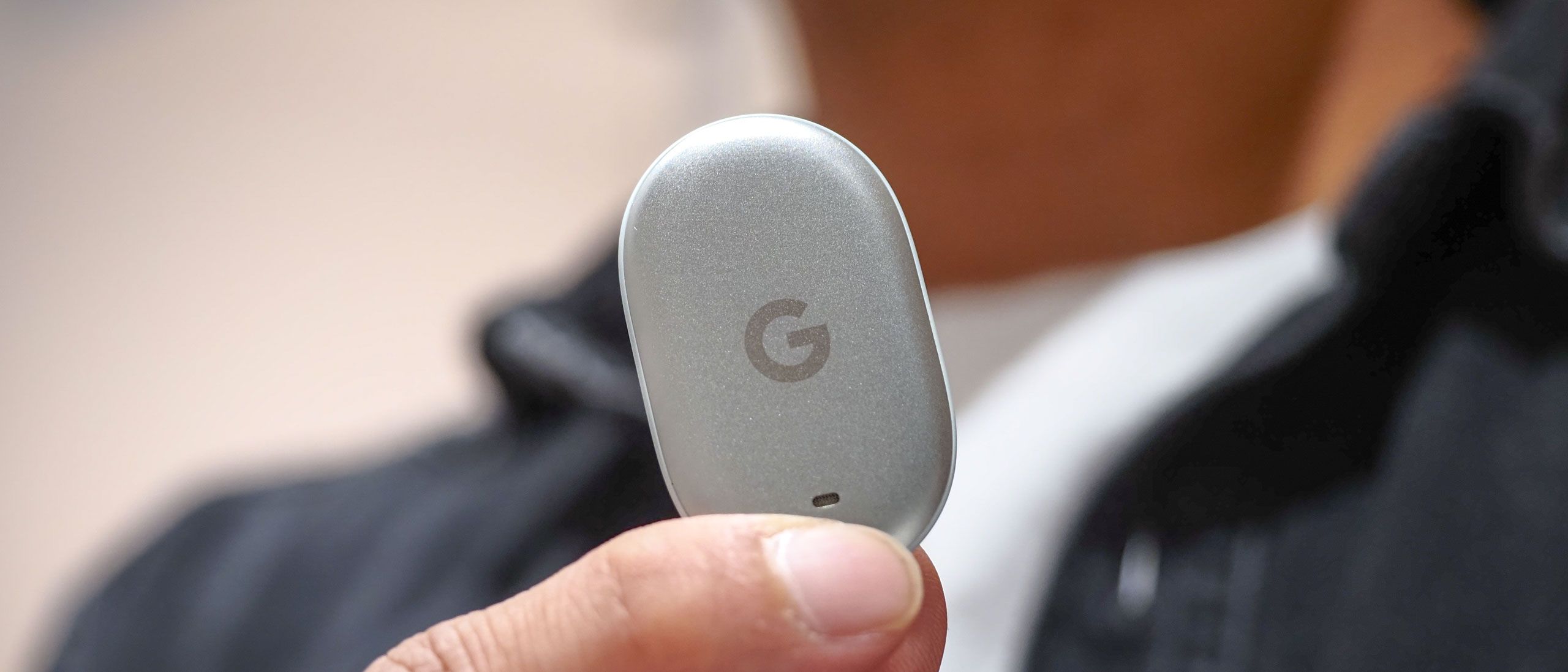
At 5.4 mm thin and 11.8 grams, the Pixel Tag features an elongated pill shape that Stuff and ZDNET found significantly easier to slide into card sleeves and tight luggage compartments than rounded puck-style tags. The build pairs a satin stainless steel backplate bearing the Google logo with a matte Fog polycarbonate front. Durability is certified at IP67, protecting against dust and water submersion in up to 1 meter for 30 minutes. However, Stuff and Tom's Guide noted the biggest design omission: there is no pre-drilled keyring hole, so attaching it to keys or bags requires buying an external holder or case.
Performance and tracking
The Pixel Tag relies on Google's Find Hub crowdsourced network alongside Ultra Wideband (UWB) and Bluetooth Channel Sounding for proximity search. In hands-on testing, Tom's Guide praised its visual Precision Finding range, noting it locked onto the tag at greater distances than standard Bluetooth beacons. Real-world tracking tests by Android Authority highlighted the strengths and limits of the network: dropping the tag in a busy downtown area delivered a left-behind alert in under five minutes and regular map pings from passing Android devices. On an isolated trail, however, updates stalled due to sparse device traffic, demonstrating that remote tracking still hinges on user density.
Battery life and charging speed
Rather than using a rechargeable battery, the Pixel Tag is powered by a standard CR2032 coin cell rated for over one year of typical use. Tom's Guide singled out Google's battery management as a major functional advantage over the Apple AirTag: instead of a lone notification that is easily missed, Find Hub pushes persistent low-battery reminders every two weeks once reserves run low. Accessing the compartment involves pressing down and twisting the rear cover, though ZDNET observed that seating the coin cell correctly inside the ultra-compact housing can take a little patience.
Software and update promise
Pairing uses Fast Pair on Android 9 or later devices, integrating directly into the system-level Find Hub without requiring a proprietary third-party application. Reviewers from 9to5Google and Stuff particularly praised the hidden hardware button on the tag: double-tapping it rings your paired smartphone even if the volume is muted, providing practical two-way finding. Location data is end-to-end encrypted across Google's billion-device network, and users can share access with up to 10 contacts or generate temporary airline tracking links.
Price and storage options
Google prices the Pixel Tag at $29.99 for a single unit and $99.99 for a four-pack, matching the standard retail pricing established by Apple. As a dedicated location accessory, it carries no internal flash storage options and ships in a single Fog colorway. Reviewers consider the standalone pricing competitive given the inclusion of UWB hardware, but shoppers should note that official and third-party keychain holders from brands like Spigen and Bellroy run an additional $20 to $30.
Is it worth the money?
Priced identically to Apple's AirTag and Samsung's SmartTag 2, though budgeting extra for a keychain case is necessary for key loops.
Also consider
- Apple AirTag
The standard choice for iPhone users, backed by Apple's extensive Find My network, though it lacks reverse phone ringing.
- Motorola Moto Tag
Offers AirTag accessory shape compatibility and UWB on Android, but relies on a separate companion app for reverse ringing.
- Samsung Galaxy SmartTag 2
Features an integrated keyring loop and UWB, but is restricted strictly to Samsung Galaxy devices and SmartThings.
Reviews we read
This roundup summarizes professional reviews and published specifications; Next Interrupt did not test the product. Roundup updated November 11, 2026. How we work