Headphones & audio / Review roundup
Bose QuietComfort Headphones (2nd Gen)
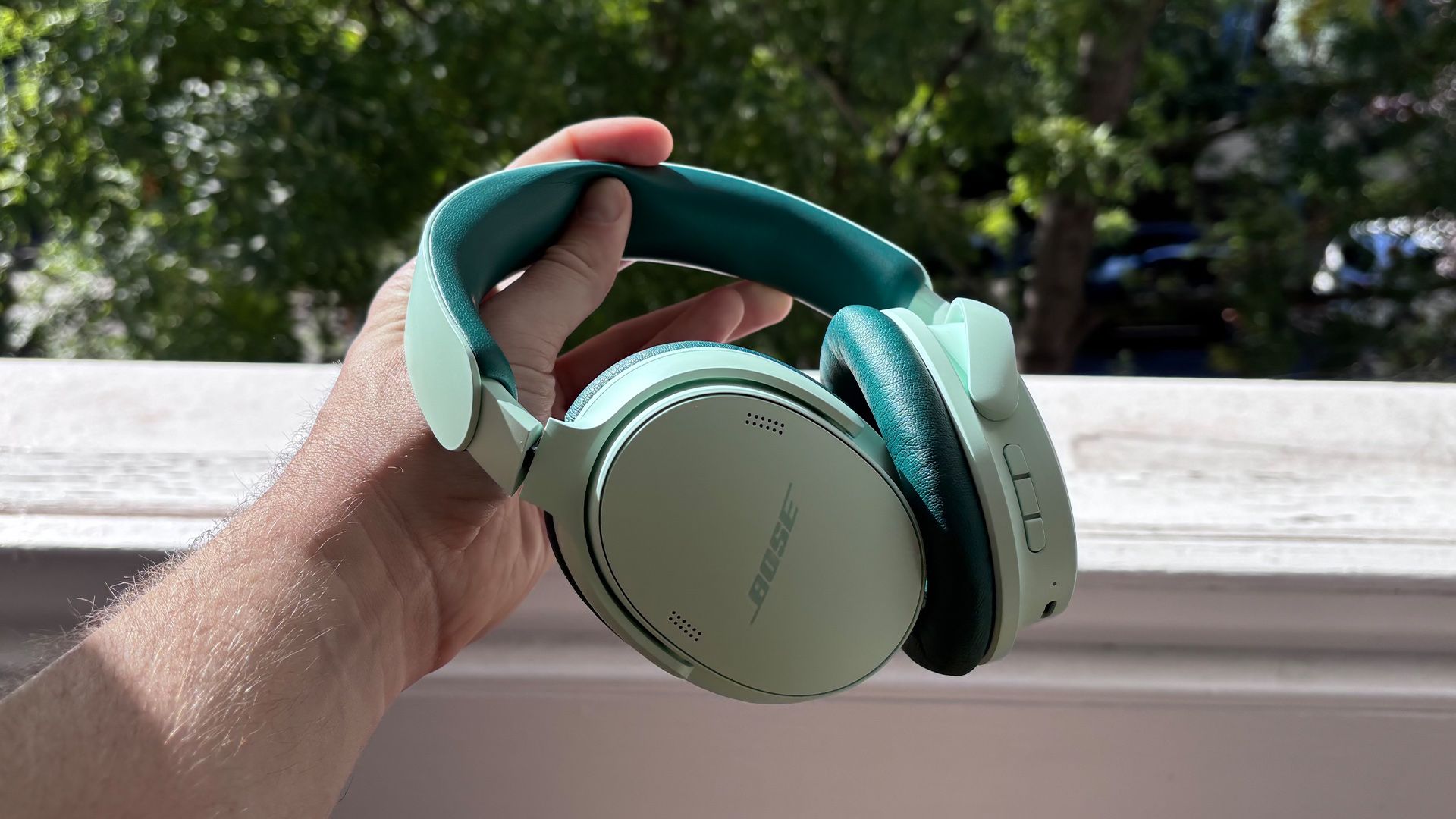
QuietComfort Headphones (2nd Gen)
- 4 / 5What Hi-Fi?
- 4 / 5Trusted Reviews
- 4.0 / 5PCMag
- 8.4 / 10Engadget
Supreme travel comfort and elite noise cancellation offset modest battery life and basic codec support
Frequent travelers and remote workers who want unmatched long-session comfort and top-tier noise reduction will find the Bose QuietComfort Headphones (2nd Gen) an easy everyday pick. Its biggest strength is its featherlight 230-gram folding chassis combined with class-leading noise cancellation that reliably muffles travel drone and office chatter. The primary drawback is its ordinary 24-hour battery life and lack of high-resolution Bluetooth codecs like LDAC or aptX. Compared to the Sony WH-1000XM5, the Bose offers a lighter, foldable frame and physical button controls, though the Sony delivers longer runtime and higher wireless audio fidelity.
Buy it if
- Frequent flyers who need dependable noise cancellation and a folding design for travel
- Office workers and commuters seeking all-day comfort without high clamping pressure
- Listeners who prefer tactile physical buttons over touch-sensitive earcup swipe gestures
Skip it if
- Audiophiles seeking advanced Bluetooth codecs like LDAC or aptX Adaptive on Android
- Travelers who demand multi-day battery endurance beyond 30 to 40 hours
- Users who regularly take calls outdoors in blustery wind or chaotic street noise
Where to buy
We may earn a commission from purchases or qualifying sign-ups through our links. Affiliate links explained
What reviewers liked
- Outstanding active noise cancellation with adaptive seal compensation for glasses wearers
- Exceptionally lightweight 230-gram design with plush cushioning and compact folding hinges
- Two-way USB-C audio supporting wired 24-bit/48kHz playback and conference call input
- Reliable physical button controls replace finicky touch swipes
- Bose Immersive Audio with head tracking expands the soundstage
What they didn’t
- 24-hour battery life lags behind rivals offering 40 to 60 hours
- Bluetooth codecs limited to standard SBC and AAC
- Microphone struggles to separate speech from loud ambient background noise
- Soundstage lacks the dynamic punch and treble sparkle of class rivals
Key specs
- Launch price
- $359
- Reported price
- $299 - $319
- Weight
- 230 g (8.1 oz)
- Battery life
- Up to 24 hours (ANC on); up to 18 hours (Immersive Audio)
- Charging
- USB-C; 3 hours full charge, 15-minute quick charge yields 2.5 hours
- Bluetooth version
- 5.4 with multipoint (2 devices) and Google Fast Pair
- Audio codecs
- SBC, AAC (lossless up to 24-bit/48kHz via wired USB-C)
- Inputs
- USB-C (audio and charging); USB-C to 3.5 mm analog cable included
- Microphones
- 6-microphone array with ActiveSense technology
- Companion app
- Bose app (iOS and Android) with 3-band EQ and ANC modes
In depth
Sound quality
Reviewers describe the Bose QuietComfort Headphones (2nd Gen) as having an accessible, warm, and balanced sound signature. RTINGS measured outstanding mid-range accuracy, noting that vocals and instruments sound clear, natural, and true-to-life, backed by a moderately boosted bass response of roughly 4 dB that delivers pleasing punch without overwhelming the mix. What Hi-Fi? praised the smooth tonality and cohesive frequency delivery, though it pointed out that audiophiles seeking raw dynamic excitement or micro-detail will find competitors like the Sennheiser Momentum 4 or Sony WH-1000XM5 more engaging. CNET and SoundGuys also observed that treble definition is subtly clearer than on the previous generation. The addition of USB-C wired listening allows playback up to 24-bit/48kHz without wireless compression, giving critical listeners a cleaner presentation than Bluetooth alone provides.
Noise cancellation
Active noise cancellation remains the headline strength of the QuietComfort line, and reviewers agree that the 2nd Gen model continues that tradition. SoundGuys scored its noise reduction at 8.5 out of 10, beating 70 percent of over-ear models it has tested, while RTINGS rated its isolation as exceptional across low engine rumbles and high-frequency chatter. Bose updated the microphones and internal processing to better compensate for seal breaks caused by hair or glasses frames, a change Engadget verified as effective during real-world commuting. The transparency Aware mode now incorporates ActiveSense, which smoothly clamps down on abrupt, jarring transient spikes like sirens or subway squeals before returning to ambient passthrough. PCMag noted that while the pricier QuietComfort Ultra edges it out slightly in total decibel reduction, the gap is small enough that most travelers will never notice.
Comfort and fit
Comfort has always defined the QuietComfort family, and testers uniformly agree the 2nd Gen model remains a benchmark for long-term wearability. Weighing just 230 grams, it is noticeably lighter than rivals like the AirPods Max (385 grams) and Sennheiser Momentum 4 (293 grams). PCMag highlighted the gentle, well-calibrated clamping force and generous memory foam padding on the headband and earcups, which prevent hotspot formation over marathon sessions. The earcups fold inward into a compact, included hard-shell travel case, making them far more packable than non-folding competitors. Testers from SoundGuys and Engadget also praised Bose's decision to stick with physical, tactile buttons for playback, volume, and listening modes, avoiding the accidental swipes and glove-unfriendly touch gestures found on many rival headsets.
Battery life
Bose rates the QuietComfort Headphones (2nd Gen) for up to 24 hours of playback with active noise cancellation enabled, dropping to roughly 18 hours when using spatial Immersive Audio. In independent lab testing, RTINGS measured 27 hours of continuous playback with ANC active, surpassing the manufacturer's claim. A quick 15-minute charge over USB-C delivers up to 2.5 hours of emergency playback. However, reviewers at What Hi-Fi? and SoundGuys noted that 24 to 27 hours lags well behind category benchmarks, such as the Sony WH-1000XM5 (30 hours) and the Sennheiser Momentum 4 (60 hours). A full recharge requires approximately 3 hours, though users can continue listening while charging via the USB-C audio cable.
Call quality and microphones
The headset uses a six-microphone array with three microphones per earcup for voice capture and ambient noise reduction. In quiet environments like a home office or private room, PCMag and CNET found voice pickup clear and intelligible for conference calls and phone chats. However, RTINGS noted that microphone performance degrades in noisy surroundings, where speech loses clarity and background clamor bleeds through. SoundGuys observed that breezy conditions can induce audible wind noise in Aware mode. For desk workers, the 2nd Gen introduces two-way wired USB-C audio, enabling the internal microphones to function directly as an audio input device for PC and Mac videoconferencing applications with noticeably cleaner vocal capture than over Bluetooth.
Features: app, EQ, multipoint, codecs
The Bose app provides a basic three-band equalizer (bass, mid, treble) alongside options to customize noise cancellation levels and assign shortcut functions to the physical left earcup action button. Wireless connectivity runs on Bluetooth 5.4 with Google Fast Pair and seamless multipoint pairing for two devices simultaneously. The big feature addition borrowed from the Ultra line is Bose Immersive Audio, which provides Still, Motion, and Cinema spatial audio modes with head tracking. The primary trade-off highlighted by PCMag, SoundGuys, and What Hi-Fi? is codec support: the headset remains limited to standard SBC and AAC codecs, lacking high-resolution Bluetooth codecs like LDAC or aptX Adaptive. Users seeking uncompressed high-resolution audio must rely on the wired USB-C connection instead.
Price
The Bose QuietComfort Headphones (2nd Gen) arrived on the market at a list price of $359 (£300). Reviewers across outlets like Trusted Reviews and What Hi-Fi? observed that at full MSRP, the headphones sit uncomfortably close to the $449 QuietComfort Ultra and Sony WH-1000XM5, where competitors offer more premium materials and advanced audio codecs. However, frequent retailer promotions have seen prices drop as low as $199 to $319, which significantly sharpens their value proposition. The package includes the headphones, a zippered protective travel case, a USB-C charging cable, and a USB-C to 3.5mm analog audio cable for connecting to in-flight seatback entertainment systems.
Is it worth the money?
While the $359 launch price sits close to flagship territory, routine retail discounts drop it closer to $300 or lower, where its class-leading comfort and noise cancellation become exceptional bargains.
Also consider
- Bose QuietComfort Ultra Headphones (2nd Gen)
Adds premium metal construction, aptX Adaptive and Lossless codecs, and slightly stronger noise reduction for $90 more.
- Sony WH-1000XM5
Delivers LDAC high-resolution streaming, automated ambient awareness features, and 30 hours of battery life.
- Sennheiser Momentum 4 Wireless
Features class-leading 60-hour battery life and richer dynamic range, though with a less compact folding profile.
Reviews we read
This roundup summarizes professional reviews and published specifications; Next Interrupt did not test the product. Roundup updated November 6, 2026. How we work
- What Hi-Fi? — Bose QuietComfort Headphones (2nd Gen) review
- Trusted Reviews — Bose QuietComfort Headphones (2nd Gen) Review
- SoundGuys — I tested the Bose QuietComfort Headphones (2nd Gen) and they’re a legit upgrade
- PCMag — Bose QuietComfort Headphones (2nd Gen) Review: Not Flashy, Just Excellent
- RTINGS.com — Bose QuietComfort Headphones (2nd Gen) Review
- WIRED — Bose QuietComfort Headphones (2nd Gen) Review: Noise-Canceling Champ