Smart home & cameras / Review roundup
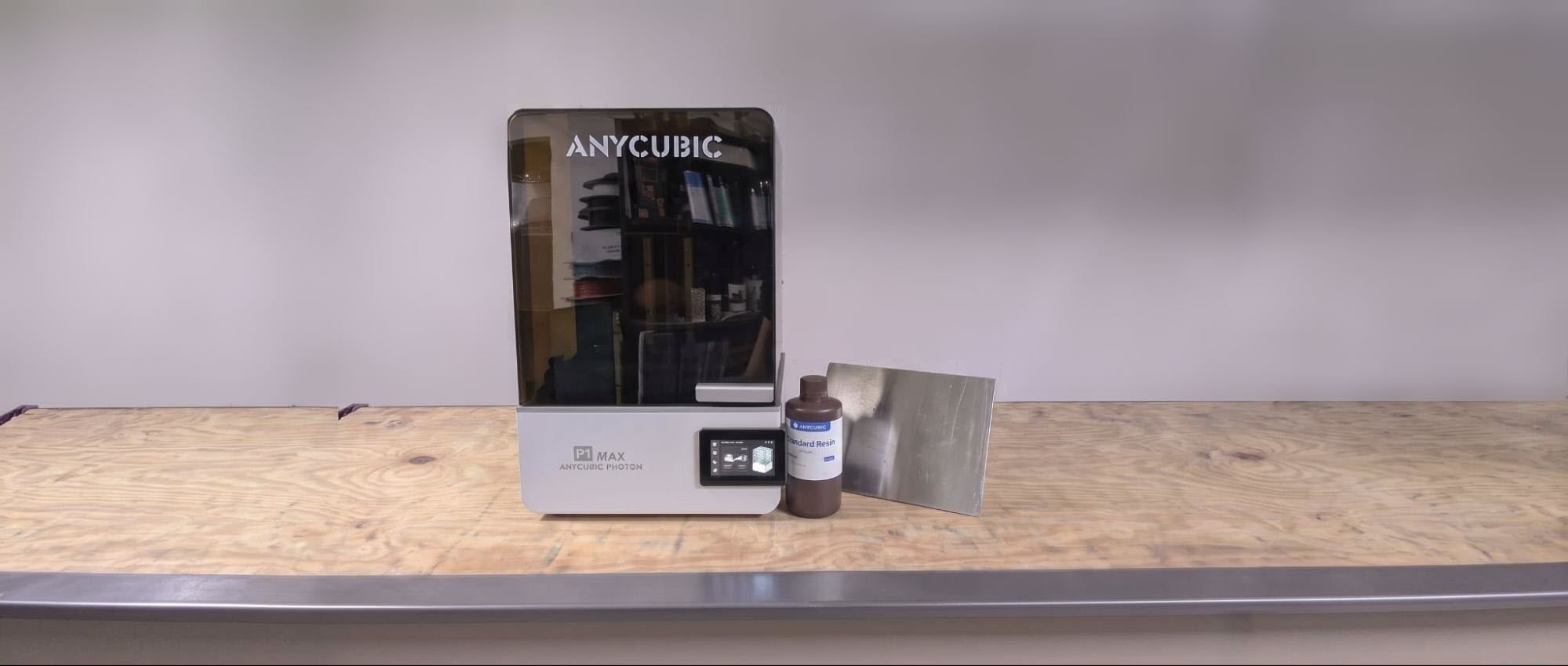
Anycubic Photon P1 MAX
Anycubic Photon P1 MAX
- 4/5 (Editor's Choice)Tom's Hardware
- 4.5/5TechRadar
- 4/53DWork
A massive 18.3-liter 12K resin 3D printer with a heated vat and reliable peel mechanics
The Anycubic Photon P1 Max is an appealing choice for prop builders, tabletop miniature painters, and prototyping workshops that require large single-piece prints or high-volume batch runs. Its primary strengths are a massive 18.3-liter build volume, a sharp 14-inch 12K LCD, and an integrated heated vat that maintains resin fluid temperatures up to 40°C. The main trade-offs are the absence of an automated resin-refill pump and finicky AI camera alerts. Compared to the Elegoo Jupiter 2, the P1 Max provides superior temperature control for viscous engineering resins at a competitive sub-$1,000 street price.
Buy it if
- Cosplayers and prop makers printing full-size helmets in one piece
- Tabletop gamers batch-printing dozens of 28mm to 32mm miniatures in a single run
- Makers in colder workshops running viscous engineering resins up to 8,000 cps
Skip it if
- You only print individual tabletop miniatures and have limited bench space
- You require an automatic resin dispensing and siphoning system
- You want seamless integration into third-party smart-home ecosystems
Where to buy
We may earn a commission from purchases or qualifying sign-ups through our links. Affiliate links explained
What reviewers liked
- Expansive 285.5 x 214 x 300 mm build area with 18.3-liter capacity
- Integrated vat heater reliably maintains resin at 35°C to 40°C
- Sharp 14-inch 12K monochrome LCD with uniform 24.8-micron square pixels
- Rigid C7-grade ball screw and dual linear rails ensure smooth Z travel
- Wave Release film noticeably reduces layer separation peel forces
What they didn’t
- Lacks an automated resin refilling pump for long batch prints
- AI camera print-monitoring features are sensitive and prone to false positives
- Heavier build plate and massive vat require substantial cleaning space and IPA
Key specs
- Launch price
- $1,149 (with $959–$1,103 presale discounts)
- Reported price
- $849.99 to $959.00
- Build Volume
- 285.5 x 214 x 300 mm (18.3 liters)
- LCD Screen
- 14-inch 12K monochrome LCD (11,520 x 8,640)
- XY Resolution
- 24.8 x 24.8 microns
- Z-Axis Motion
- C7-grade ball screw with dual linear guide rails
- Vat Capacity
- 1,900 ml with integrated thermal heating
- Peel Mechanism
- Wave Release textured film system
- Connectivity
- Wi-Fi (2.4/5 GHz), 100M Ethernet, USB Type-A
- Dimensions & Weight
- 430 x 414 x 625 mm; 23.1 kg (50.9 lbs)
In depth
Setup and app
Getting the Photon P1 Max ready for printing is straightforward despite its substantial 23.1-kilogram bulk. The printer arrives mostly assembled, and the 4.5-inch color touchscreen walks users step-by-step through self-testing, vat installation, and network setup. Assisted leveling uses integrated pressure sensors rather than traditional paper leveling screws. Tom's Hardware noted an early firmware quirk during setup where the build plate lifted approximately 100 mm after homing, though this did not prevent successful calibration. The Anycubic mobile app connects smoothly over dual-band Wi-Fi to monitor active prints, start files remotely, and send push status alerts.
Core performance
Print quality from the 14-inch 12K screen is exceptionally sharp. Despite the large panel size, pixel density remains tight at 24.8 x 24.8 microns, eliminating visible stair-stepping on organic sculpts. Tom's Hardware printed a detailed Tyrael figure in 7 hours 24 minutes at a 0.05 mm layer height (consuming 254 mL of resin), a full mask in 6 hours 5 minutes, and an oversized sculpt in 14 hours 15 minutes. Reviewer Mike's Quest Log reported printing 63 detailed skeleton miniatures on a single build plate in 2 hours 22 minutes. The integrated vat heater maintains resin temperatures between 35°C and 40°C, drastically improving flow rates for thick resins rated up to 8,000 cps. The Wave Release film successfully minimizes separation forces, preventing layer delamination across large cross-sections.
Smart-home platform support
The Photon P1 Max functions strictly inside Anycubic's proprietary mobile and cloud ecosystem. Reviewers found no native compatibility with common smart-home automation protocols such as Apple HomeKit, Amazon Alexa, Google Home, or Matter. Users cannot query print completion through voice assistants or tie completion triggers into smart home automations directly from the printer's firmware. Makers who want automated ventilation duct fans or workshop safety shutoffs will need to pair the printer with an external smart plug and third-party power-monitoring routines.
Privacy, local storage and subscriptions
Anycubic keeps the Photon P1 Max accessible without subscription paywalls or compulsory cloud logins. Users can slice models offline in Photon Workshop, Chitubox, or Lychee Slicer and transfer files via a standard USB drive. While the Anycubic Cloud platform enables remote print starts and mobile alerts, it remains optional. The integrated 1080p camera provides live video feeds inside the app, but reviewers like FauxHammer noted that timelapse video exports are capped at 640 x 480 resolution and are transferred via USB storage rather than hosted on paid cloud servers.
Reliability
Mechanical stability is a high point across professional testing. Anycubic equips the Z-axis with an industrial-grade C7 ball screw and dual linear rails, eliminating Z-wobble and layer banding even on tall prints near the 300 mm height ceiling. Reviewers at TechRadar reported completing more than 20 consecutive prints without a single failure. However, Tom's Hardware reported that the AI optical monitoring system—designed to detect vat debris and layer detachment—is inconsistent, producing false alarms on certain geometries. Because the vat holds 1.9 liters of resin and there is no automatic bottle refill pump, users must manually monitor fluid levels during long, high-volume jobs.
Price
Anycubic launched the Photon P1 Max with an official retail price of $1,149, following introductory pre-order pricing between $959 and $1,103. In retail circulation, typical promotional pricing settles near $849.99 to $959 on Amazon and Anycubic's web store. Reviewers emphasize that getting an 18.3-liter capacity, a 12K screen, a heated vat, and a precision ball screw for under $1,000 represents strong value in the large-format resin printer category.
Is it worth the money?
Delivers an 18.3-liter build envelope, ball-screw motion, and a heated vat at a street price under $1,000, significantly undercutting industrial resin hardware with similar capacity.
Also consider
- Elegoo Jupiter 2
Offers an automatic resin-feeding system and comparable large volume, but lacks the P1 Max's heated resin vat.
- Anycubic Photon P1
Provides higher 14K detail (16.8-micron XY) and dual-material vat options at a lower price for users who do not need 18.3 liters of build space.
- Phrozen Sonic Mega 8K V2
A proven workhorse for large batch printing with a pre-calibrated plate, though it carries a lower screen resolution and a higher price tag.
Reviews we read
This roundup summarizes professional reviews and published specifications; Next Interrupt did not test the product. Roundup updated November 7, 2026. How we work